A dreamcatcher is easy to recognize — a woven web inside a hoop, often finished with beads and feathers — but its meaning goes much deeper than bedroom decor. For the Ojibwe people, who originated the dreamcatcher, it is a protective teaching tool with a specific story, made first for children. Understanding that origin is essential to appreciating the symbol honestly.
This article explains where dreamcatchers come from, how the web is traditionally understood, and how to choose and hang one respectfully today. We will also look at how people pair the dreamcatcher with calming nighttime rituals and crystals traditionally associated with restful intention.
The Ojibwe Origins of the Dreamcatcher
The dreamcatcher originates with the Ojibwe Nation (also known as Chippewa or Anishinaabe), an Indigenous people of the Great Lakes region of what is now the United States and Canada. In Ojibwe tradition, a protective figure known as Asibikaashi, the Spider Woman, watched over the people, especially children. As the Ojibwe grew in number and spread across a wider territory, grandmothers and mothers began weaving small webbed hoops to hang above cradleboards and beds, carrying that protective role into each family.
In the traditional teaching, the web catches bad dreams and harmful thoughts during the night, holding them until the morning sun dissolves them, while good dreams pass through the center hole and travel down the feathers to the sleeper below. Some versions of the teaching reverse small details, but the core idea is consistent: filtering, protection, and care for children as they sleep.
During the 1960s and 1970s, the dreamcatcher was adopted more widely through intertribal exchange and the Pan-Indian movement, and it spread further through other Indigenous nations, including the Lakota, who have their own teachings about the hoop and web. From there it entered mainstream decor worldwide. You can read a fuller history on Wikipedia’s dreamcatcher page.
Acknowledging this history matters. A dreamcatcher is not an ancient symbol from everywhere — it is a specific cultural creation with named origins, and that attribution should travel with it.
What the Parts of a Dreamcatcher Symbolize
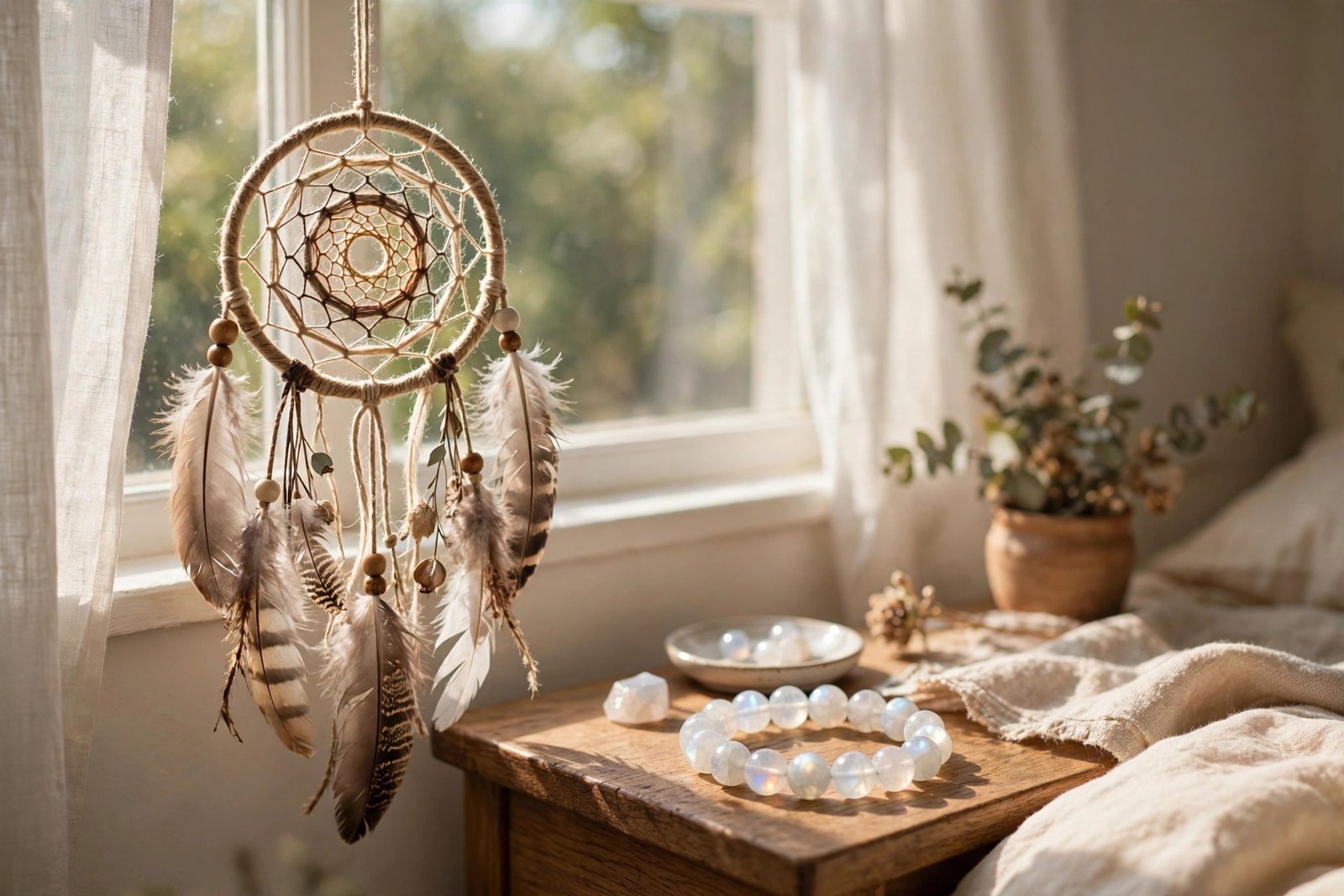
In traditional and widely shared teachings, each element carries meaning. The hoop represents the circle of life and the continuous journey of the sun and moon across the sky. The web echoes Asibikaashi’s spider web, and its pattern of seven points is sometimes linked, in Ojibwe teaching, to the seven fires or prophecies, though interpretations vary among teachers and families, and not every maker follows the same count.
The single bead sometimes woven into the web is said by many makers to represent the spider herself, while multiple beads can represent good dreams that were caught and turned to charms. Feathers hanging below act as the soft path good dreams follow to the sleeper; in some teachings, owl feathers, associated with wisdom, were used for girls, and eagle feathers, associated with courage, for boys — though eagle feathers are now legally protected and reputable makers use legal alternatives.
Because teachings differ, the most respectful approach is to buy from Indigenous makers who share their own explanations, rather than treating any one decorative listing as the definitive story.
Dreamcatchers, Luck, and Nighttime Rituals
In modern use, many people describe the dreamcatcher as a luck symbol for the home because it represents protected sleep, a calmer mind, and a hopeful start to the morning. Waking rested shapes how lucky a day can feel, and a bedtime ritual — dimming lights, putting the phone away, hanging a dreamcatcher where it catches the morning light — helps many people wind down with intention.
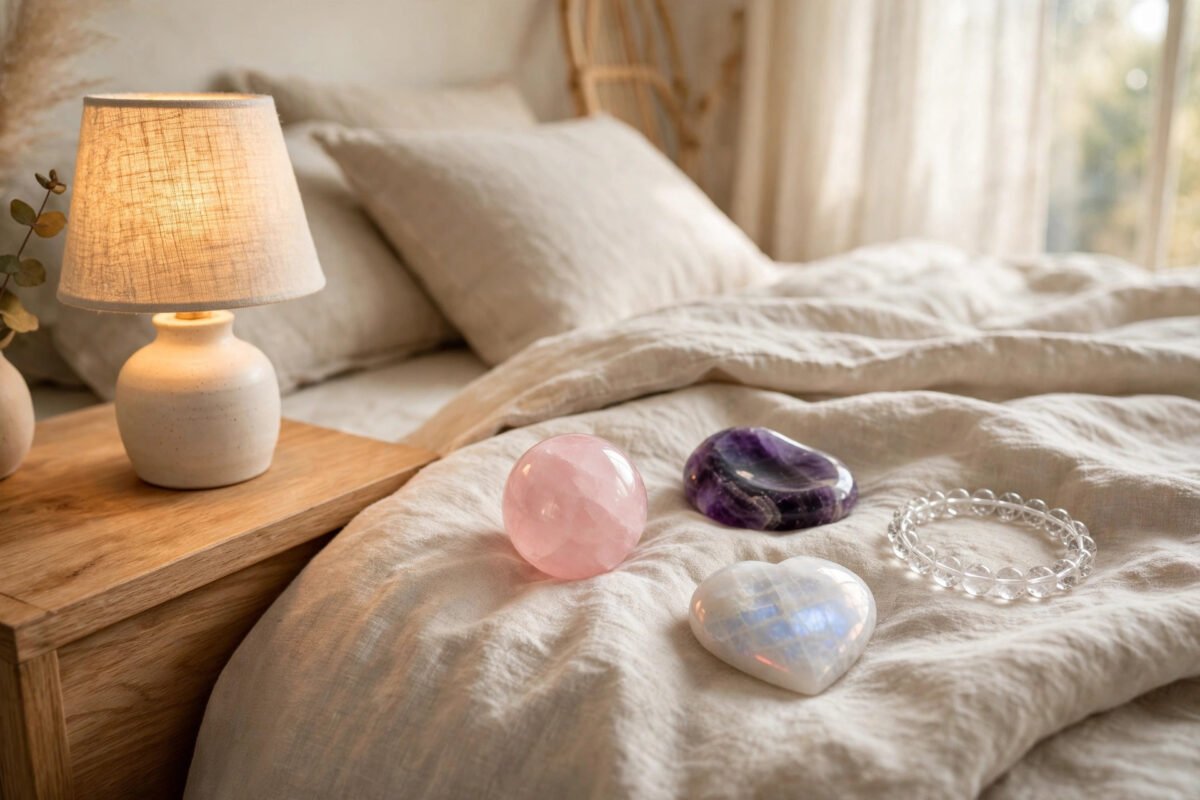
Crystals traditionally associated with intuition and calm are often placed nearby. Moonstone, for example, has long been linked in folklore with the night, cycles, and inner calm; see our guide to moonstone meaning and intuition. An AVENSU moonstone bracelet worn during an evening routine, then rested on the nightstand, can become part of that same wind-down ritual. Our full moon bracelet cleansing ritual and crystal meditation guide for beginners offer gentle practices that pair naturally with a bedtime setting.
These are comforts and rituals, not medical treatments. If you or your child has ongoing sleep difficulties, a clinician is the right source of help — a dreamcatcher belongs in the category of meaningful tradition and a peaceful bedroom, not healthcare.
How to Choose and Hang a Dreamcatcher Respectfully
Start with the maker. Authentic, handmade dreamcatchers by Indigenous artists support the communities the tradition comes from, and they are usually made with natural materials — willow hoops, sinew or natural cord, and real feathers. Mass-produced plastic versions may look similar in a photo but carry none of that craft or connection. Buying authentic work is the single most meaningful way to honor the symbol.
Traditionally, a dreamcatcher is hung above the bed or in a nearby window, where morning sunlight can reach the web — in the teaching, sunlight is what clears away what was caught in the night. In a child’s room, hang it securely out of reach, as you would any item with cords and small parts.
As a gift, a dreamcatcher suits a new baby, a child starting school, someone moving into a first home, or anyone who loves the story behind it. Include a card that names its Ojibwe origins and explains the teaching in a sentence or two. That context is part of the gift, and it is what separates appreciation from appropriation. You can find complementary calming pieces in the AVENSU shop, and more bedtime ideas alongside our feng shui bedroom tips for love luck.
Frequently Asked Questions
Where do dreamcatchers originally come from?
Dreamcatchers originate with the Ojibwe (Anishinaabe) people of the Great Lakes region. They were first woven as protective charms for children, inspired by Asibikaashi, the Spider Woman, and later shared with other Indigenous nations.
Where should you hang a dreamcatcher?
Traditionally, above the sleeper’s bed or cradleboard, ideally where morning sunlight can touch the web. A bedroom window near the bed is a common modern placement that honors that teaching.
Do dreamcatchers really filter dreams?
Filtering bad dreams while letting good dreams pass is the traditional Ojibwe teaching behind the design. Whether you hold that belief literally or value it as a comforting ritual and cultural story, the meaning comes from that tradition.
How can I buy a dreamcatcher respectfully?
Choose handmade pieces from Indigenous makers and sellers, ask about materials and the maker’s nation, and avoid plastic mass-produced imitations. An AVENSU moonstone bracelet can complement the ritual, but the dreamcatcher itself is best sourced from its community of origin.



 English
 Vietnamese