With its bold blue circle and watchful gaze, the evil eye is one of the most recognized protection symbols in the world. You will see it on doorways in Greece, on jewelry in Turkey, on baby gifts in the Middle East, and on bracelets and key rings almost everywhere else. Behind that simple design sits thousands of years of shared human worry — and hope — about envy, attention, and keeping good fortune safe.
This guide explains what the evil eye actually refers to, how the protective symbol developed, and how people wear and display it today. We will keep the focus where it belongs: on tradition, culture, and personal meaning, rather than on promises no symbol can make.
What Is the Evil Eye Belief?
The term evil eye refers to a belief, found in many cultures, that a jealous or overly admiring glance can bring misfortune to the person or thing being looked at. It is an old idea — references appear in ancient Greek and Roman texts, as well as in traditions across the Mediterranean, Middle East, South Asia, and Latin America, where it is known as mal de ojo.
The blue eye-shaped amulet, often called a nazar in Turkish, was created as a response to that belief. The logic in folk tradition is symbolic: an eye to watch for the harmful glance, and to reflect attention away from the wearer. Whether or not someone shares the underlying belief, the symbol has become a widely understood shorthand for protection, awareness, and wishing someone well. For a broad cultural overview, see Wikipedia’s article on the evil eye.
It helps to separate two things that are often confused. The evil eye is the perceived harmful glance itself. The blue charm is the protective symbol worn against it. When someone gives you an evil eye bracelet, they are giving you the charm — a gesture of care, not a warning.
Colors and Meanings in Tradition
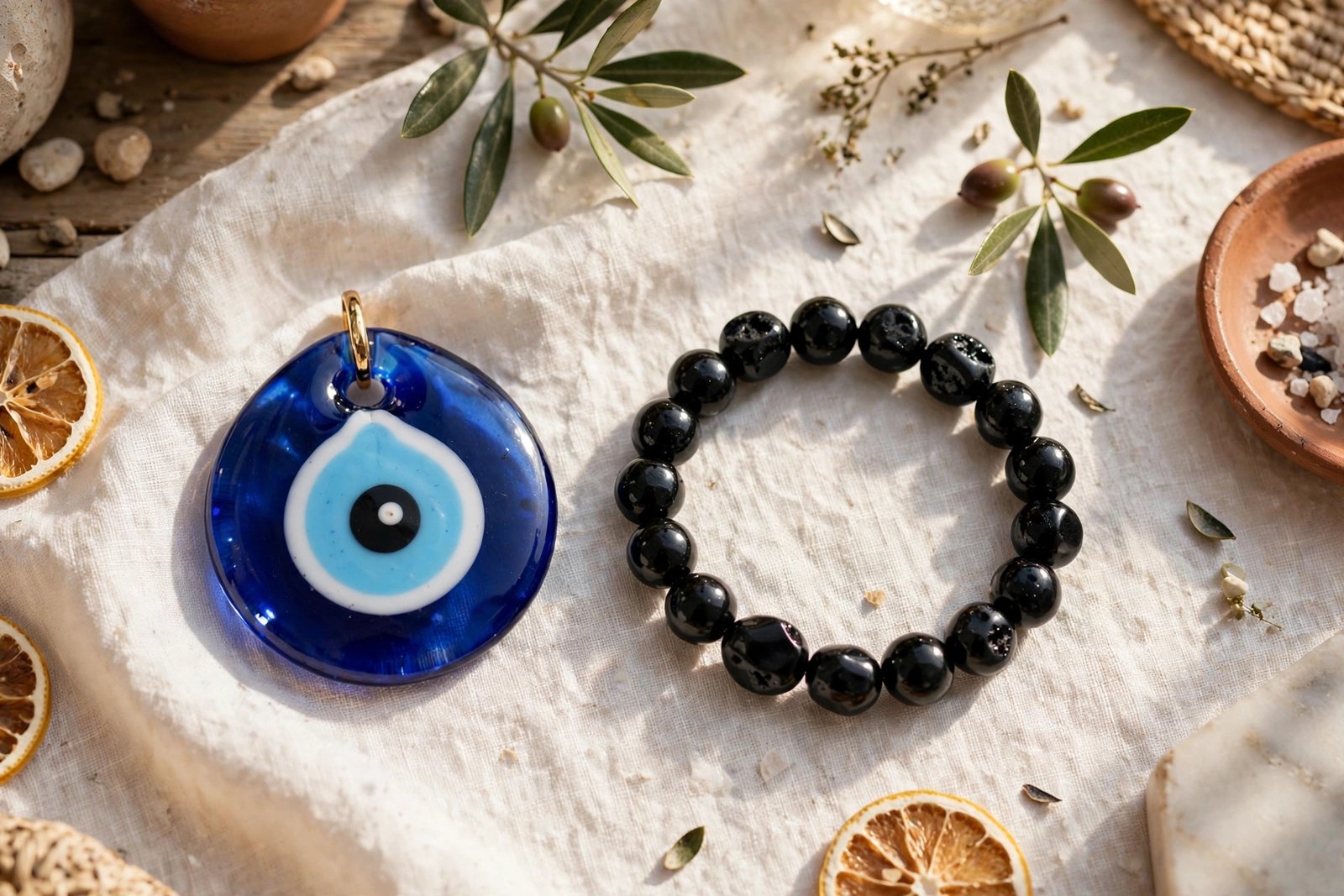
The classic evil eye charm is made of glass in deep cobalt blue, with concentric circles of white, light blue, and black forming an eye. Blue was traditionally associated with protection in many Mediterranean cultures, and glass made the symbol affordable for everyday people, not just the wealthy.
Today you will also find evil eye designs in other colors, each given informal meanings by modern makers. Light blue is often linked with calm and general protection, green with growth and luck, red with courage, and black or gold with strength and prosperity. These color associations are contemporary interpretations rather than ancient rules, so treat them as styling guidance rather than strict tradition.
Crystals are frequently paired with the symbol for the same reason. Black obsidian, for example, is traditionally associated with protection and grounding, which is why an AVENSU black obsidian bracelet with a small evil eye charm feels like a natural combination. You can learn more in our guide to obsidian meaning and protection properties.
How People Wear and Display the Evil Eye Today
Jewelry is the most common modern use. Evil eye bracelets, necklaces, earrings, and anklets are worn daily by people who like both the look and the intention behind it. On a bracelet, the charm is highly visible — a small reminder to move through the day with awareness. Many people wear it on the left wrist in folk tradition, as the left side is sometimes described as the receiving side, though plenty of wearers simply choose whichever wrist feels comfortable.
At home, evil eye ornaments are often hung near the front door, in a window, or above a baby’s crib as a traditional blessing for the household. Our guide to feng shui front door tips for good luck covers similar entryway customs from another tradition, and it is interesting to see how many cultures place protective symbols in exactly the same spot: the threshold.
As a gift, the evil eye is especially popular for newborns, new homes, new jobs, graduations, and travel. It says, in effect, I am thinking of you and wishing you a smooth path. Paired with a crystal traditionally linked to luck, such as the stones in our guide to lucky crystals for travel luck and safety, it makes a compact, meaningful send-off. You can also explore everyday protective pieces in the AVENSU shop.
Respecting the Symbol’s Cultural Roots
Because the evil eye is now a global fashion motif, it is worth remembering that for many communities it is not just decoration — it is a living tradition tied to family, faith, and identity. Wearing it respectfully means understanding what it represents, avoiding mocking or trivializing uses, and appreciating the cultures that carried the symbol for centuries before it appeared on fast-fashion accessories.
That respectful approach also makes the symbol more meaningful for the wearer. Knowing that a grandmother in Athens, a shopkeeper in Istanbul, and a parent in Mexico City might all reach for a similar protective eye connects a small blue charm to a much larger human story. An AVENSU bracelet is designed in that same spirit: as a mindful, wearable reminder, chosen deliberately rather than worn thoughtlessly.
If the protective theme resonates with you, you may also enjoy reading about black obsidian in feng shui protection and how different traditions approach the idea of a guarded, peaceful home.
Frequently Asked Questions
What does it mean when someone gives you an evil eye bracelet?
In tradition, it is a protective and caring gift. The giver is wishing you safety from negativity and envy, and good luck in whatever you are starting — a journey, a job, a new home, or a new baby.
Which hand should you wear an evil eye bracelet on?
Folk tradition often favors the left wrist, described as the side that receives energy. In practice, there is no strict rule, and most people wear it wherever it is most comfortable and visible to them as a reminder.
What should you do if an evil eye charm breaks?
In some traditions, a broken charm is said to have absorbed the negativity it was meant to deflect, and it is thanked and replaced rather than viewed as a bad omen. Others simply treat breakage as normal wear for glass jewelry.
Can you wear the evil eye with crystals?
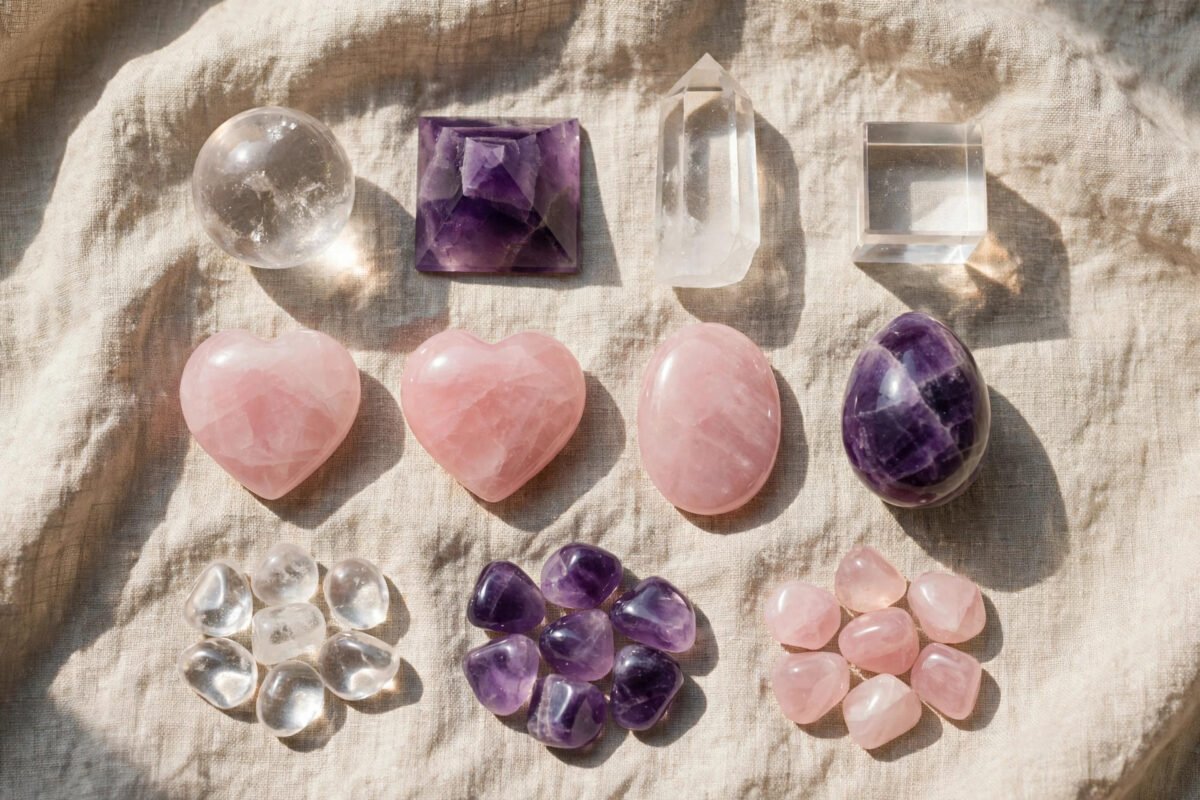
Yes. It pairs commonly with black obsidian, turquoise, and clear quartz, all traditionally associated with protection or clarity. Wearing an AVENSU obsidian bracelet alongside an evil eye charm is a popular, understated combination.









 English
 Vietnamese