Plenty of bracelet lovers end the day with a question: leave it on, or take it off? Some people find a familiar bracelet comforting at night; others wake with bead marks on their skin and a cord that aged a year in a month. Both experiences are real — the answer depends on the bracelet, the stone and how you sleep.
This guide weighs comfort and care honestly, suggests which bracelets suit overnight wear if you choose it, and shares the bedside habits that protect both your sleep and your jewellery.
What Happens to a Bracelet Overnight
Eight hours in bed is not rest for jewellery. You roll onto the wrist, press beads against the mattress, catch elastic on bedding, and sweat lightly through the night. Elastic cord stretches and abrades faster under that repeated compression, and knots work loose more quickly than they do in daytime wear.
Stones take their share too. Beads pressed and rubbed nightly gather micro-scratches, matte finishes polish unevenly, and softer stones can chip against a bed frame or a partner’s watch. Metal spacers tarnish faster in warm, humid bedding. None of this ruins a bracelet in a week — but nightly wear can halve the time between restringings, a pattern our elastic bracelet care guide also describes.
Skin comfort cuts the other way. Large or faceted beads dig in; a snug bracelet can leave marks and disturb circulation if your hands swell slightly overnight, as the NHS notes about swelling and circulation describe in general terms. If you wake with indentations or tingling, that bracelet should spend nights on the bedside table.
If You Sleep in One: Choose and Wear It Well
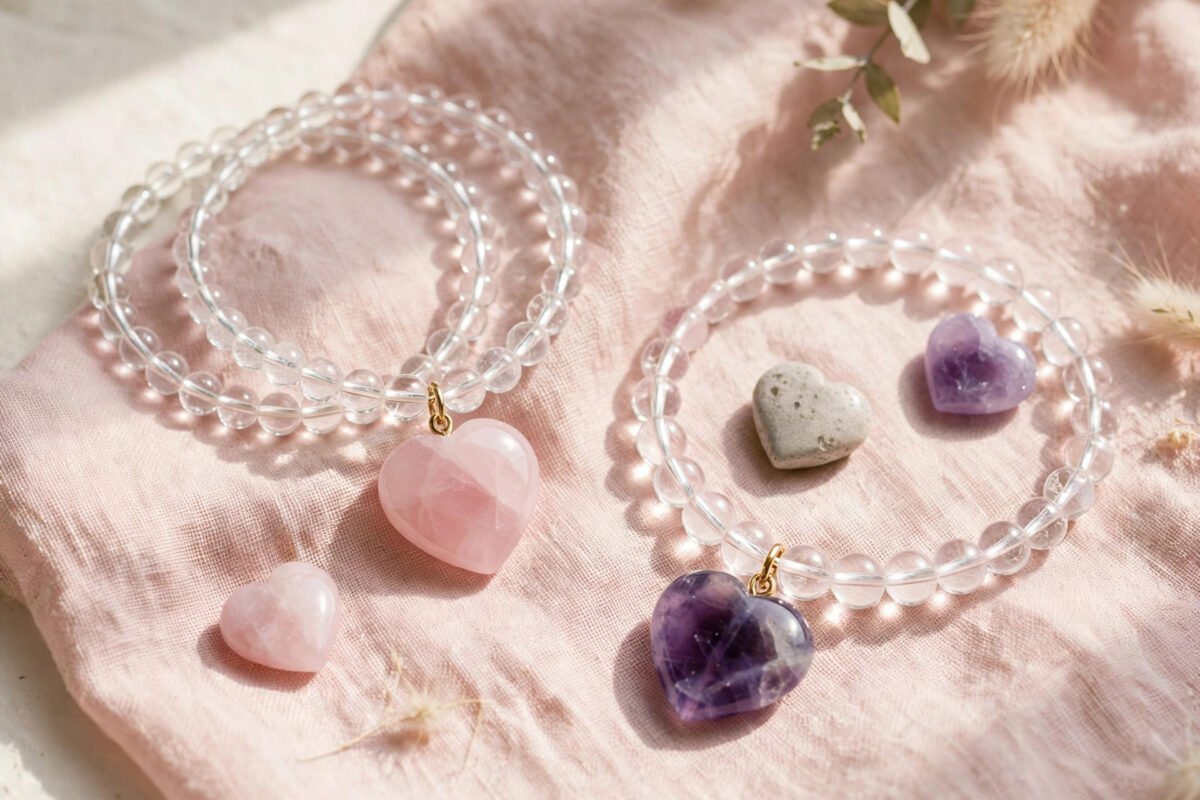
Some bracelets are far better suited to nights than others. Choose small, smooth, round beads — 6mm or 8mm — in hard stones such as amethyst or rose quartz, on fresh elastic with a little ease in the fit. In crystal tradition, amethyst and moonstone are associated with calm evenings, and lepidolite is traditionally associated with rest; our sleep ritual guide explores those associations as a bedtime practice.
Wear it on your non-dominant wrist, where it catches less, and check the fit with the two-finger test from our sizing guide: you should slide two fingers under the beads comfortably. Avoid sleeping in bracelets with charms, pendants, pointed or carved beads, Pixiu figures, wood beads that dislike moisture, or anything strung on wire or chain that can kink or scratch.
An AVENSU smooth-bead bracelet in a small bead size is the style most owners report sleeping in comfortably; an AVENSU statement piece with larger beads is better treated as daytime jewellery. Compare bead sizes in the AVENSU shop if you are choosing a dedicated night bracelet.
The Bedside Alternative Most Owners Prefer
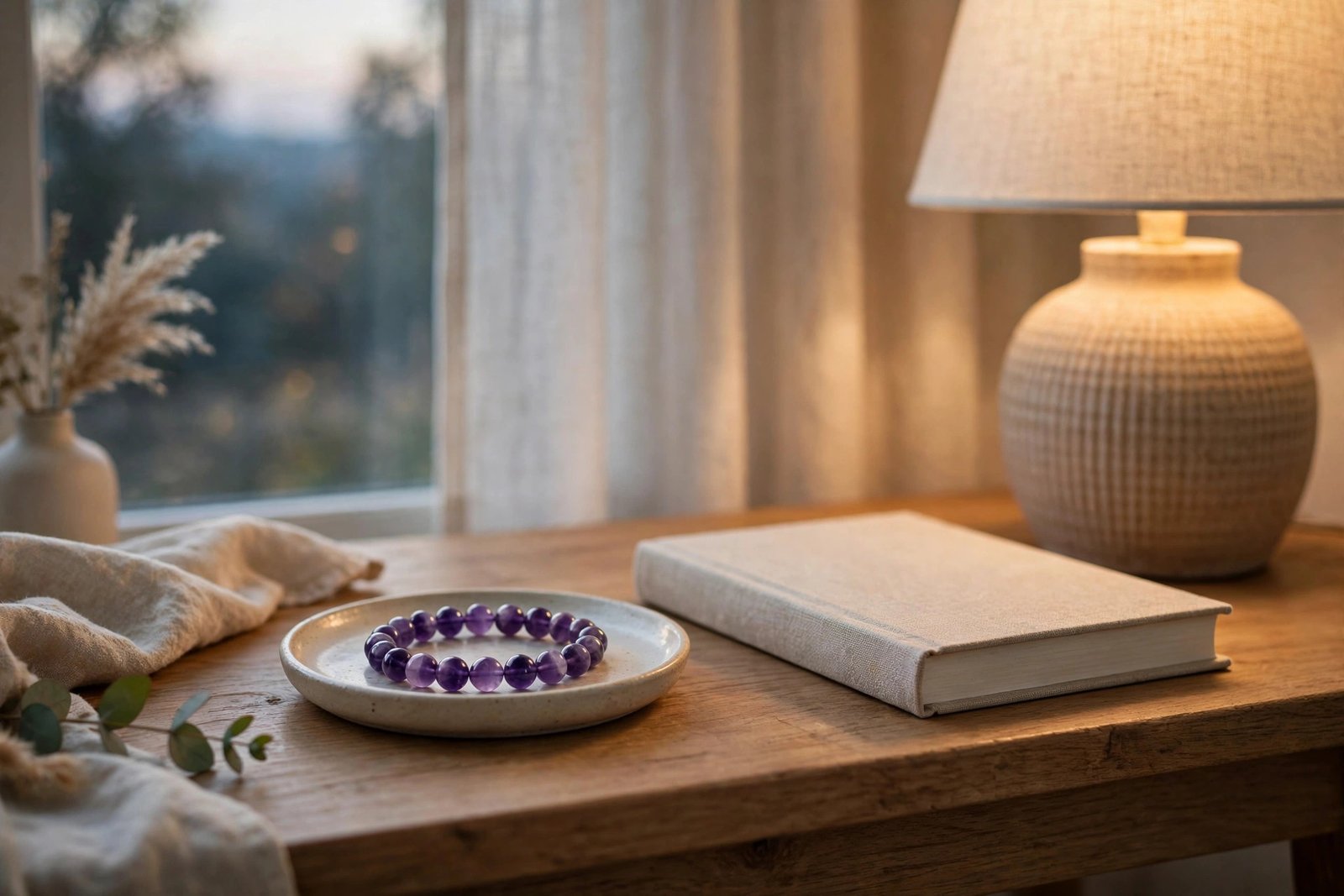
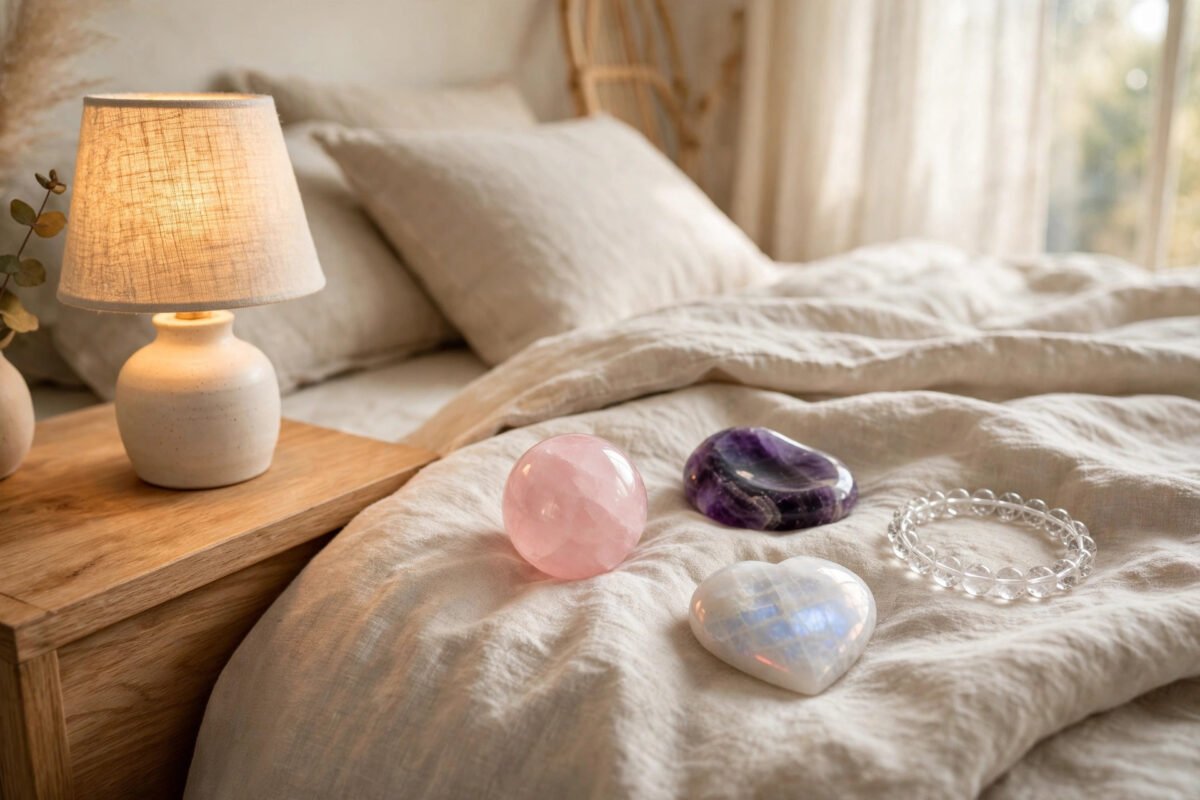
For many people the sweet spot is ritual without wear: the bracelet comes off last thing, rests on a small dish, selenite plate or in its pouch on the bedside table, and goes back on in the morning. You keep the sense of the stone nearby, the bracelet gets eight hours of genuine rest, and your skin gets a break too.
That nightly pause is also the perfect care moment. A five-second wipe removes the day’s oils before they build up; a glance at the elastic catches fraying early. Pair the habit with the evening wind-down in our grounding ritual guide and the bracelet becomes part of how you close the day — traditionally associated with steadier evenings — without paying for it in cord wear.
Travelling changes the equation slightly: in a hotel or a tent, keeping one bracelet on may feel safer than leaving it loose. If so, choose your smoothest piece, accept the extra wear, and give it a proper rinse and rest day when you are home. General jewellery guidance from the GIA likewise recommends removing jewellery for sleep to prevent exactly the abrasion and snagging described above.
Frequently Asked Questions
Is it bad luck or harmful to sleep in a crystal bracelet?
No tradition forbids it, and it harms nothing but the bracelet’s lifespan and possibly your comfort. The choice is practical: smooth, small, hard-stone bracelets cope best if you do.
Which crystals are traditionally chosen for sleep?
Amethyst, moonstone, lepidolite and rose quartz are traditionally associated with restful evenings. These are cultural associations, not medical claims — if sleep problems persist, a clinician is the right support.
Why does my bracelet feel tighter in the morning?
Hands and wrists commonly swell slightly overnight and in warm weather. A bracelet that feels fine at noon can feel snug at 7 a.m.; that is a sign to size up or sleep without it.
How do I clean a bracelet I sleep in often?
Wipe it each morning, wash it gently once a week with mild soap and water if the stone allows, and dry it fully before wearing. Check the elastic monthly, since overnight wear stretches it faster.





 English
 Vietnamese