Freeform crystals are polished stones that follow the natural contours of the rough material instead of being cut into a strict geometric shape. No two pieces are ever alike, and that individuality is exactly why collectors love them. If you have only seen spheres, towers, and pyramids, freeforms offer a softer, more organic alternative for your shelf, desk, or meditation space.
In this guide you will learn what makes a stone a freeform, which materials suit the shape best, how to display and care for your pieces, and how freeforms compare with other polished forms. Along the way, you will find ideas for pairing a statement freeform with an everyday piece from the AVENSU shop so your collection feels both personal and practical.
What Is a Freeform Crystal?
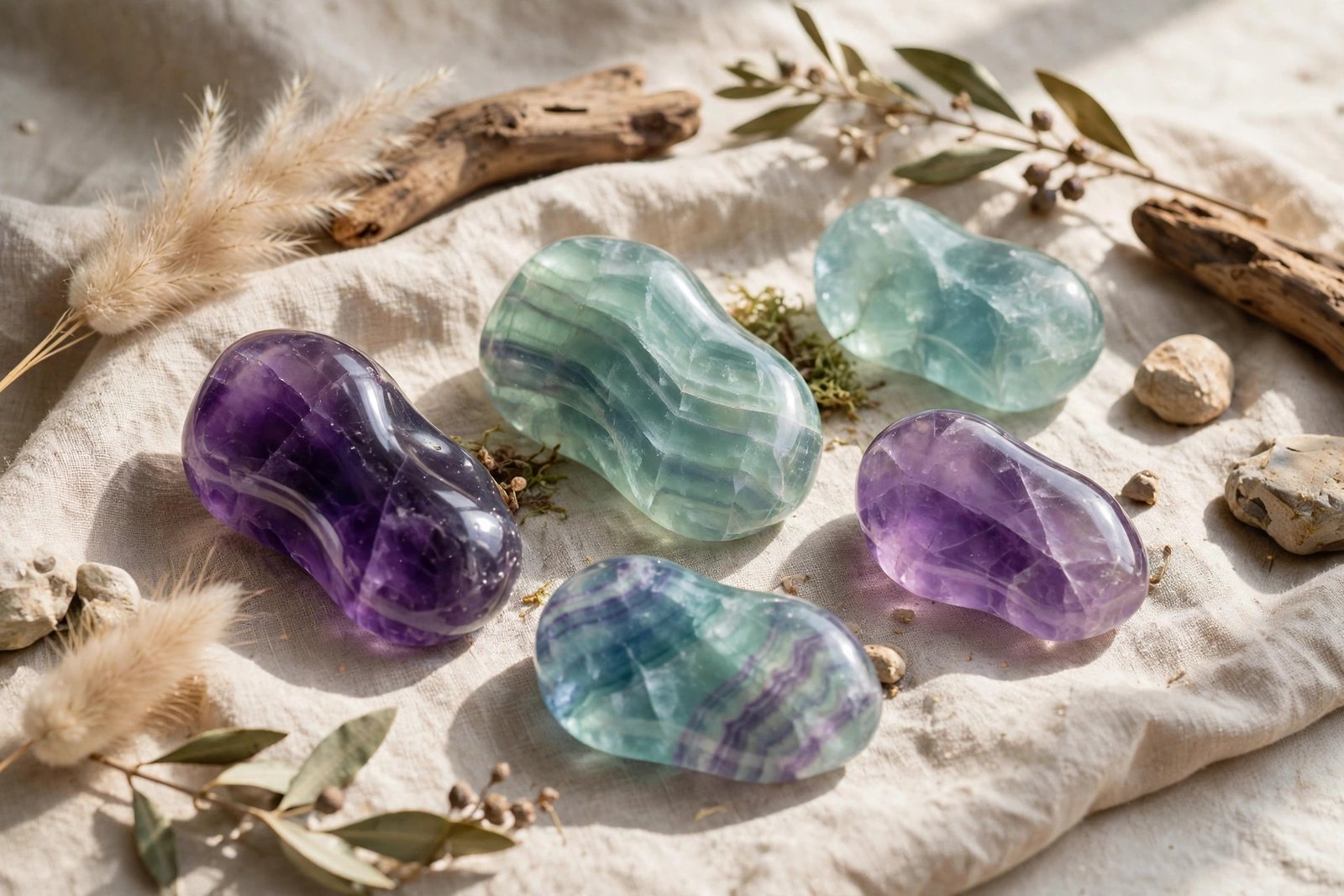
A freeform begins as a rough chunk of crystal. Instead of forcing it into a cube or point, the lapidary grinds and polishes it while preserving as much of its original outline as possible. The result is a smooth, flowing stone with rounded edges, gentle bulges, and sometimes flat polished faces that catch the light at unexpected angles. Many freeforms are polished on all sides, while others keep one flat base so they can stand upright for display.
Because the cutter works with the stone rather than against it, freeforms often retain interesting features that a stricter cut would remove: color zoning, rainbows, phantoms, and natural inclusions. Fluorite, for example, is famous for bands of purple, green, and clear crystal that look especially striking in a freeform, while amethyst freeforms can show deep violet tips fading into milky quartz. You can read more about that stone in our guide to amethyst meaning and properties.
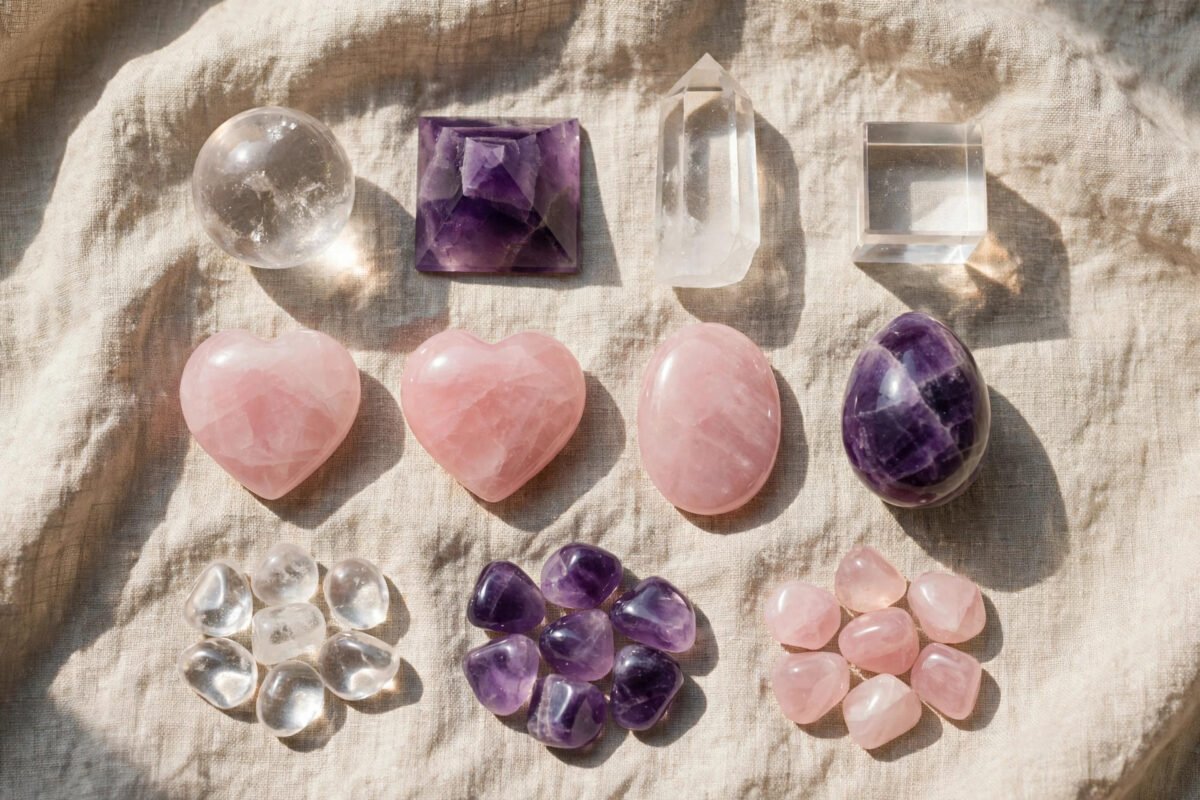
Freeforms sit in a middle ground between raw specimens and fully geometric carvings. They give you the smooth, touchable finish of a polished piece while keeping the wild character of the original rough. For many people, that balance makes them the most inviting stones to hold during quiet moments.
Popular Materials for Freeforms
Almost any crystal can be shaped as a freeform, but some materials show the form to its best advantage. Fluorite is a classic choice because its natural color banding flows beautifully through an irregular outline. Labradorite freeforms flash blue and gold as you turn them, and the uneven surfaces make the play of light feel alive. Ocean jasper, polychrome jasper, and moss agate are also popular because their swirling patterns suit organic shapes.
Softer, translucent stones such as rose quartz and blue chalcedony look gentle and luminous as freeforms, especially near a window. If you love rose quartz, our article on rose quartz meaning and the love stone tradition explores why it remains a favorite for gifts. Harder, glassy materials like clear quartz and smoky quartz polish to a high shine and show off internal rainbows well.
When choosing a material, think about Mohs hardness and daily use. Fluorite rates around 4 on the Mohs scale, so it needs gentler handling than quartz at 7. The Mohs scale of mineral hardness is a helpful reference before you buy any polished stone you plan to handle often.
How to Choose and Display a Freeform
Start with your hands. A good freeform should feel comfortable and balanced, with no sharp edges. Turn it slowly in natural light and look for the features that draw you in: a band of color, a small rainbow, or a face that glows when backlit. Because every piece is one of a kind, trust your eye more than a product photo template — reputable sellers photograph the exact piece you will receive.
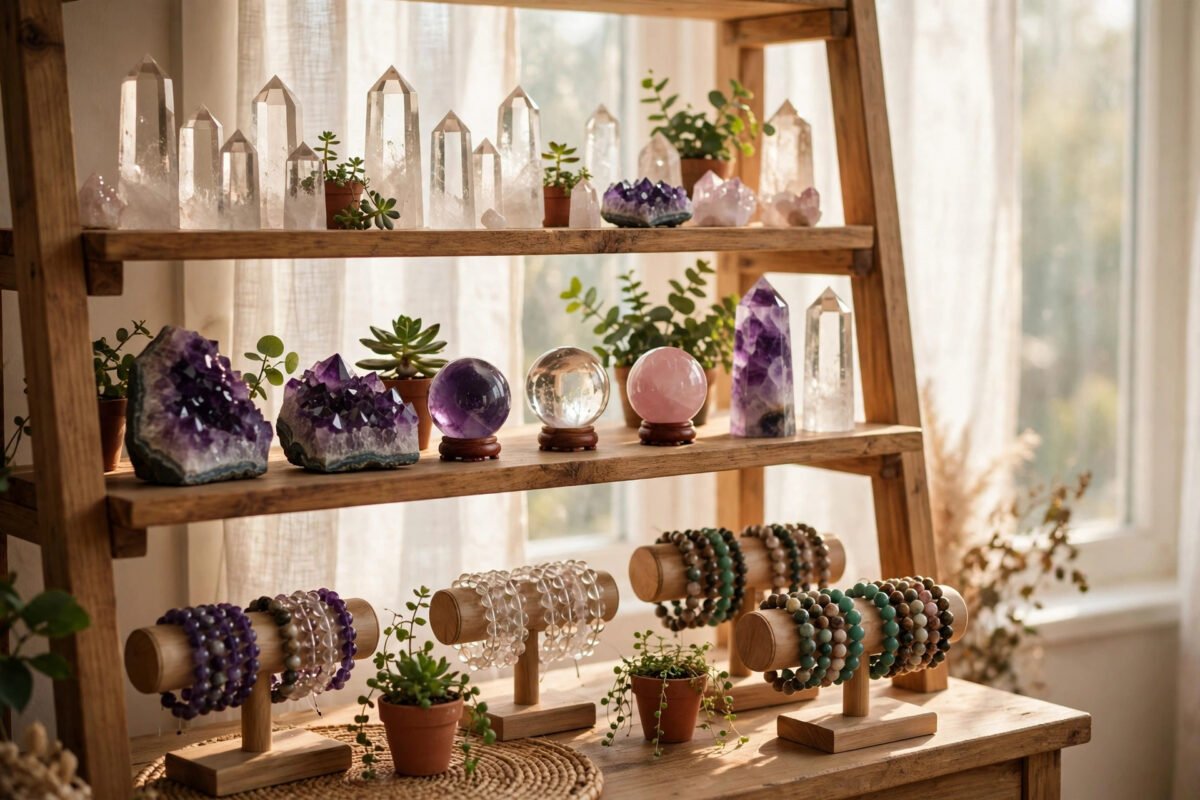
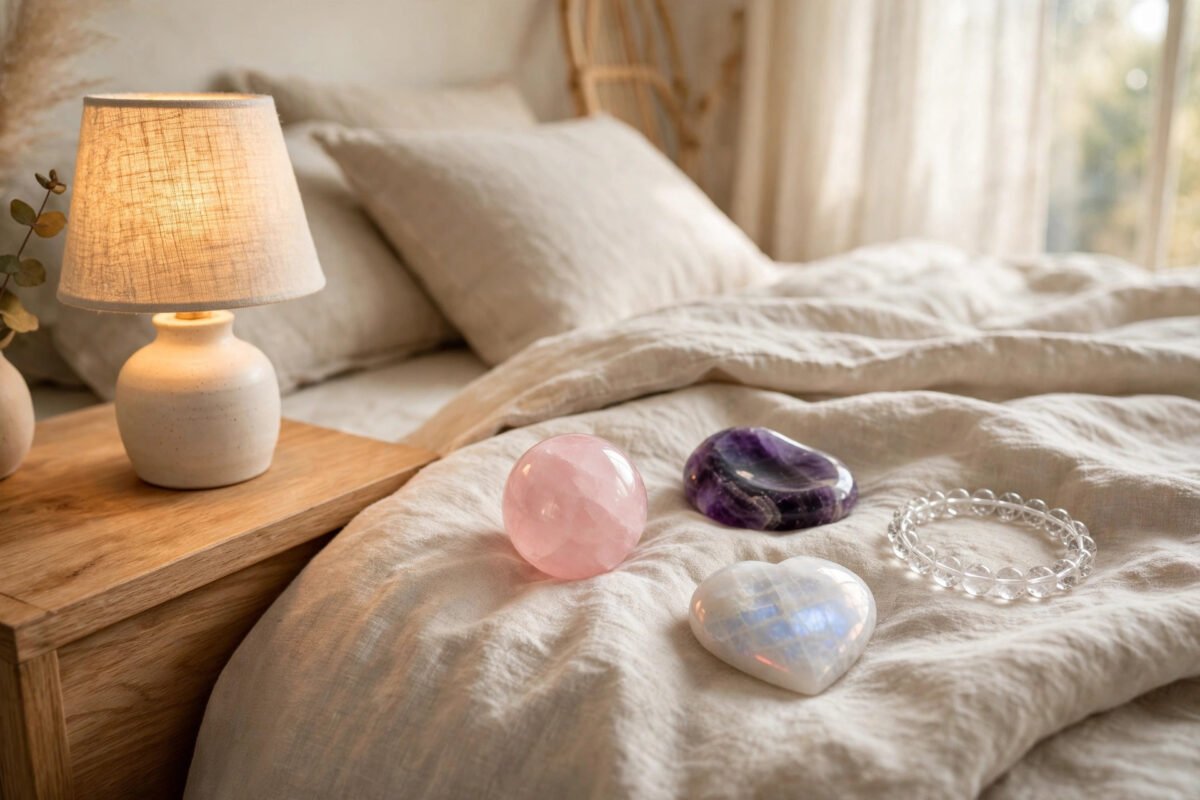
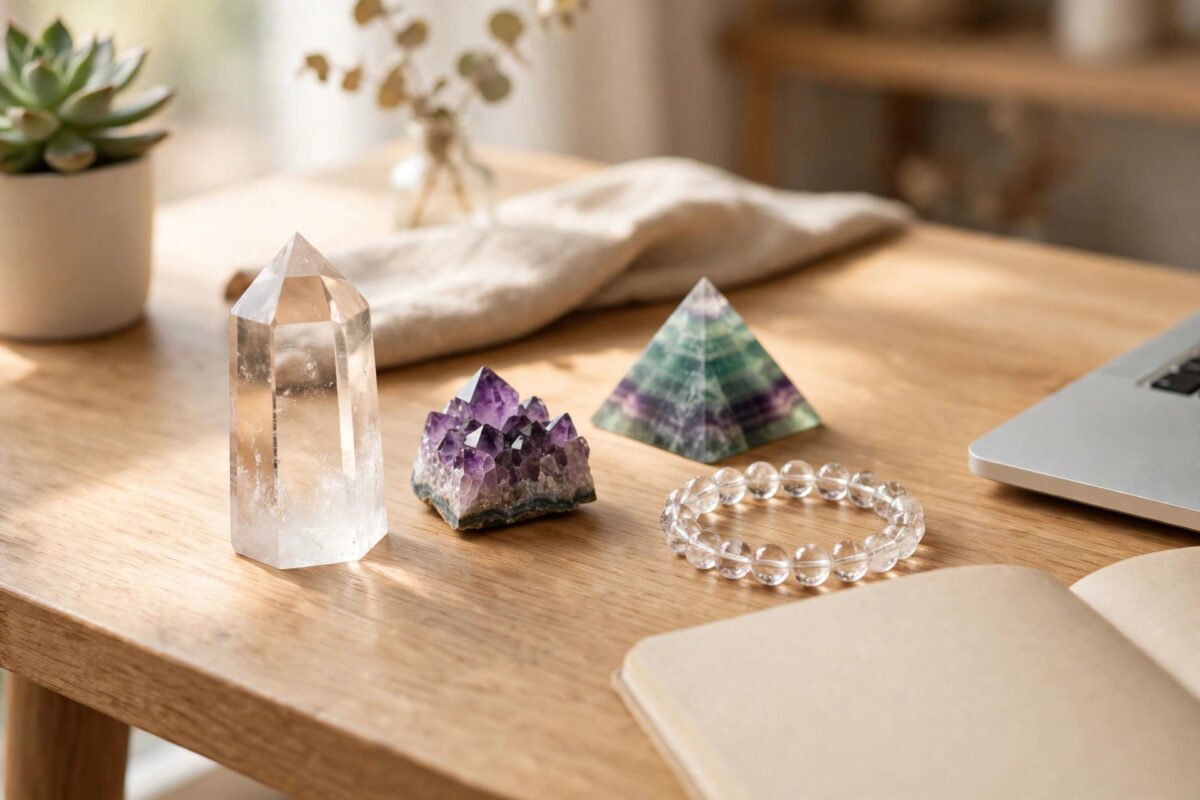
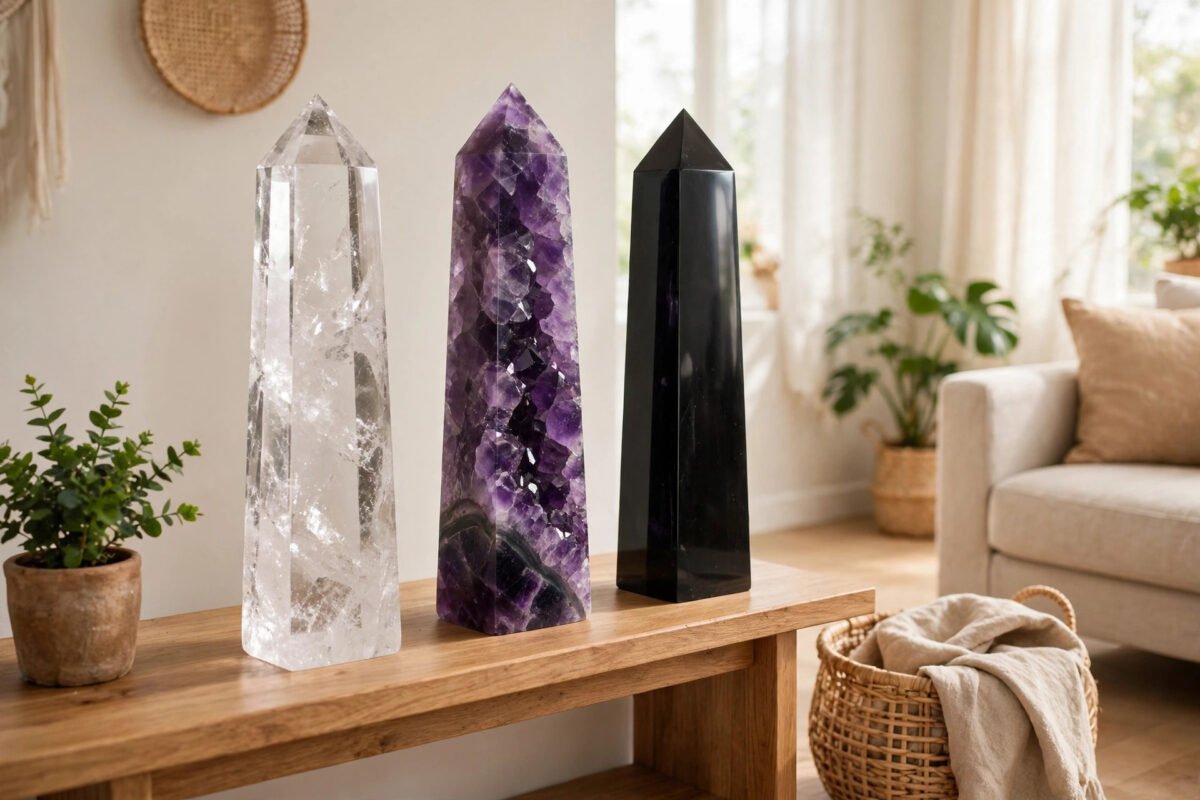
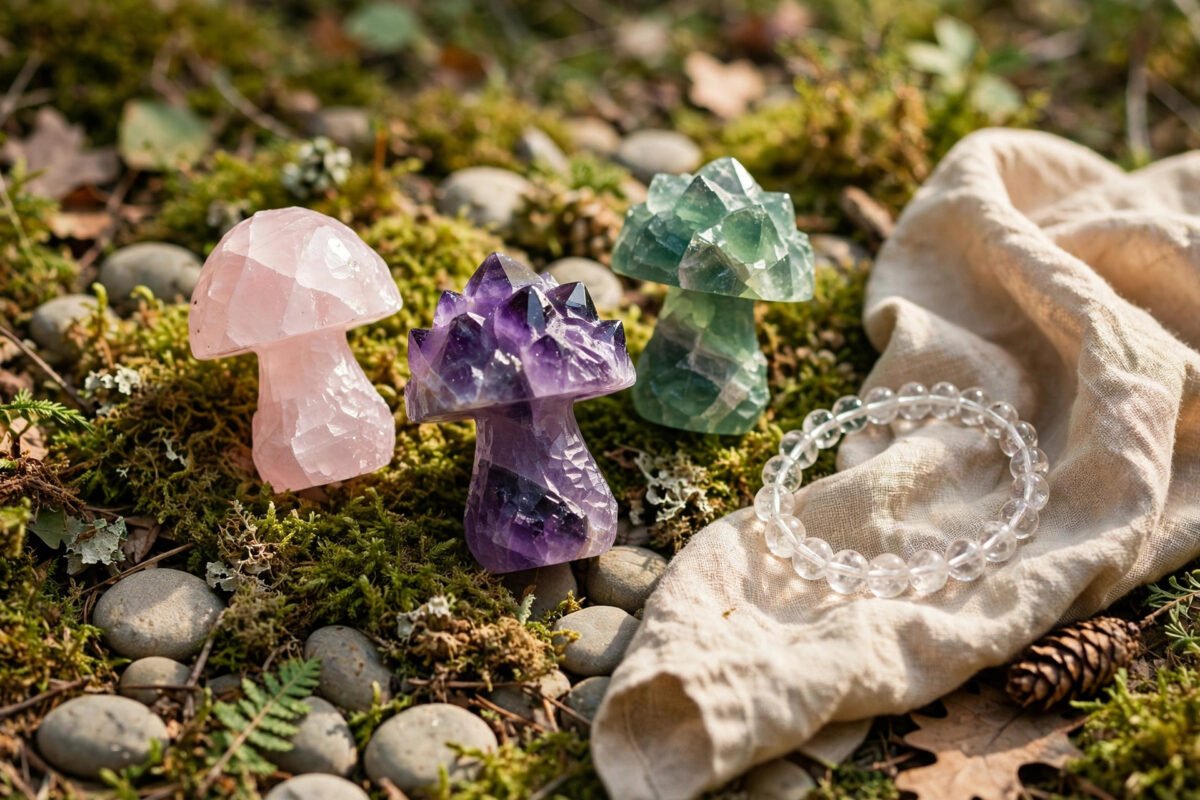
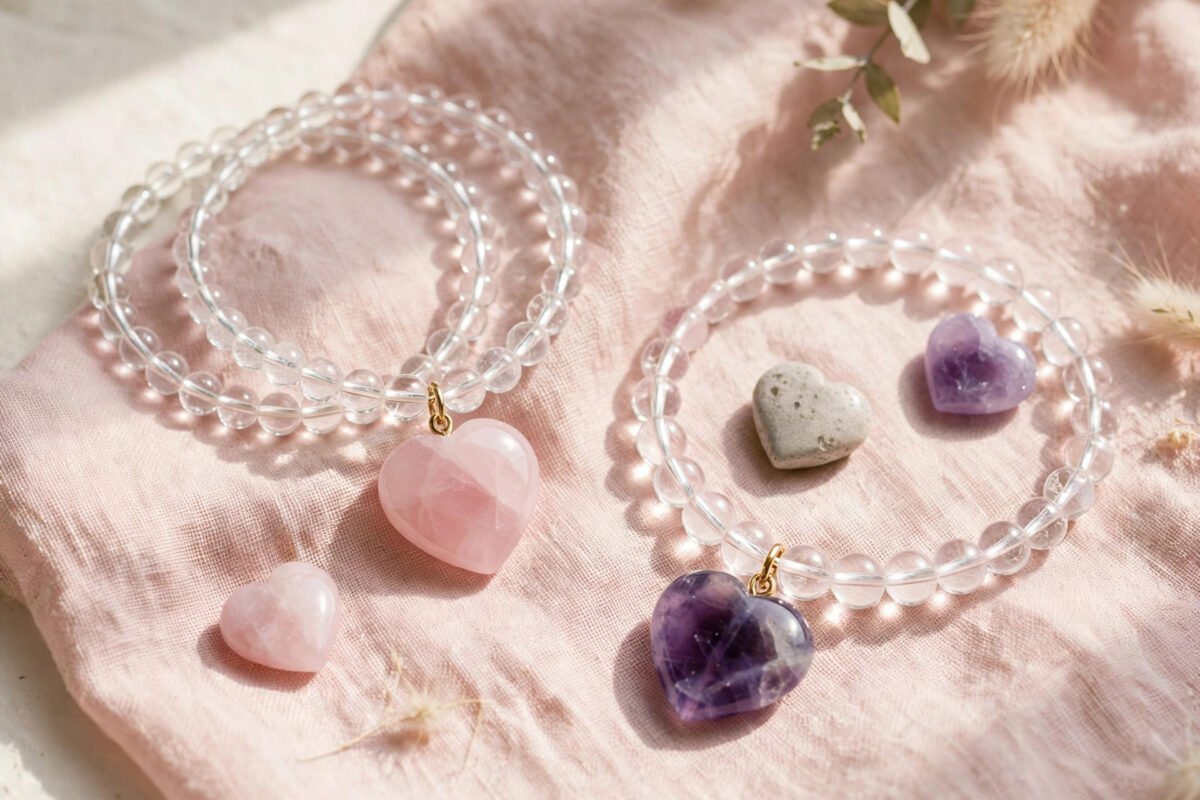
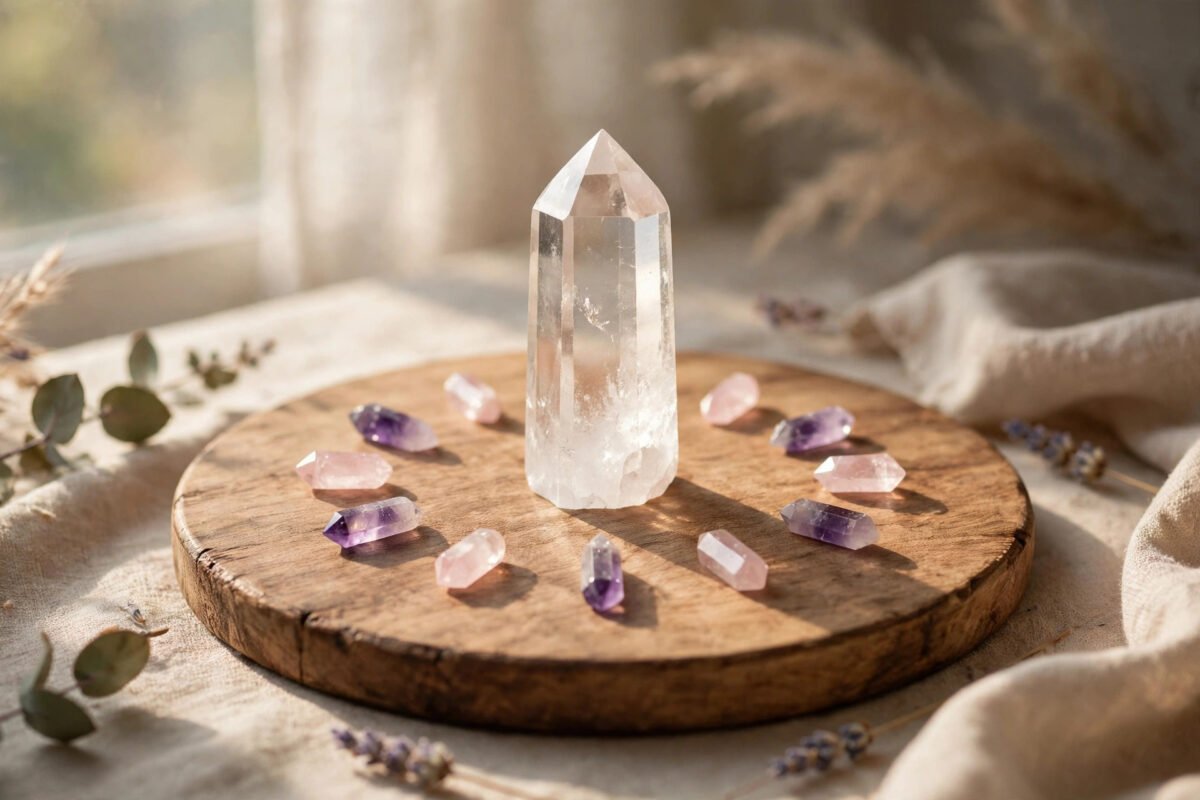
For display, group freeforms in odd numbers on a wooden tray, a ceramic dish, or a linen cloth. Mixing heights and colors creates a small landscape effect. Keep softer stones like fluorite and selenite out of harsh, direct sun for long periods, since some crystals can fade. Pairing a large freeform with a wearable piece is also rewarding: an AVENSU crystal bracelet in a matching stone keeps the same color story with you through the day, while the freeform anchors your space at home. Browse the AVENSU shop to compare bracelet stones with the freeform materials you love.
Storage matters too. Freeforms have no protective setting, so keep harder and softer stones separated to avoid scratches. Our guide on how to store crystal bracelets shares soft-pouch and compartment ideas that work just as well for loose polished stones.
Caring for Freeform Crystals
Most freeforms need only lukewarm water, a soft cloth, and gentle drying. Avoid ultrasonic cleaners for stones with fractures or inclusions, and keep chemicals away from softer materials. For a deeper traditional refresh, many collectors follow a cleansing routine; our article on how to cleanse crystals with salt water explains which stones tolerate salt and which should never be soaked.
In crystal tradition, freeforms are often associated with creativity and going with the flow, precisely because their shape refuses rigid rules. Practitioners traditionally associate fluorite freeforms with focus and clear thinking, while rose quartz freeforms are believed to encourage a calm, affectionate atmosphere. Treat these associations as folklore and personal symbolism rather than promises, and enjoy the stone first for its beauty.
If you are building a larger care routine, the complete crystal bracelet care routine covers cleaning, charging traditions, and storage in one place, and most of its advice applies to freeforms as well.
Frequently Asked Questions
Are freeform crystals natural or man-made?
The stone itself is natural; only the shaping and polishing are done by hand. A freeform is cut from real rough crystal, so inclusions, color zoning, and small surface variations are normal and often prized.
Why do freeforms cost more than tumbled stones?
Freeforms are usually larger, individually shaped, and polished piece by piece rather than tumbled in bulk. The labor, plus the fact that each piece is unique, explains the higher price compared with small tumbles.
What size freeform should I buy first?
A palm-sized piece around 200 to 400 grams is a versatile start: large enough to display, small enough to hold comfortably. After that, let color and pattern guide you.
Can I pair a freeform with a crystal bracelet?
Yes. Many collectors match a display freeform with an AVENSU bracelet in the same or a complementary stone, so the theme of the piece carries from home into daily wear.



 English
 Vietnamese