The same rose quartz beads feel completely different on the wrist, the ankle and the neck. Placement changes everything about a piece of crystal jewellery: how it moves, how often you notice it, how long it lasts, and even what it traditionally means. Choosing between a bracelet, an anklet and a necklace is therefore less about which is prettiest and more about which fits your body, your wardrobe and your daily routine.
This guide compares the three forms honestly — comfort, durability, styling and traditional associations — so you can pick the right home for your favourite stones.
The Bracelet: Visible, Tactile and Everyday
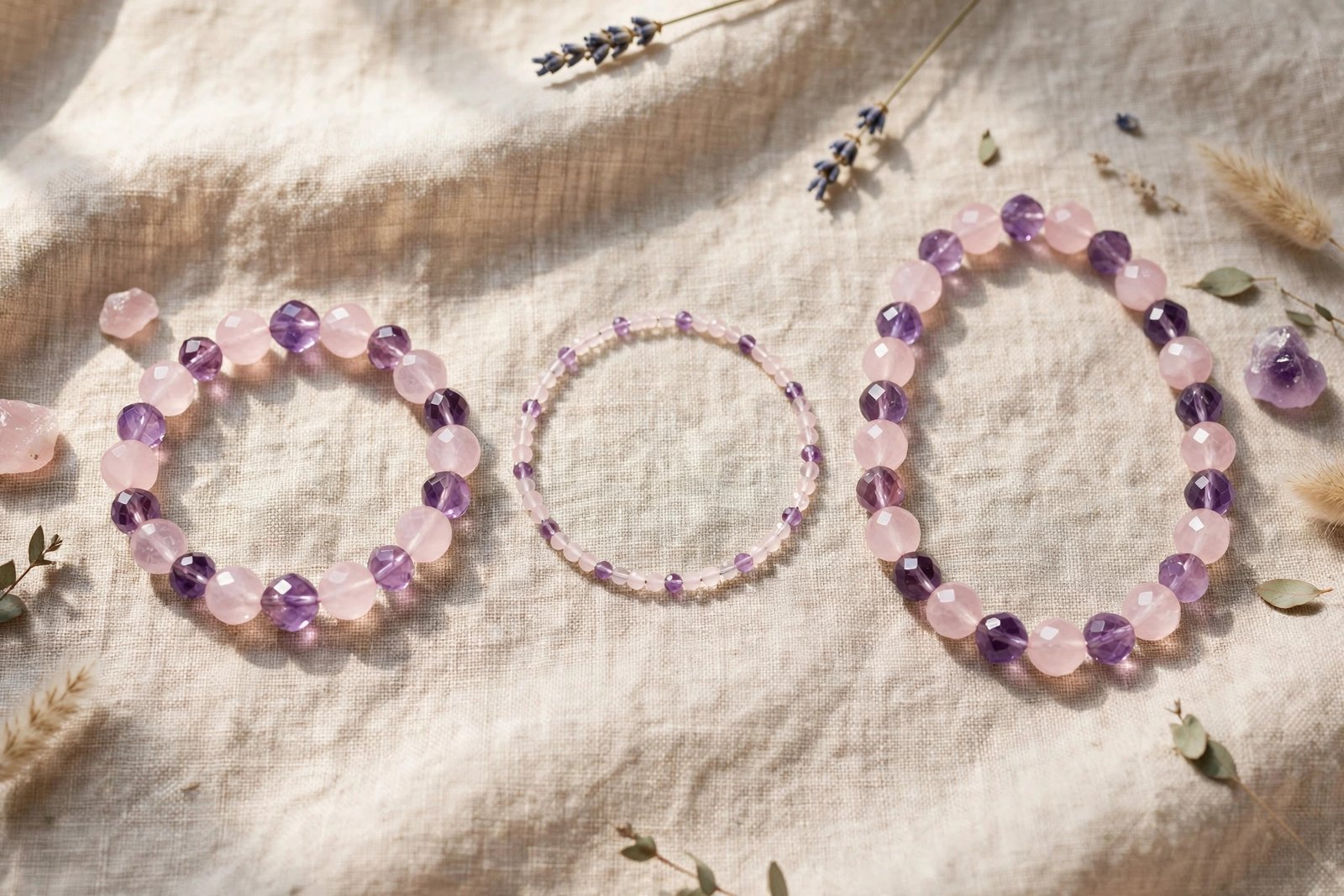
The bracelet is the most popular crystal form for good reason. It sits in your line of sight all day, so every glance at your hands becomes a small reminder of the intention you set in the morning. It is easy to put on, easy to remove for washing or sport, and it layers well with watches and other bracelets. Fit is measurable and forgiving: our crystal bracelet sizing guide shows how to measure your wrist and choose bead sizes using the bracelet bead size guide.
In tradition, the wrist is considered a sensitive pulse point, and bracelets are believed to keep a stone’s influence in constant gentle contact with the wearer. An AVENSU crystal bracelet on elastic is the form most customers start with, including the grounding crystal bracelet, because it asks nothing of the wearer beyond putting it on.
The trade-off is exposure. Bracelets knock against desks, laptops and door handles, so softer stones chip faster on the wrist, and elastic eventually stretches. Both issues are manageable with the habits in our complete crystal bracelet care routine, but they are real: the wrist is the hardest-working placement of the three.
The Anklet: Subtle, Playful and Seasonal
An anklet is the quietest form. Tucked at the ankle, it appears in flashes as you walk, pairs naturally with sandals, cropped trousers and summer dresses, and carries a light, playful mood that wrist jewellery rarely matches. Because ankle skin is less sensitive and the area moves less against hard surfaces in most office routines, a delicate anklet can feel surprisingly comfortable all day.
Fit needs more care than a bracelet. An anklet should drape slightly — roughly a finger’s ease beyond the ankle bone — so it moves without sliding under the heel or catching on shoe edges. Construction matters even more: anklets endure constant flexing and occasional snags from footwear, so strong cord or chain and a secure clasp outlast fine elastic here. Stones should be small and smooth; large beads feel clumsy at the ankle and knock against the ankle bone.
Traditionally, anklets have a long history across South and Southeast Asian and Middle Eastern dress, where ankle jewellery has signified everything from celebration to marital status; the Wikipedia page on anklets traces that history. In modern crystal practice, anklets are associated with grounding through the feet and with freedom and travel. They sit closest to the earth of the three forms, which is why grounding stones such as hematite and smoky quartz — discussed in our root chakra crystals guide — are popular anklet choices.
The Necklace: Close to the Heart, Kind to Stones
A necklace keeps crystal nearest the heart and throat, which is why tradition links necklaces with emotional and expressive themes: rose quartz pendants for love, as explored in our rose quartz meaning guide, and blue stones at the throat for communication. Visually, a necklace is the most deliberate form — it frames the face, finishes an outfit, and can be chosen by length to sit above a neckline, at the collarbone or lower as a pendant drop.
Necklaces are also the kindest placement for delicate stones. A pendant or beaded strand on the chest rarely strikes hard surfaces, so softer or faceted stones that would suffer on the wrist thrive here. The handling is a little more involved: clasps, chain care and length choices replace the bracelet’s simple stretch-on ease, and beaded necklaces should be stored flat or hung to protect their cord, following the principles in our guide on how to store crystal bracelets.
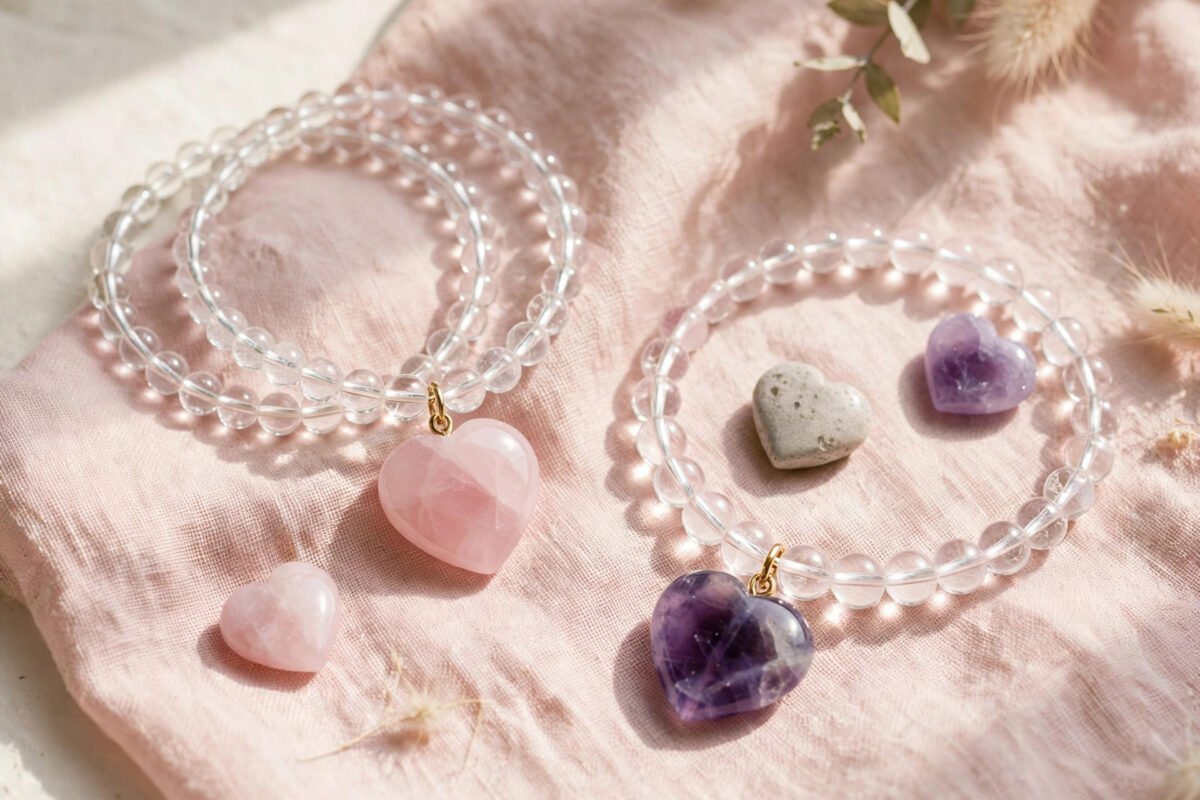
Heart-shaped pendants deserve a special mention, since the necklace is where the heart form shines brightest; our guide to heart-shaped crystal jewellery compares heart pendants, charms and bracelets in detail.
Choosing Your Form: A Practical Comparison
Decide by routine first. If your hands are in water, soil, dough or machinery all day, choose a necklace and keep your wrists bare. If you want a constant visual reminder during desk work, choose the bracelet. If your style is seasonal and relaxed, or you want crystal present but barely noticeable, choose the anklet. Many people rotate: bracelet for workdays, necklace for evenings, anklet for holidays.
Decide by stone second. Hard quartz-family stones — clear quartz, amethyst, citrine, rose quartz — handle any placement. Softer or heavily included stones belong on a necklace or in small, protected anklet beads. Finally, decide by meaning: grounding themes suit ankle and wrist, heart themes suit the chest, and all-round everyday intention suits the bracelet, which is why AVENSU focuses its core range there. Browse all three approaches in the AVENSU shop and notice which placement you imagine wearing tomorrow morning — that instinct is usually right.
Frequently Asked Questions
Which form is best for a first crystal jewellery piece?
A bracelet, for most people. It is the easiest to fit, the easiest to remove, and the most visible as a daily reminder. If your work keeps your hands busy in water or with tools, start with a short necklace instead.
Can I wear a bracelet as an anklet?
Sometimes. A stretch bracelet worn at the ankle must be large enough to pass over the heel and loose enough to drape without slipping down, which usually means sizing up one or two sizes from your wrist. Purpose-made anklets with stronger cord and a clasp last longer in that position.
Do different placements change a crystal’s traditional meaning?
Tradition does associate placements with themes: the ankle with grounding, the wrist with everyday action and intention, and the chest with love and expression. The stone’s own traditional associations stay the same; placement tunes the emphasis rather than changing the stone.
Which form lasts longest?
A necklace usually lasts longest because it avoids knocks and abrasion, followed by a well-made anklet on strong cord. Bracelets work hardest and need the most maintenance — an occasional restring keeps a loved bracelet going for years.



 English
 Vietnamese