Every creative person knows the feeling: the blank page, the empty canvas, the project that will not quite start. In moments like that, many people reach for a small ritual to shift their mindset — and lucky crystals have become a popular part of that ritual. They are not magic shortcuts, but objects traditionally associated with confidence, openness, and fresh thinking.
Wearing a stone on your wrist works, for many people, as a reminder. When you glance at it, you remember the intention you set: to stay curious, to risk a first draft, to keep going. That simple prompt can be surprisingly powerful, whether you write, paint, design, build a business, or solve problems at work.
This guide explores the crystals most often linked to creativity in tradition, how to choose one that fits your work, and easy ways to build them into a daily creative routine.
Citrine, Carnelian, and Amethyst: The Classic Creative Trio
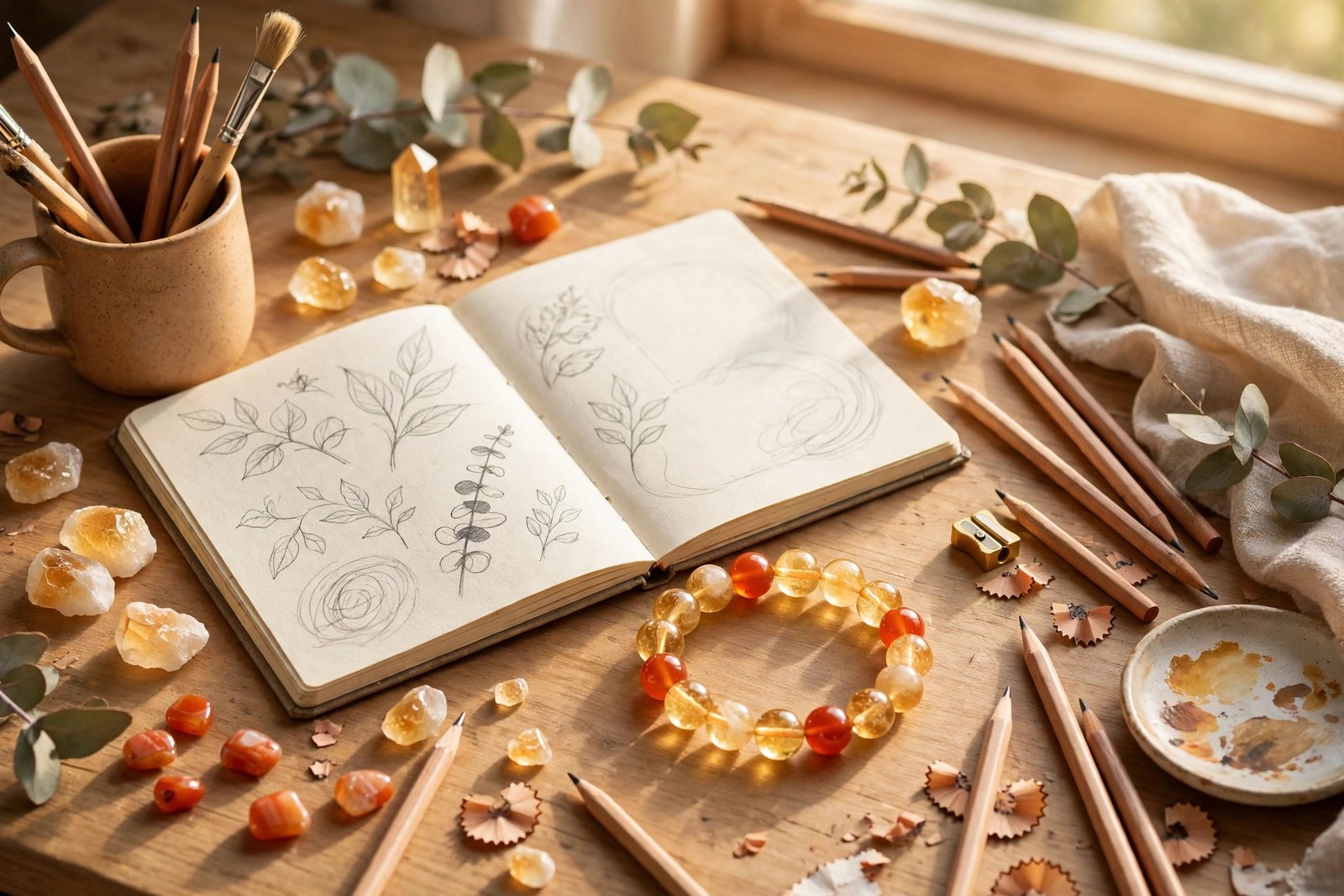
Citrine is traditionally associated with optimism, abundance, and mental clarity. Its sunny yellow colour is often linked in crystal tradition to the solar plexus and to self-belief — the confidence to share an idea before it feels perfect. Many makers keep citrine on a desk as a bright visual cue to begin.
Carnelian, a warm orange-red stone, is believed to support motivation and courage. In folklore it was worn by speakers and performers who wanted to find their voice. If your block is not a lack of ideas but a lack of momentum, carnelian is often the stone people choose first. An AVENSU carnelian bracelet, worn while you work, can serve as a tactile reminder to take the next small step.
Amethyst is traditionally associated with calm focus and intuition. Writers and musicians have long kept it nearby, believing it helps quiet self-criticism so ideas can surface. You can read more in our guide to amethyst meaning and properties. Used together, citrine for confidence, carnelian for drive, and amethyst for calm can cover the three moods most creative work moves through.
Choosing a Stone for Your Kind of Work
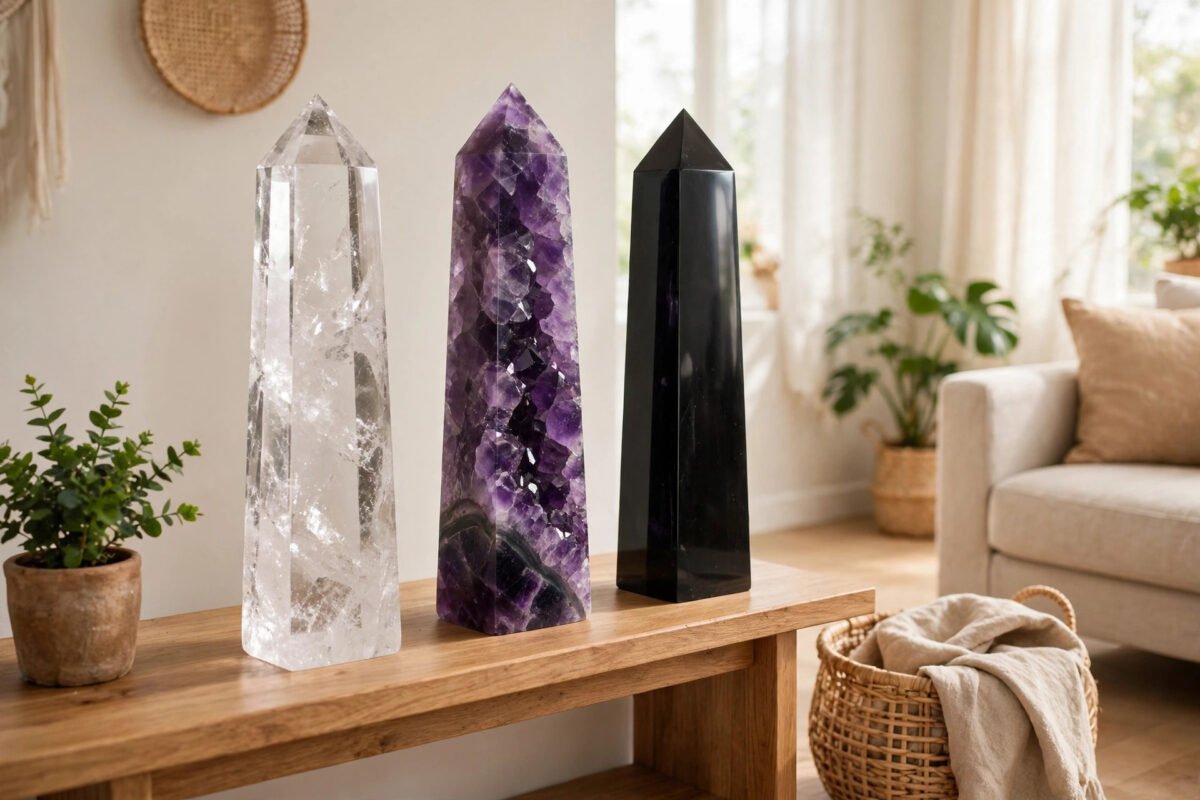
Different creative tasks ask for different energy. For brainstorming and generating lots of options, many people prefer bright, warm stones like citrine and sunstone, traditionally linked to playfulness. For editing, refining, and finishing, cooler stones such as fluorite and clear quartz are believed to support concentration and clear thinking. Our article on clear quartz, the master healer in tradition explains why it is so often paired with other stones.
If your work is collaborative — theatre, design teams, music — you might also enjoy our guide to lucky crystals for friendship and social luck, because good ideas often grow in conversation. And if a project marks a fresh chapter, see lucky crystals for new beginnings for stones traditionally associated with starting over.
Trust your eye, too. Tradition matters, but the stone you keep picking up is usually the one you will actually use. Hold it, wear it for a week, and notice whether reaching for it helps you settle into work.
Simple Ways to Use Crystals in a Creative Routine
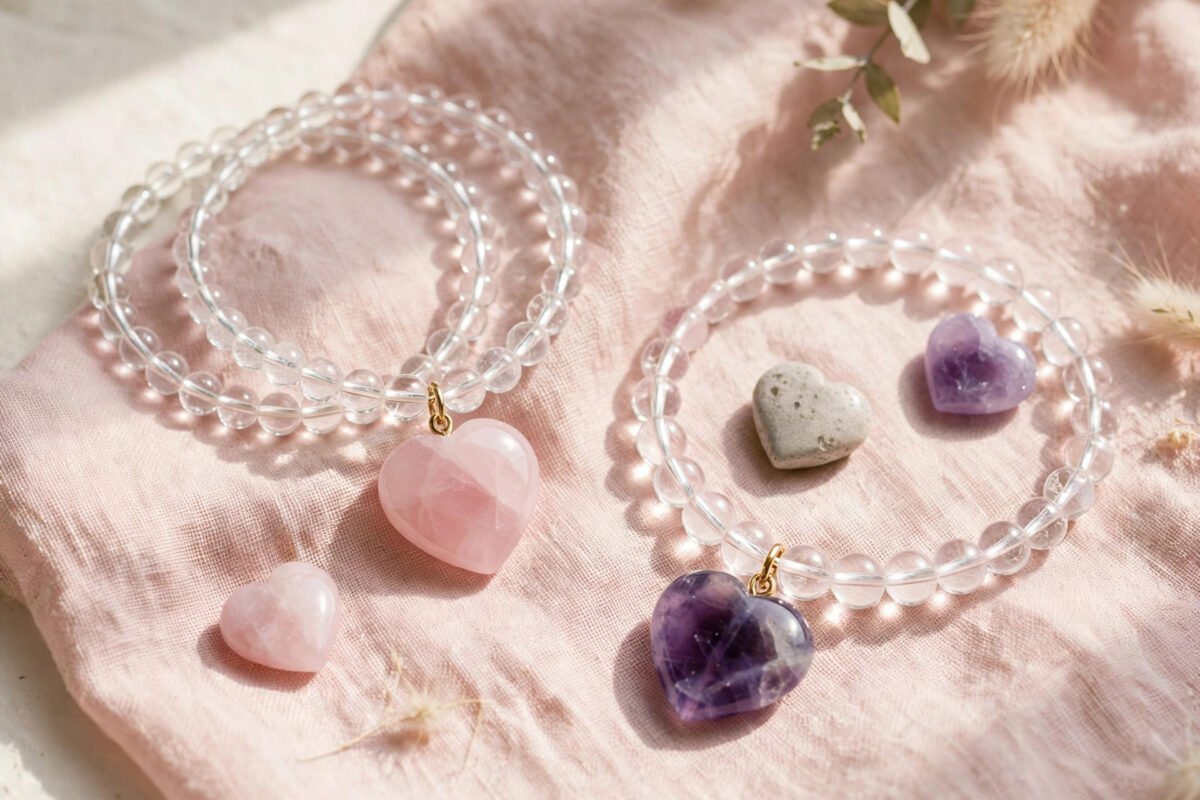
Start with a morning intention. Before you open a laptop or notebook, hold your bracelet, name one creative goal for the day, and put the bracelet on. This echoes the practice in our morning crystal ritual for mindfulness, adapted for makers. It takes less than a minute, but it marks the difference between drifting into work and choosing it.
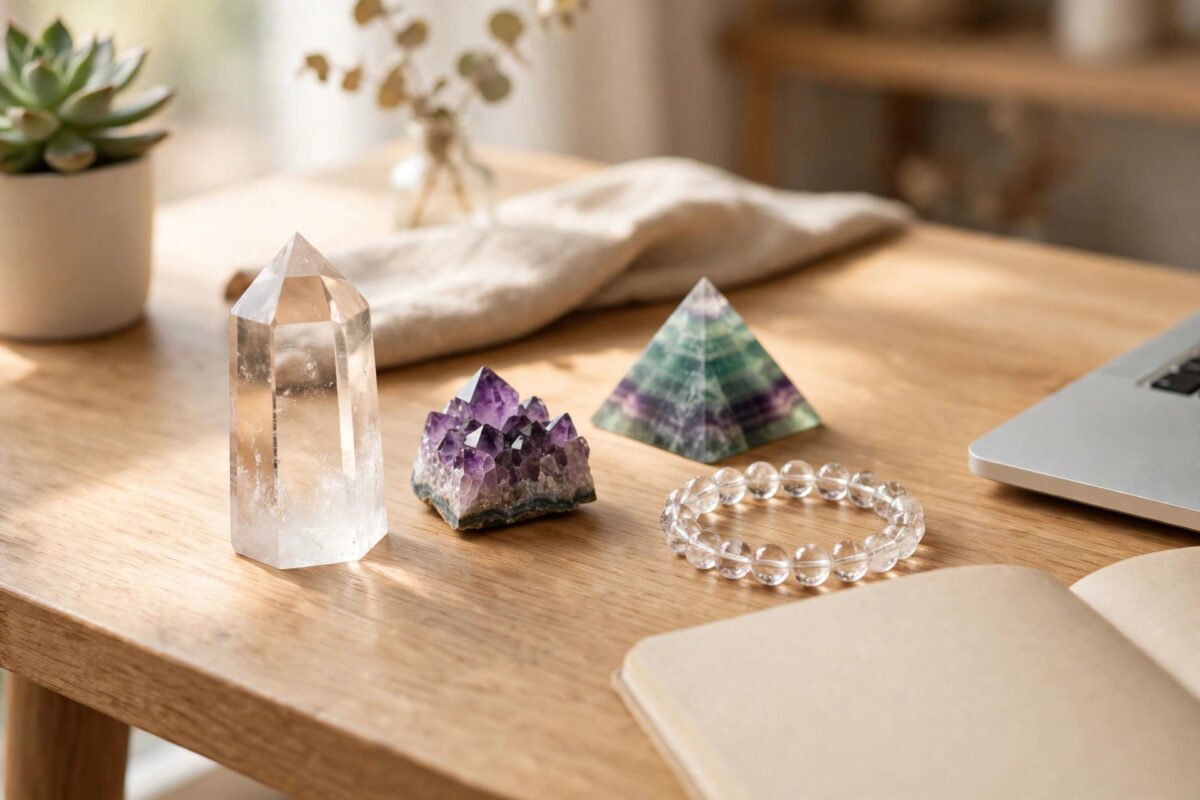
Keep a desk stone within sight. A small tumble stone beside your keyboard or paints acts as an anchor when attention wanders. Our desk ritual for focus crystals offers a simple layout you can copy. When you feel stuck, pick the stone up, stand, stretch, and return — the break itself often loosens an idea.
End the day by noting one thing you made, however rough. Place your bracelet beside your notebook overnight. Many people wear an AVENSU citrine bracelet this way, not because the stone does the work, but because the routine closes the day with evidence of progress. Over weeks, that record builds creative confidence more reliably than waiting for inspiration to strike.
For background on how quartz family stones form, the Gemological Institute of America offers clear, factual resources, and Wikipedia’s overview of quartz covers its history and varieties.
What to Do When You Still Feel Blocked
Blocks are normal, and no crystal — however beautiful — replaces rest, skill-building, or feedback. Traditionally, people who work with crystals treat a block as a signal to change state: change location, change medium, or work smaller. Draw the idea badly on purpose. Write the middle before the beginning. Set a timer for fifteen minutes and stop when it rings.
You can also rotate stones. Swap a calm amethyst for an energising carnelian for a week, or add a stone linked in tradition to new starts. Browse the collection at AVENSU shop if you want a second piece for rotation, and notice which colours you return to when work feels hard.
Above all, keep the framing honest and kind. These stones are prompts, companions, and reminders of an intention you chose. The creativity itself remains yours — which is good news, because it means a block is temporary, not a verdict on your talent.
Frequently Asked Questions
Which lucky crystal is best for creativity?
There is no single best stone, but citrine, carnelian, and amethyst are the three most traditionally associated with creativity. Citrine is linked to confidence and optimism, carnelian to motivation and voice, and amethyst to calm intuition. Choose the one that matches the part of the process you find hardest.
How do I use a crystal bracelet while I work?
Put it on with a specific intention, keep it in sight during focused sessions, and use touching or glancing at it as a cue to return to the task. Many people pair this with timed work sessions and a short note at the end of the day about what they created.
Can crystals guarantee creative success?
No. In tradition they are believed to support a mindset, but they do not guarantee outcomes and are not a substitute for practice, rest, or learning your craft. Think of them as reminders that help you show up consistently.
Should I cleanse my creative crystals?
Many people like to rinse, rest, or place their stones in moonlight as a symbolic reset, especially after a frustrating project. It is a personal ritual rather than a requirement. Handle delicate stones gently and avoid harsh chemicals on jewellery.



 English
 Vietnamese