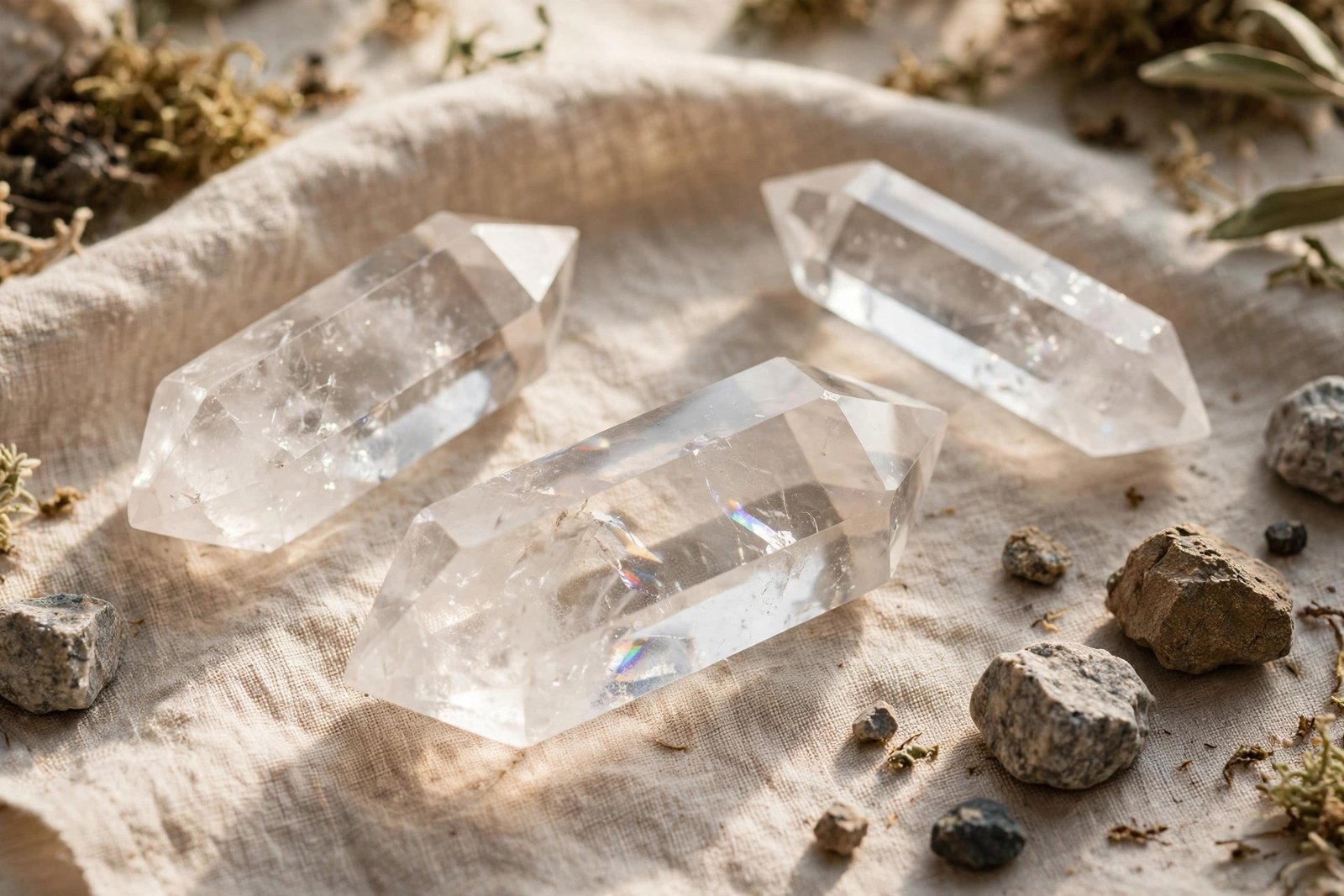
Most crystal points grow attached to a rock matrix, so they form a tip at only one end. A double-terminated point is different: it has a well-formed point at both ends, because it grew freely in soft clay or a pocket rather than anchored to a host rock. That rare, complete shape has fascinated collectors for centuries and carries a rich layer of folklore.
In this guide you will learn how double-terminated crystals form, meet famous varieties such as Herkimer diamonds, explore what the shape means in crystal tradition, and get practical advice on display and care. If the theme inspires you, the AVENSU shop offers wearable quartz pieces that carry a similar sense of clarity into everyday life.
How Double-Terminated Crystals Form
A crystal grows by adding material layer by layer. When a quartz crystal is attached to matrix, only the free end can develop a termination. In special environments — pockets of soft clay, for example — a young crystal can detach early and keep growing in all directions, forming points at both ends. The result is a complete, self-contained crystal that never needed to be broken away from a cluster.
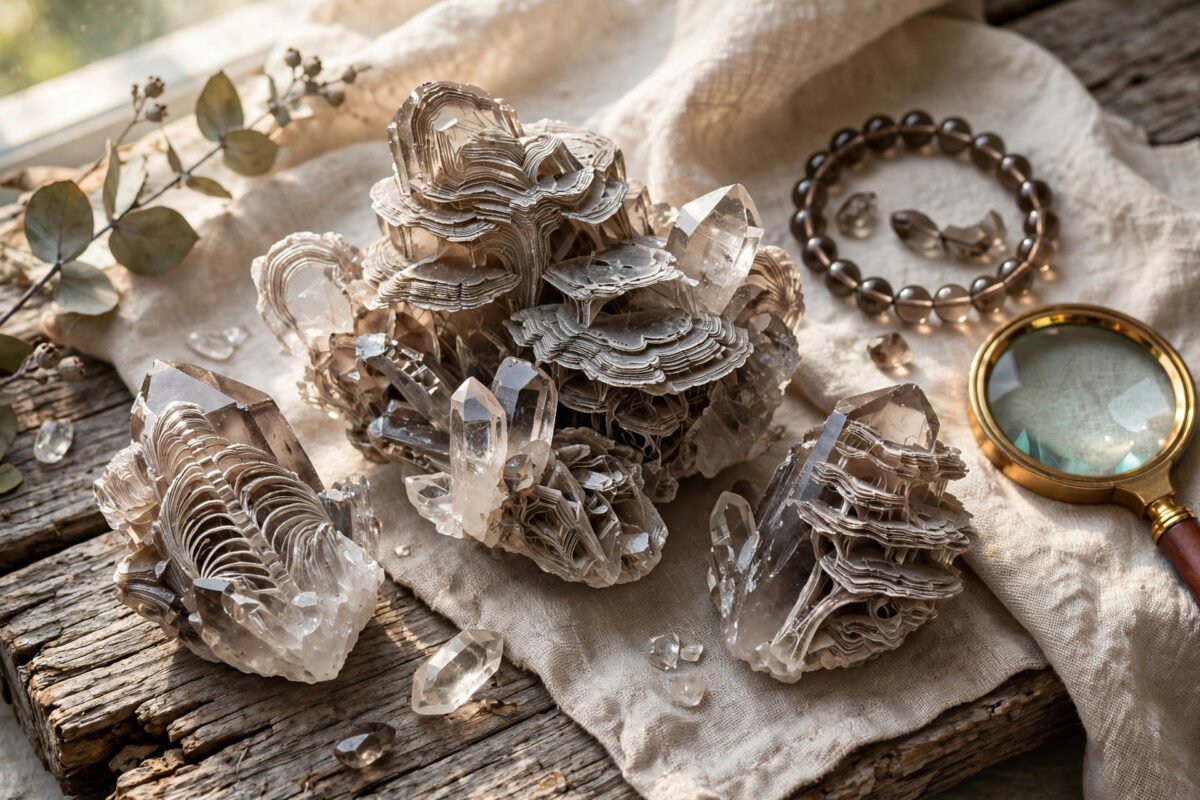
Because they grew freely, double-terminated crystals often show excellent clarity and distinctive features such as skeletal growth, fluid inclusions, or tiny secondary crystals on their faces. Geologists value them as clues to the conditions in the pocket where they formed. For an accessible introduction to how quartz grows, the quartz entry on Mindat is an excellent starting point.
Not every stone sold as double-terminated is natural. Some single points are cut and polished to create a second tip. Natural pieces usually show growth marks, slightly uneven faces, and inclusions, while cut pieces look perfectly symmetrical with a polished, glassy finish. Knowing the difference protects your wallet and your collection.
Famous Varieties to Know
The most famous double-terminated quartz is the Herkimer diamond, found in Herkimer County, New York. Despite the name, it is quartz, not diamond, but its exceptional clarity and naturally faceted appearance earned it the nickname. Herkimers are typically small, water-clear, and brilliant enough to be set in jewelry with minimal cutting.
Tibetan quartz from high-altitude mines in the Himalayas is often double-terminated and frequently carries black inclusions, traditionally associated in folklore with protection. Jacaré and skeletal varieties from Brazil show layered, alligator-like growth. Smoky quartz, amethyst, and citrine can also occur as double-terminated points, though they are less common than clear quartz. Our amethyst meaning and properties guide covers the purple variety in depth.
When shopping, ask whether a piece is natural or shaped, check both tips for chips, and look at the crystal against light to appreciate its inclusions — in double-terminated pieces, character is a feature, not a flaw.
The Shape in Folklore and Tradition
In crystal tradition, a double-terminated point is believed to move energy in both directions at once, receiving and releasing in a continuous flow. Practitioners traditionally associate the form with balance, connection, and clear communication between two points, which is why these crystals are popular in layouts placed between other stones.
Single points, by contrast, are described in folklore as directing energy one way. Whether or not you follow these traditions, the symbolism is easy to appreciate: a crystal complete at both ends feels like a bridge. Many collectors simply enjoy that idea while displaying the piece for its beauty.
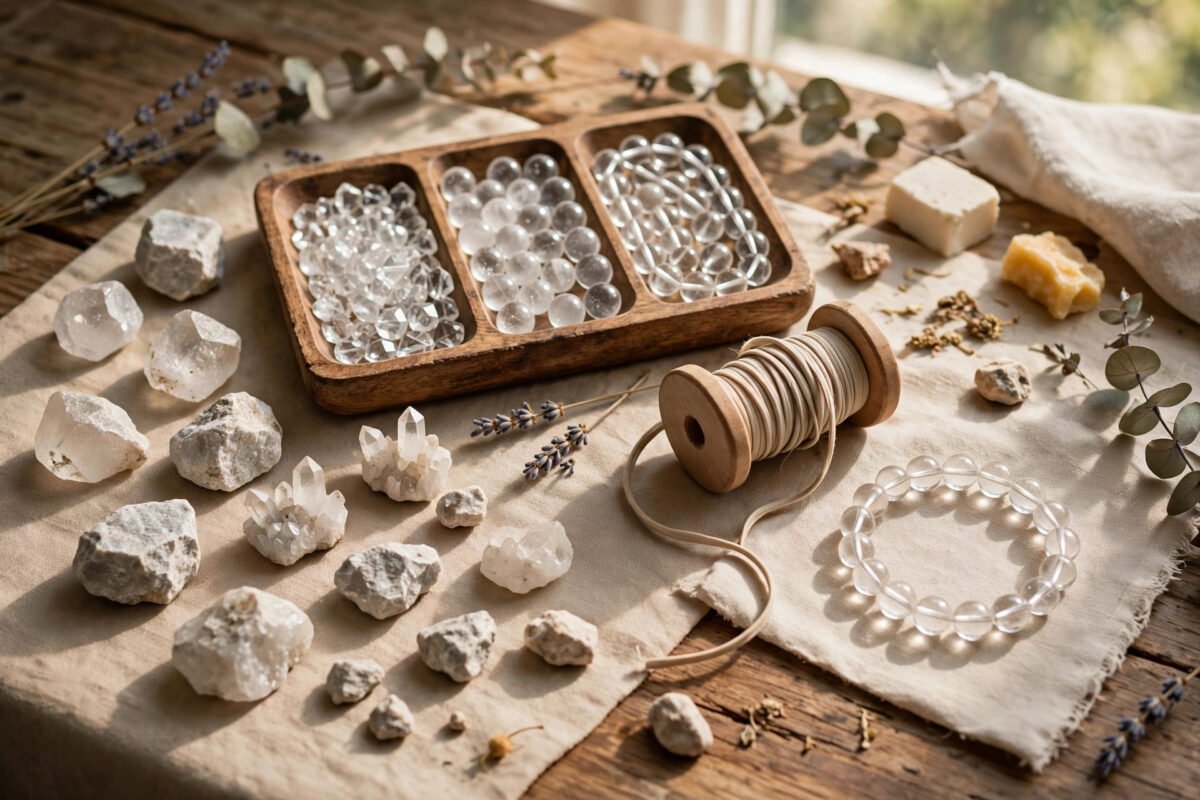
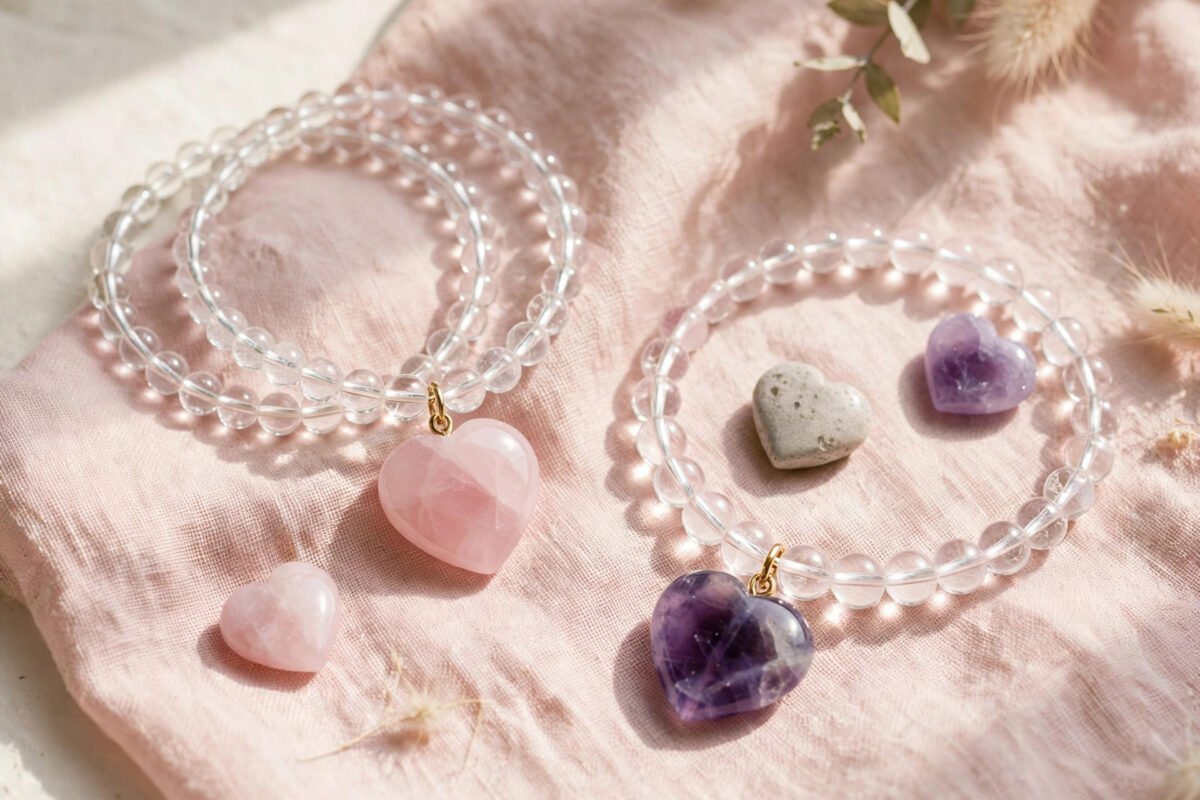
Wearable pieces can echo the same theme. An AVENSU clear quartz bracelet is traditionally associated with clarity and balance, and wearing one alongside a treasured double-terminated specimen on your desk keeps the motif consistent. For more on choosing stones by traditional theme, see our guide to lucky crystals for money and wealth — a reminder that these associations are best enjoyed as personal symbolism rather than guarantees.
Displaying and Caring for Your Points
Double-terminated crystals have two delicate tips, so display them lying on a soft surface rather than standing. A small wooden stand, a bed of sand in a shallow dish, or a padded specimen box all work well. Keep them separate from harder stones and from each other; quartz tips chip when they knock together in a drawer.
Our guide on how to store crystal bracelets recommends individual soft pouches, and the same advice protects loose points perfectly. A crystal care kit with a soft brush helps lift dust from the facets without scratching.
Cleaning is simple: lukewarm water, mild soap if needed, and a soft cloth. Avoid dropping double-terminated pieces into salt water with other stones, where collisions can damage the tips; if you follow cleansing traditions, our article on how to cleanse crystals with salt water explains gentler alternatives such as resting a stone on a cloth beside the salt rather than soaking it.
Frequently Asked Questions
Are double-terminated crystals rare?
They are less common than single points because they need special growing conditions, but small quartz examples, especially Herkimer diamonds, are widely available. Large, flawless pieces are genuinely rare and priced accordingly.
How can I tell if a double-terminated point is natural?
Look for growth striations, natural etching, inclusions, and slight asymmetry. A perfectly symmetrical, flawlessly polished piece is often cut from a single point, which sellers should disclose.
What are double-terminated crystals used for in tradition?
Tradition holds that they balance and connect, moving energy in both directions. Collectors also value them simply as complete, sculptural specimens.
Can I wear double-terminated crystal jewelry?
Yes, small natural points, especially Herkimers, are set in pendants and earrings. For everyday wear, an AVENSU quartz bracelet offers the same traditional associations with far more durability.









 English
 Vietnamese