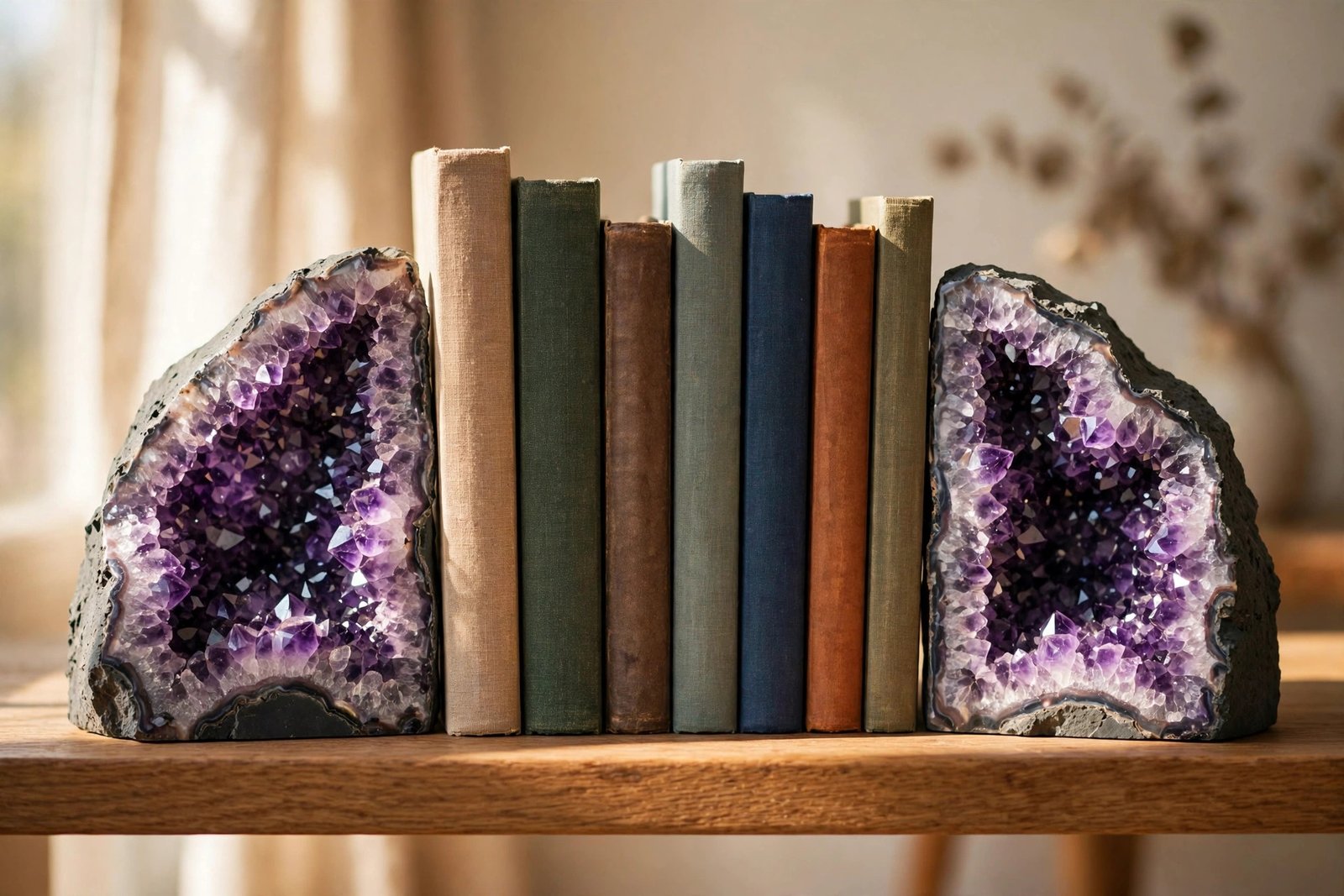
Few decor pieces stop a guest mid-sentence like a pair of geode bookends: two halves of one stone, rough rock on the outside, and a sparkling crystal cave within. Geode halves work as bookends, standalone sculptures, and small altar pieces, bringing genuine geology into everyday rooms.
This guide explains how geodes form, the types you will meet in shops, how to style bookends and halves around your home, and how to care for them. If you would like the same crystal beauty in wearable form, the AVENSU shop carries bracelets in many of the same stones, including amethyst.
How Geodes Form
A geode begins as a hollow in volcanic rock or sedimentary stone. Over millions of years, mineral-rich water seeps through the outer shell and deposits crystals on the inner walls, growing inward layer by layer. Quartz and amethyst are the most common linings, while some geodes grow calcite or celestite instead. The geode overview on Wikipedia explains the geology in accessible detail.
Most decorative geodes come from Brazil, Uruguay, Morocco, and Mexico. Artigas in Uruguay is famous for amethyst with exceptionally deep purple color, while Moroccan geodes are usually lined with clear quartz points. Because each geode grew in darkness, no one knows exactly what is inside until it is sawn open — which is why matched halves are sold as pairs, each bookend mirroring the other.
For bookends, the geode is cut so one face is flat for standing and the inner face is polished around the rim to reveal the crystals. The flat cut face against your books is usually polished smooth, protecting both the stone and your book covers.
Popular Types of Geode Decor
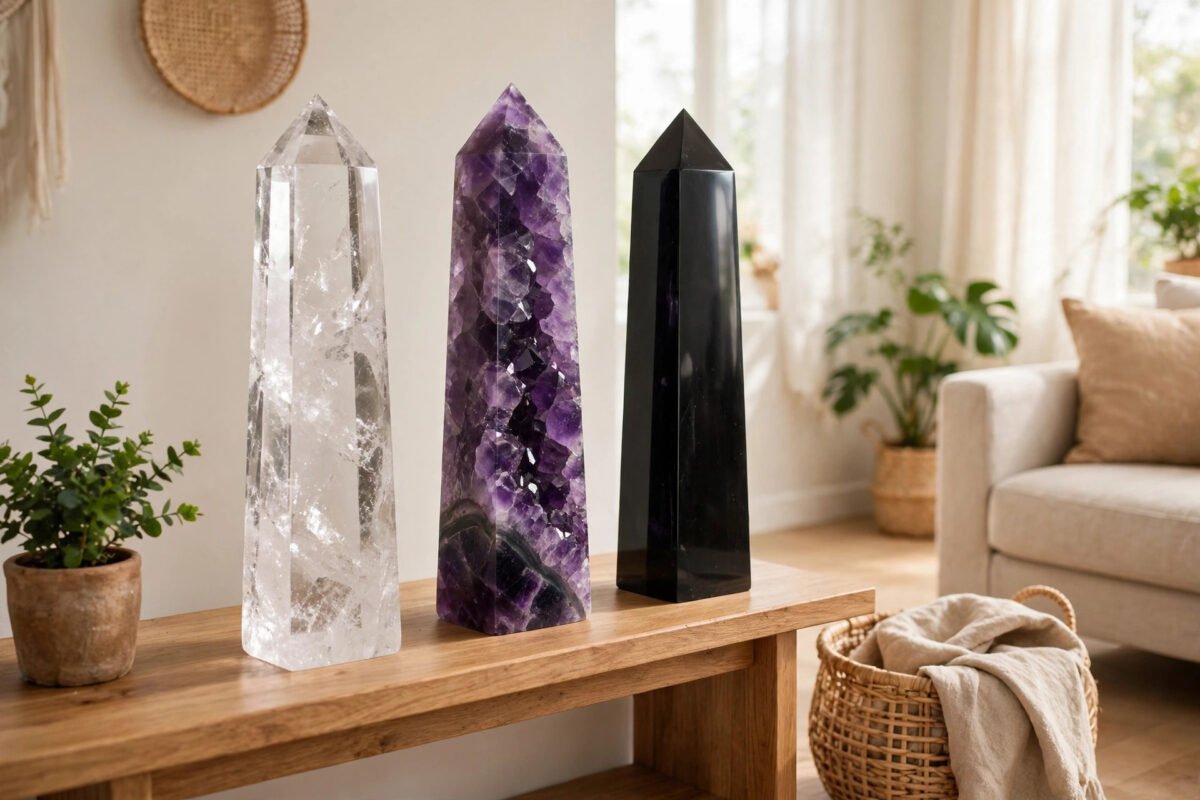
Amethyst bookends are the classic choice: violet crystal points with white quartz and agate banding at the edges. Agate bookends, often dyed blue, teal, or natural brown, offer a smoother, banded look with smaller crystals and a lower price. Clear quartz geodes bring a bright, icy sparkle that suits minimalist rooms.
Beyond bookends, geode halves are sold as standalone display pieces, small trinket bowls, and candle holders. Large cathedral geodes — tall amethyst formations that stand like small shrines — anchor meditation rooms and entryways. Whatever the form, the stone’s traditional associations travel with it: amethyst is traditionally associated with calm and clarity, a theme explored in our amethyst meaning guide, while clear quartz is believed in tradition to brighten and clarify a space.
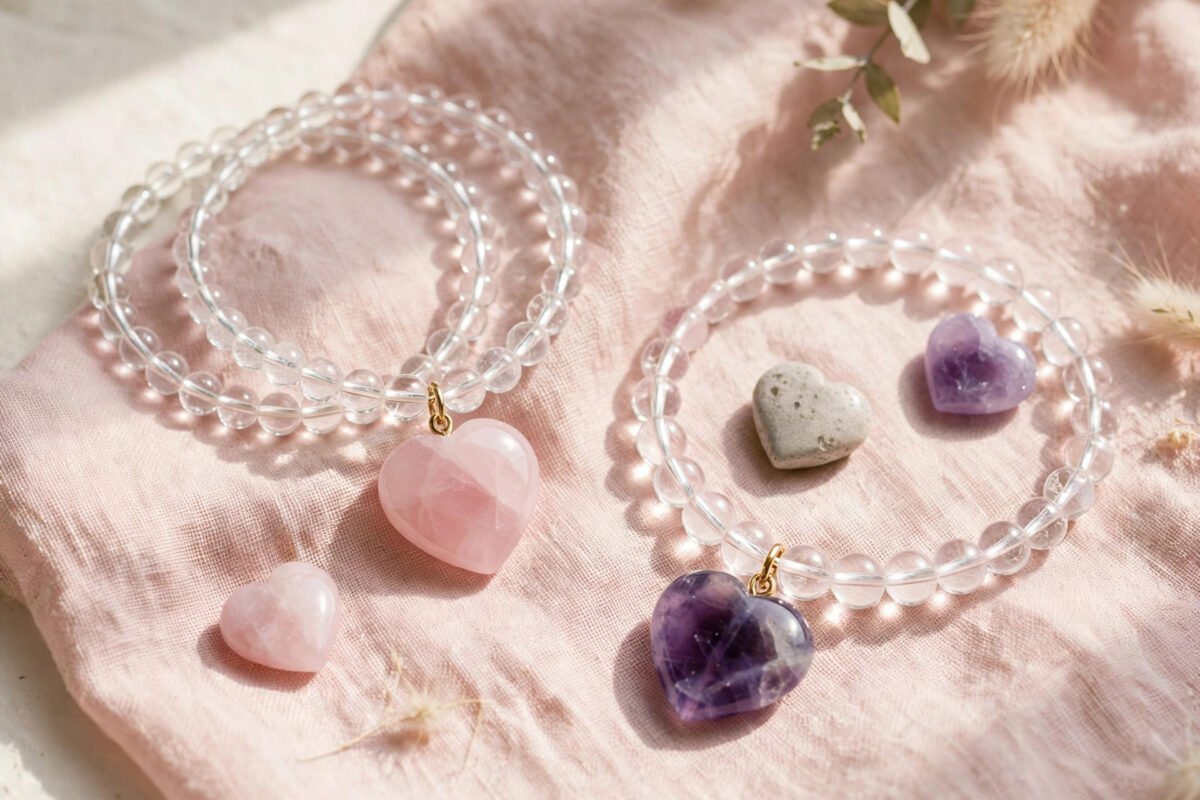
Pairing decor with jewelry deepens the theme. An AVENSU amethyst bracelet echoes your bookends’ color story, and our guide to lucky crystals for money and wealth shows how collectors combine display pieces and wearable stones by intention — always as tradition and symbolism, never as guaranteed results.
Styling Geode Bookends and Halves
Bookends earn their keep on shelves, desks, and kitchen counters, where they hold cookbooks with unexpected glamour. For a balanced look, place the pair with crystal faces outward at the ends of a book row, or split the pair to flank different shelves in the same room so the two halves converse across the space.
Small geode halves shine as paperweights, ring rests by the sink, and bases for air plants. On a desk, pairing a geode half with our grounding crystal bracelet resting in it overnight makes a beautiful, practical ritual — the geode becomes the bracelet’s home. Our guide on how to store crystal bracelets suggests exactly this kind of dedicated resting spot to protect elastic and beads.
Mind the light. Amethyst can fade in strong, prolonged sunlight, so keep prized purple pieces out of south-facing windowsills. Under a lamp or near a window with indirect light, the crystal points will sparkle at their best. Geodes also mix well with wood, linen, and plants — natural textures that let the stone’s geometry lead.
Caring for Geodes
Geodes are sturdy but dusty by design: the crystal cave collects dust that a cloth cannot reach. Rinse quartz and amethyst geodes under lukewarm water and let them air-dry upside down, or use a soft brush and a gentle puff of air. Our crystal care kit essentials guide lists the brushes that work best in crystal cavities.
Avoid harsh chemicals and ultrasonic cleaners, and keep calcite or celestite geodes dry, since those minerals are softer and water-sensitive. For traditional cleansing, many collectors simply rinse and dry their geodes and set an intention; if you prefer salt methods, read our guide on how to cleanse crystals with salt water first, and never soak a geode whose outer rock is crumbly or painted.
Handled this way, a pair of geode bookends will outlast the books they hold — a small piece of deep time, doing daily work in your home.
Frequently Asked Questions
Are geode bookends made from one stone?
Yes, quality bookends are the two halves of a single geode, sawn apart and polished. The crystal patterns mirror each other, which is part of their charm.
Will amethyst geodes fade?
Amethyst can fade slowly in strong, direct sunlight over long periods. Display your pieces in indirect light to keep the purple rich for decades.
How heavy should geode bookends be?
Heavier is better for holding books — look for pairs totaling at least two to three kilograms for a full row of hardcovers. Add felt pads under the base to protect shelves.
How do I clean inside a geode?
Rinse quartz-lined geodes with lukewarm water and dry them upside down, or brush dust out with a soft brush. Keep softer calcite and celestite geodes dry and dust only.




 English
 Vietnamese