Every collection eventually faces the same delightful dilemma: the calm, perfect globe of a crystal sphere, or the confident vertical line of a crystal tower? Both make superb centrepieces, but they change a room in different ways — visually, practically, and in the symbolism tradition attaches to them. This crystal spheres vs towers guide compares the two shapes honestly, then matches each one to the rooms where it shines, from a focused home office to a welcoming entryway.
Whichever shape wins your shelf, smaller accents from the AVENSU shop — a bracelet on a ceramic dish, a tumbled stone beside the centrepiece — complete the scene without crowding it.
The Sphere: Wholeness, Calm, and 360-Degree Beauty
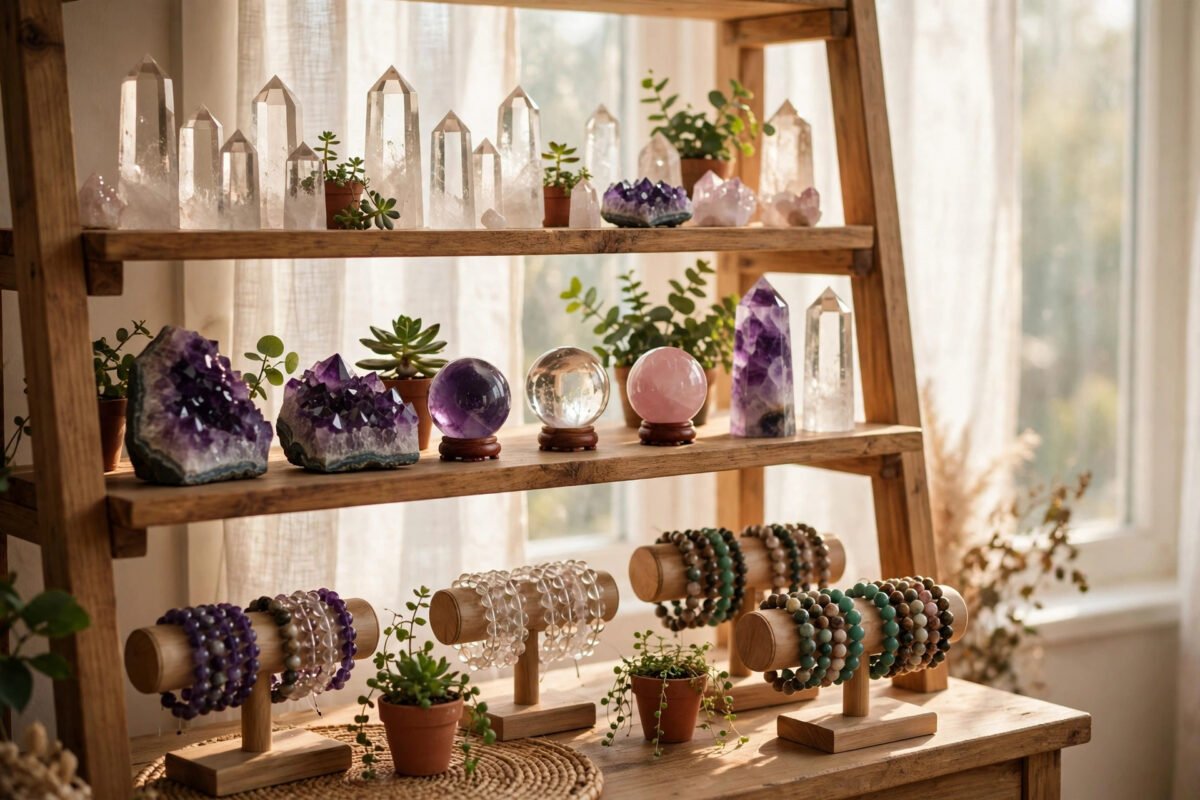
A sphere is the most labour-intensive common shape: the cutter grinds a rough stone round, losing a large share of the original material. What you gain is a form with no edges and no “front” — it looks finished from every chair in the room. In crystal tradition, spheres are believed to radiate energy evenly in all directions and are traditionally associated with wholeness, unity, and calm. That evenness is why spheres are favoured in shared spaces where no single seat should get the “best” angle.
Practically, spheres reward stones with internal scenery: moss agate landscapes, fluorite banding, and labradorite flash all reward a slow turn in your hands. They need a stand — a ring, cup, or carved base — and they roll, so placement rules from displaying large crystals safely apply in full. Gazing into spheres is also a long-standing scrying tradition; the Wikipedia article on crystal gazing gives an entertaining, sceptical history of the practice.
The Tower: Direction, Focus, and Vertical Presence
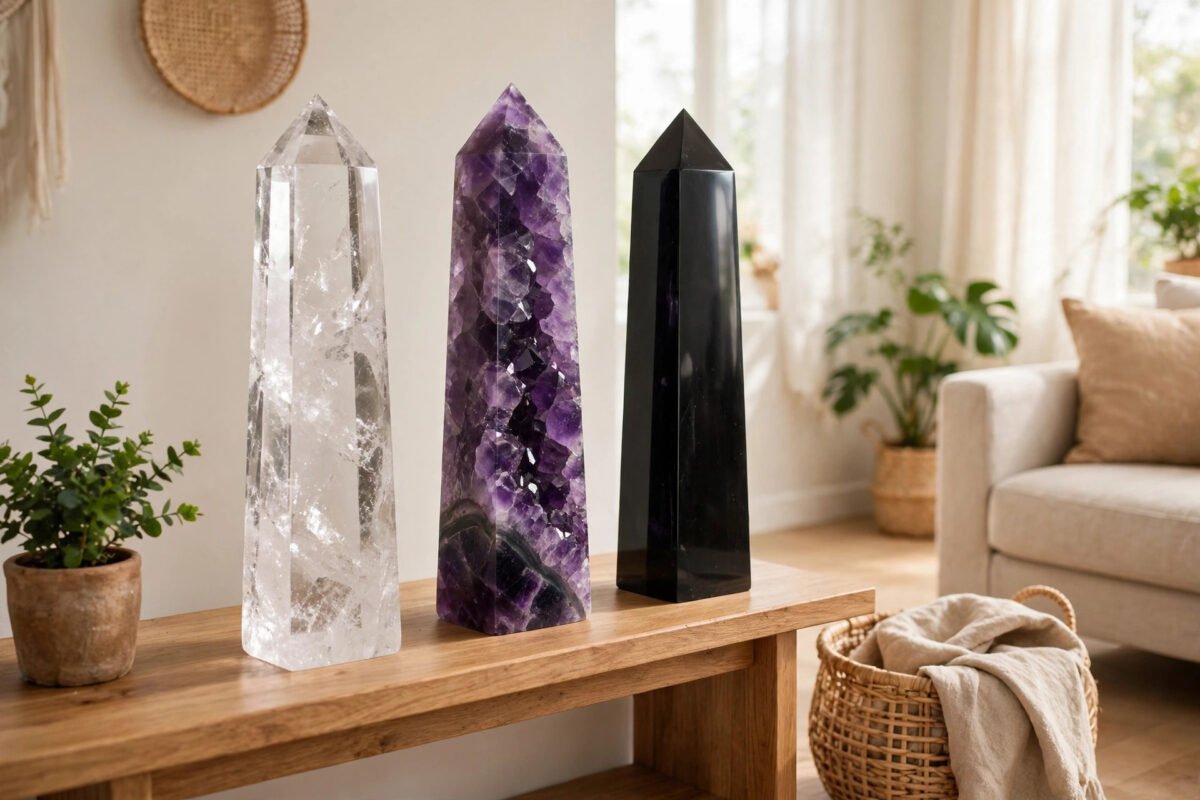
A tower (or standing point) keeps more of the stone’s natural height. As our obelisk vs point guide explains, six-sided points echo natural quartz growth, while four-sided obelisks add architectural formality. In tradition, towers are believed to concentrate and direct energy upward through the tip, and they are traditionally associated with focus, ambition, and clarity — the desk-piece archetype.
Towers suit stones where a vertical gradient is the attraction: amethyst points deepening toward the tip, or smoky quartz fading from dark base to clear point. They stand on their own cut base, need no stand, and take up little shelf footprint for their visual height. Their weakness is the tip itself — the most chip-prone part of any crystal — so verify condition with the help of how to tell if a crystal is real and keep towers out of high-knock zones.
Room by Room: Which Centrepiece Where?
Living room. A sphere on a coffee-table book or mantel suits a social space: soft, even, viewable from all seats. Choose a stone that matches your palette — rose quartz for warmth (see our rose quartz meaning guide) or smoky quartz for neutral depth.
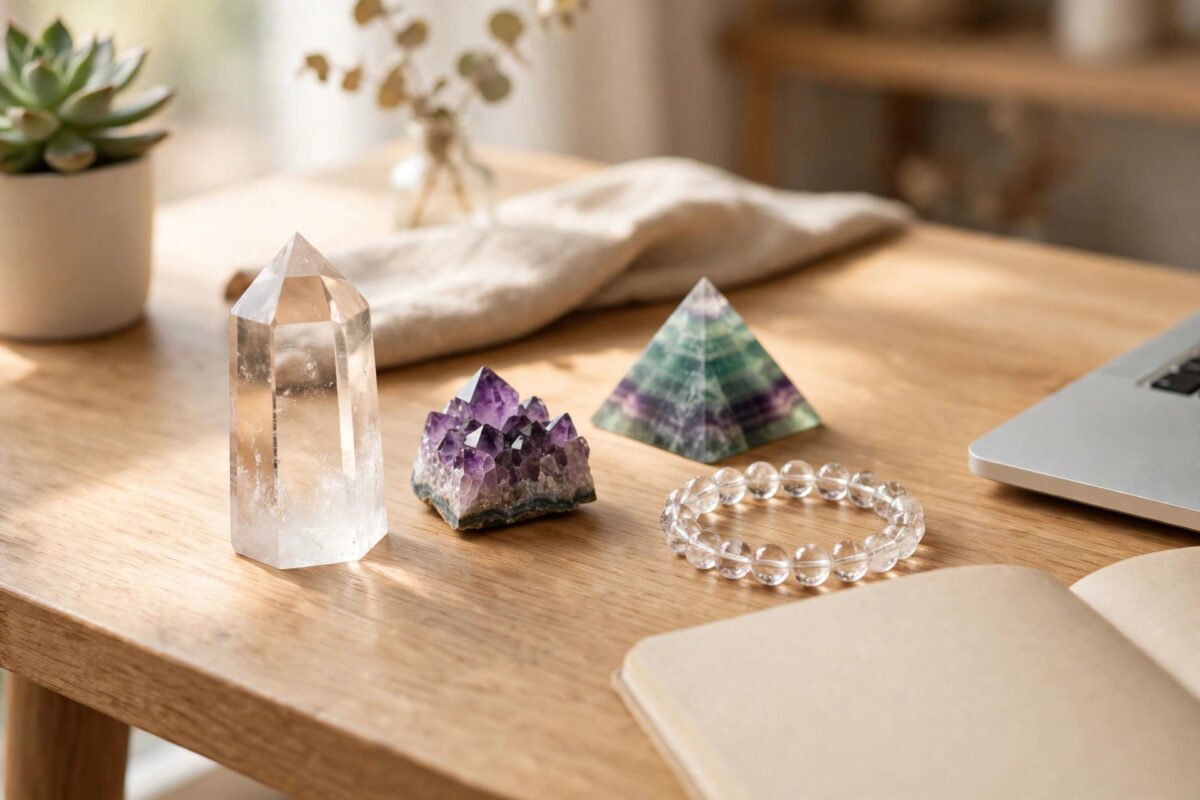
Home office and desk. A tower earns its keep here. Its vertical line reads as focus, and tradition links it with directed intention during work. Pair it with a grounding crystal bracelet you wear through the workday for a matched ritual.
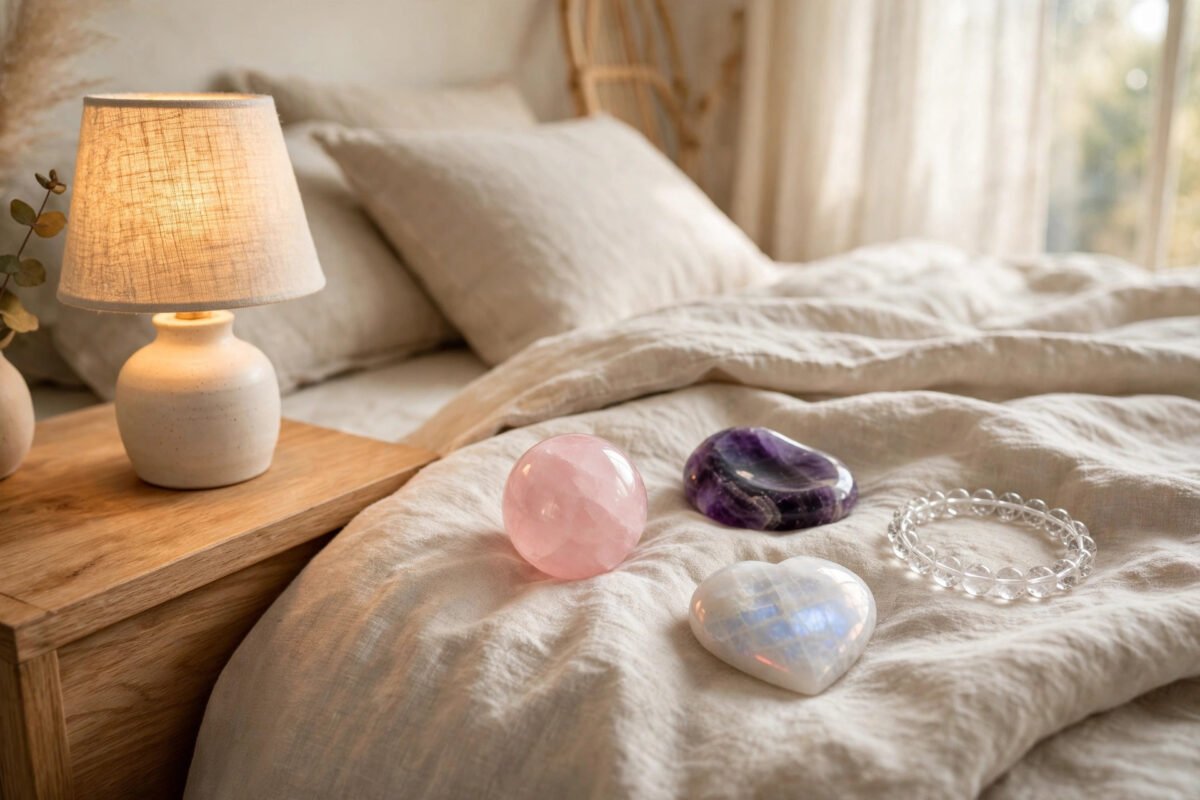
Bedroom. Either shape works in traditionally restful stones like amethyst and moonstone — our amethyst meaning guide and moonstone meaning guide explain why both are bedroom favourites. A sphere’s softness often wins for bedside tables; keep it in a proper stand so it cannot roll.
Entryway. Towers make a confident first impression on a console table, and tradition associates entryway crystals with welcoming and protective intentions — browse related ideas in the AVENSU shop and our lucky crystals for money and wealth guide if prosperity symbolism is your theme.
Meditation space. Spheres for gazing and even ambience; towers and flames (see the crystal flame carvings guide) for a focal altar. Many altars happily use one of each.
Care, Cost, and Buying Tips
Per gram, spheres usually cost more because more material is ground away; towers preserve yield and can be better value in expensive stones. Both need dusting and stone-appropriate cleaning — follow the complete crystal bracelet care routine for water and sunlight rules by mineral, and store off-duty pieces as described in how to store crystal bracelets.
Buy the exact piece in photos, check the tower tip and the sphere’s polish at the poles (a common place for rough patches), and confirm the stand is included for spheres. Mineral background for any unfamiliar stone is free at Mindat.org.
Frequently Asked Questions
Which shape is better for a small room?
A tower. It delivers height and presence on a tiny footprint, so a desk corner or narrow shelf still gets a real centrepiece. A small sphere (5–6 cm) also works, but needs its stand’s footprint too.
Do spheres need a special stand?
Yes — never balance a sphere unsecured. A simple ring stand, wooden cup, or even a decorative napkin ring works. The stand should contact the sphere snugly so a bumped table does not send it rolling.
Can I have both a sphere and a tower in one room?
Absolutely, and designers often recommend it: the sphere softens, the tower structures. Place the tower slightly behind and to one side of the sphere for a composed vignette, with breathing room between pieces to prevent chips.
Which shape holds its value better?
Neither shape guarantees resale value; stone quality, size, and condition matter more. Flawless large spheres in fine material are scarcer because of the material lost in cutting, which can support prices, but buy the shape you love living with first.






 English
 Vietnamese