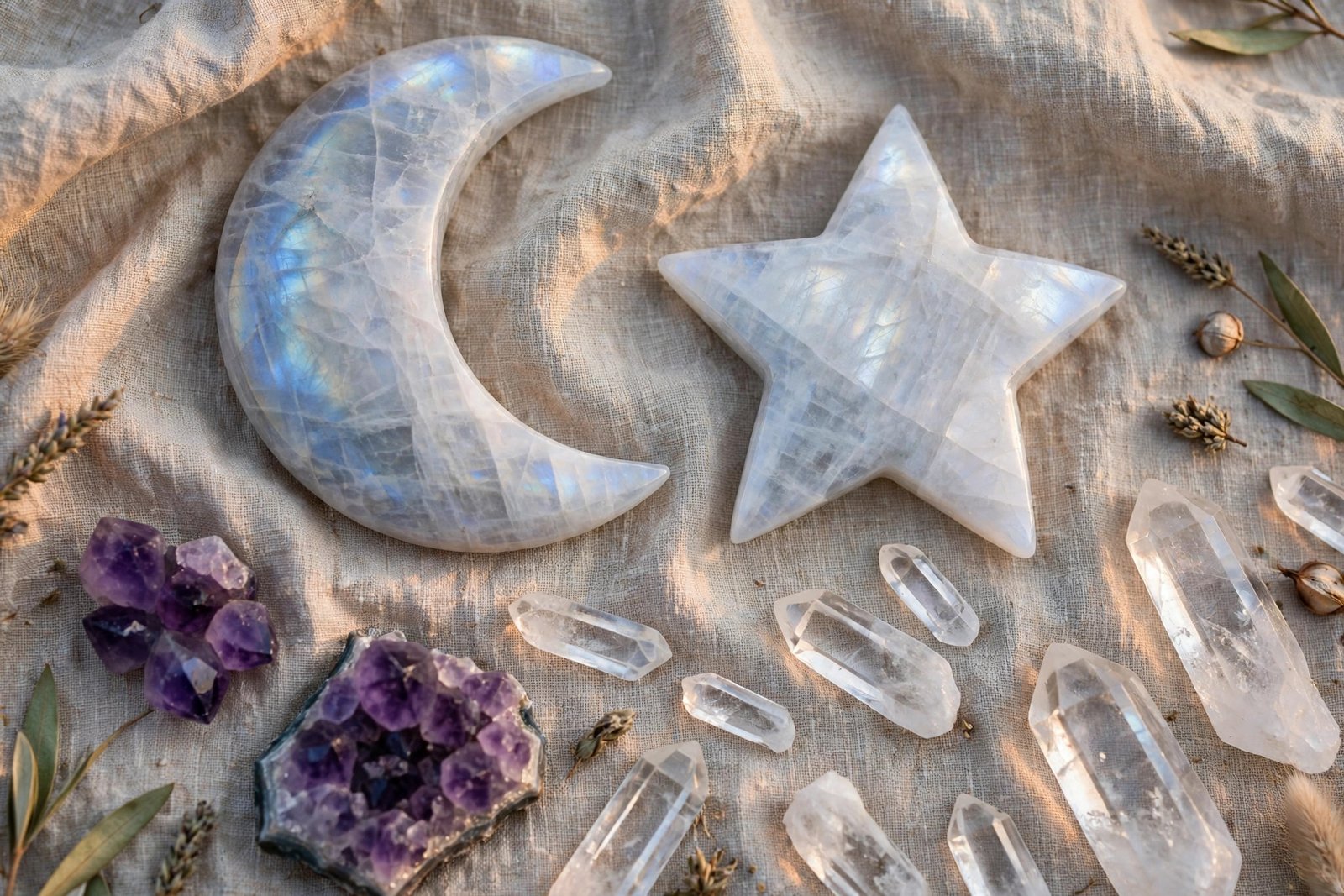
Few crystal shapes feel as instantly recognisable as a crescent moon cradling a small star. Celestial carvings translate the night sky into stone you can hold, set on a nightstand or wear as a pendant, and they have become some of the most gifted crystal forms. Their appeal is partly symbolic — the moon and stars have carried meanings of cycles, guidance and quiet hope for thousands of years — and partly practical: the shapes are flat-backed, stable and easy to display.
This guide explores what moon and star carvings traditionally symbolise, which stones suit them best, and how to display, wear and care for these small pieces of the sky.
What Moon and Star Shapes Traditionally Symbolise
In crystal tradition, the crescent moon is associated with cycles, intuition and new beginnings. Its waxing and waning rhythm makes it a natural emblem for change that returns, rest that restores, and intentions set at the start of a fresh month. The star is traditionally linked with guidance, protection on a journey and wishes held quietly. Together, moon-and-star pieces are believed to combine reflection with direction: pause, look inward, then move.
These associations echo much older symbolism. Crescent-and-star imagery appears across ancient cultures and later became a widely recognised emblem, a history summarised on Wikipedia’s crescent and star page. Modern crystal carvings borrow that visual language in a personal, decorative way rather than a religious one.
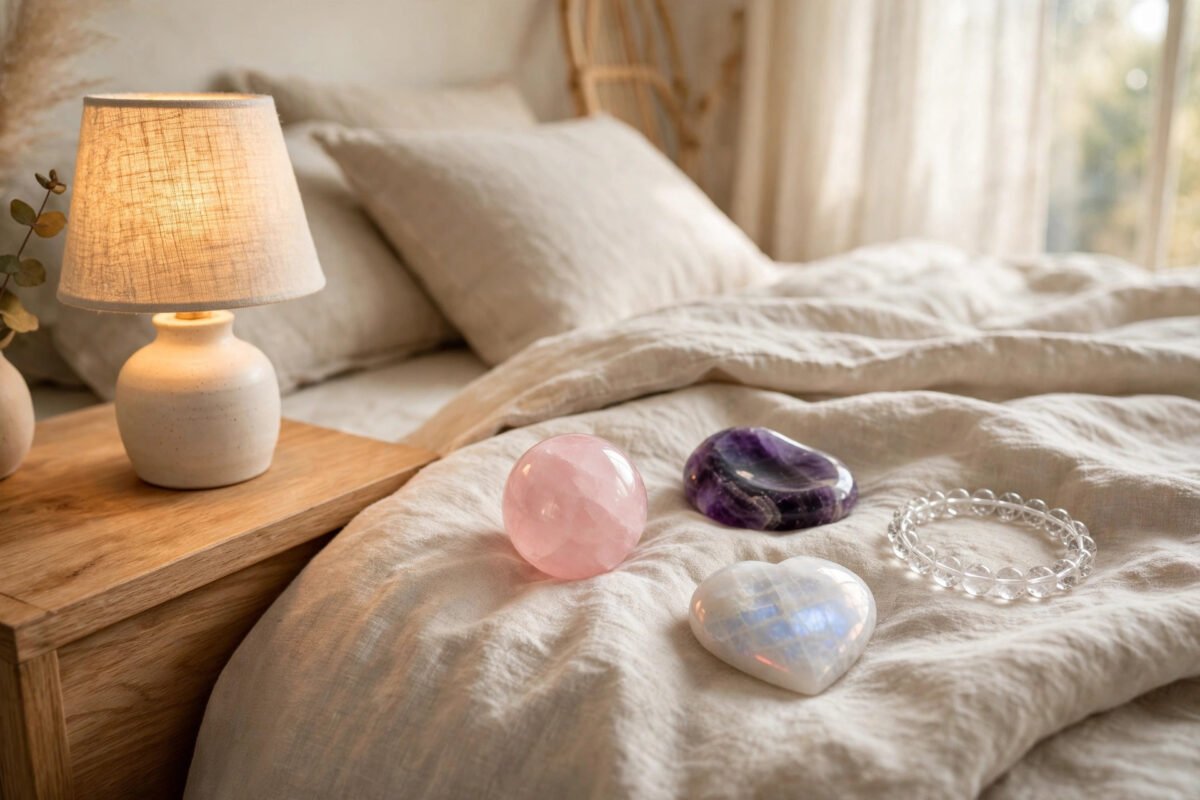
Because the meanings centre on night, rest and intuition, moon carvings are often kept in bedrooms, meditation corners and other quiet spaces. They also pair naturally with the lunar rituals in our full moon luck-drawing ritual, where a small moon carving makes a fitting centrepiece on a windowsill.
Stones That Suit Celestial Carvings
Moonstone is the obvious first choice: its soft glow, called adularescence, shifts as light moves across the surface, echoing moonlight itself. Our moonstone meaning guide explores why this stone is traditionally tied to intuition and calm. Selenite, with its milky, luminous white finish, is another favourite for moons, though it is soft and scratches easily, so selenite carvings are display pieces rather than pocket stones.
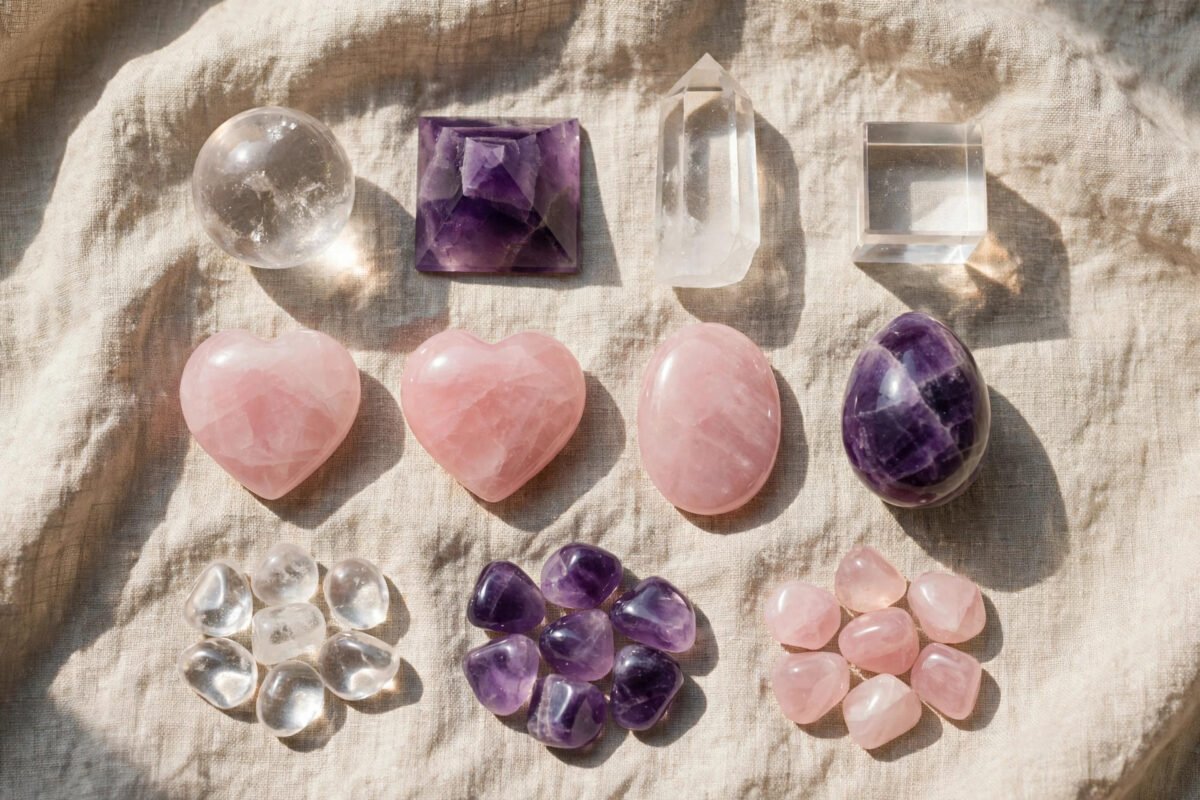
Amethyst stars bring deep purple colour and are traditionally associated with restful evenings, while labradorite carvings flash blue and gold as they turn, like stars appearing at dusk. Clear quartz suits both shapes because it is hard, takes a crisp carve and a fine polish, and reads clearly as a moon or star silhouette. Rose quartz moons soften the theme toward love and comfort, and obsidian stars offer a dramatic black contrast when displayed beside paler stones.
Delicate points define these shapes, so hardness matters. A star’s five tips and a crescent’s two horns are the first places to chip if a carving is dropped or stored loose against harder stones. Our guide on how crystal beads are made explains why shaping and polishing thin forms takes extra care, and the same principle applies to carvings: crisp points cost more because more pieces break during production.
Displaying and Wearing Moon and Star Pieces
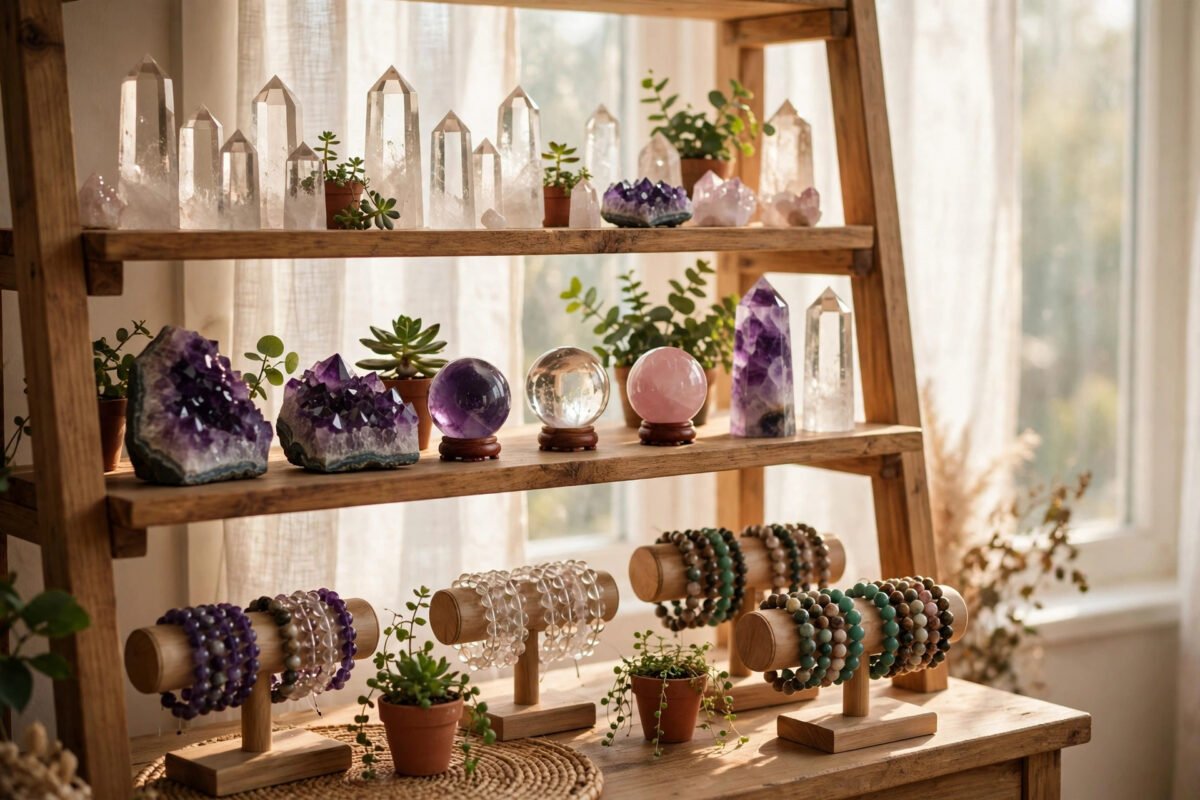
On display, celestial carvings look best grouped. A common arrangement pairs a larger crescent moon lying flat with a small star propped against it, a few tumbled stones scattered in front, and a generator crystal point standing behind the group for height. Flat-backed moons also work as the centre of a small grid or as bookends for a short row of paperbacks, provided they are thick enough to stand securely.
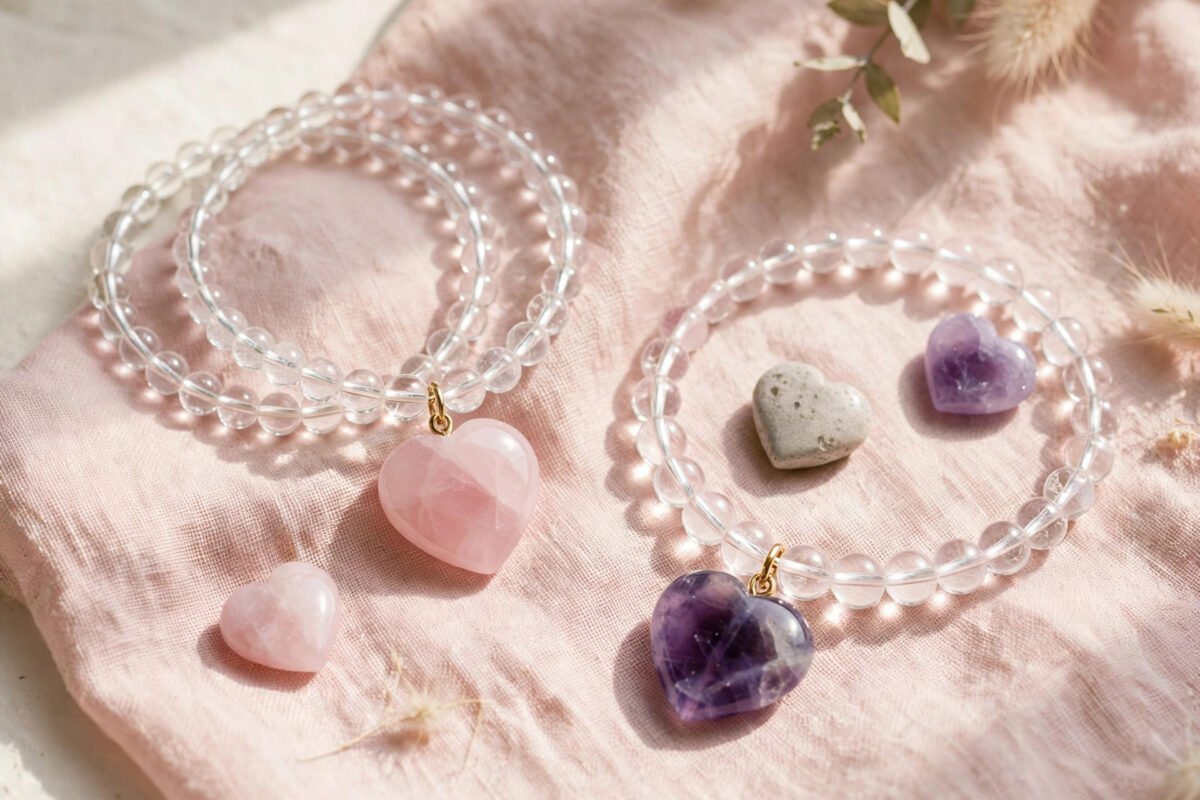
As jewellery, moon and star charms appear on pendants, earrings and charm bracelets. A tiny moonstone crescent on a bracelet adds the celestial theme without changing the whole design, and it layers well with the heart-shaped pieces covered in our guide to heart-shaped crystal jewellery. AVENSU bracelets often mix one small charm with round beads, which keeps the bracelet comfortable while letting the charm carry the symbolism. Browse charm styles in the AVENSU shop.
For charging traditions, moon carvings are the pieces most often placed on a windowsill overnight, in keeping with the lunar theme. Whichever ritual you follow, bring them in before morning condensation or strong sun reaches softer stones, and follow the storage advice in our guide on how to store crystal bracelets, which applies equally to small carvings kept in drawers.
Caring for Thin Points and Delicate Edges
Celestial carvings ask for a little more care than tumbled stones because of their thin tips. Store each piece in a soft pouch or a compartment of its own, never loose in a bowl of harder quartz points. When dusting, hold the carving over a soft surface and use a brush rather than a duster that could catch a star tip and pull the piece off its shelf.
Clean with lukewarm water and a soft cloth for hard stones such as quartz and amethyst. Keep selenite and other soft carvings dry, wiping them with a dry cloth only. If a tip does chip, the piece is not ruined: many collectors keep slightly imperfect carvings as pocket pieces, where the symbolism matters more than the silhouette. Seriously damaged pieces can sometimes be re-polished by a lapidary, as described in general terms by the Gemological Institute of America (GIA).
Collectors who fall for these shapes often expand into other small forms. Our guide to mini crystal collections shows how moons, stars and other miniatures build into a themed display without taking much space.
Frequently Asked Questions
What is the difference between a crescent moon and a full moon carving?
A crescent shows the curved sliver shape with two pointed horns and is traditionally linked with beginnings and growing intentions. A full moon carving is a complete disc or sphere, associated with completion and release. Both are popular; crescents display more distinctively, while discs stack and store more easily.
Which stone is best for a crystal moon carving?
Moonstone is the classic pairing because its natural glow resembles moonlight, and selenite is a close second for display pieces. For durability in a pocket or on jewellery, choose clear quartz, amethyst or rose quartz, which are harder and keep their points longer.
Can I wear a moon or star carving every day?
Yes, if the stone is hard enough and the setting protects its points. Quartz-family charms on bracelets and pendants handle daily wear well. Soft selenite carvings are better kept as home display pieces, since their tips scratch and dull quickly against keys, coins and other jewellery.
How do I display moon and star carvings together?
Give the group one anchor: a crescent lying flat as the base, a star leaning against it, and one taller point behind for height. Keep the arrangement near a window or lamp so translucent stones catch light, and leave small gaps between pieces so their silhouettes stay readable.



 English
 Vietnamese