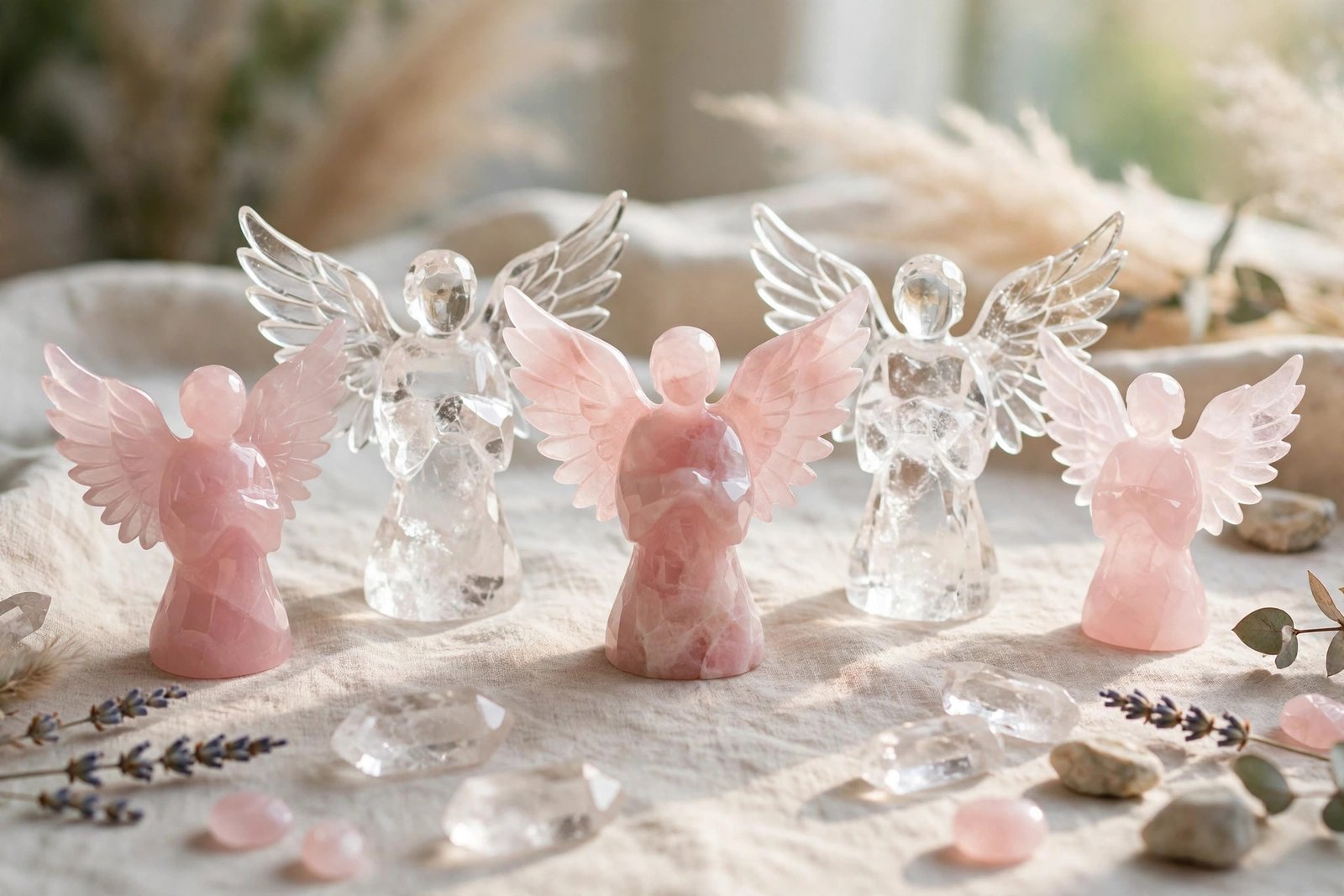
Crystal angel carvings are among the most gifted of all crystal figures. With their flowing robes and raised wings, these small guardian figures carry a simple, comforting message: you are watched over and not alone. They appear on hospital bedside tables, in nurseries, on memorial shelves, and in meditation corners around the world.
This guide explains the tradition behind angel carvings, which stones are chosen most often and why, how to select the right size and style, and where to place and how to care for your figure. For a wearable expression of the same comforting themes, explore the gentle stones in the AVENSU shop.
The Tradition Behind Guardian Figures
Guardian figures are far older than crystal carving. Angels hold a central place in Christian, Jewish, and Islamic traditions as messengers and protectors, and winged guardian figures appear in art reaching back to ancient Assyria and Egypt. The Britannica entry on angels gives a helpful overview of how widely the idea of guardian angels is shared.
Modern crystal angels translate that long tradition into a small, tactile object. In crystal practice, an angel figure is traditionally associated with protection, comfort, and guidance. People give them at births, during illness, after a loss, and at moments of change such as a move or a new job. The beliefs are personal and symbolic — an angel carving makes no promises — but as a token of care, few gifts communicate as much with as little explanation.
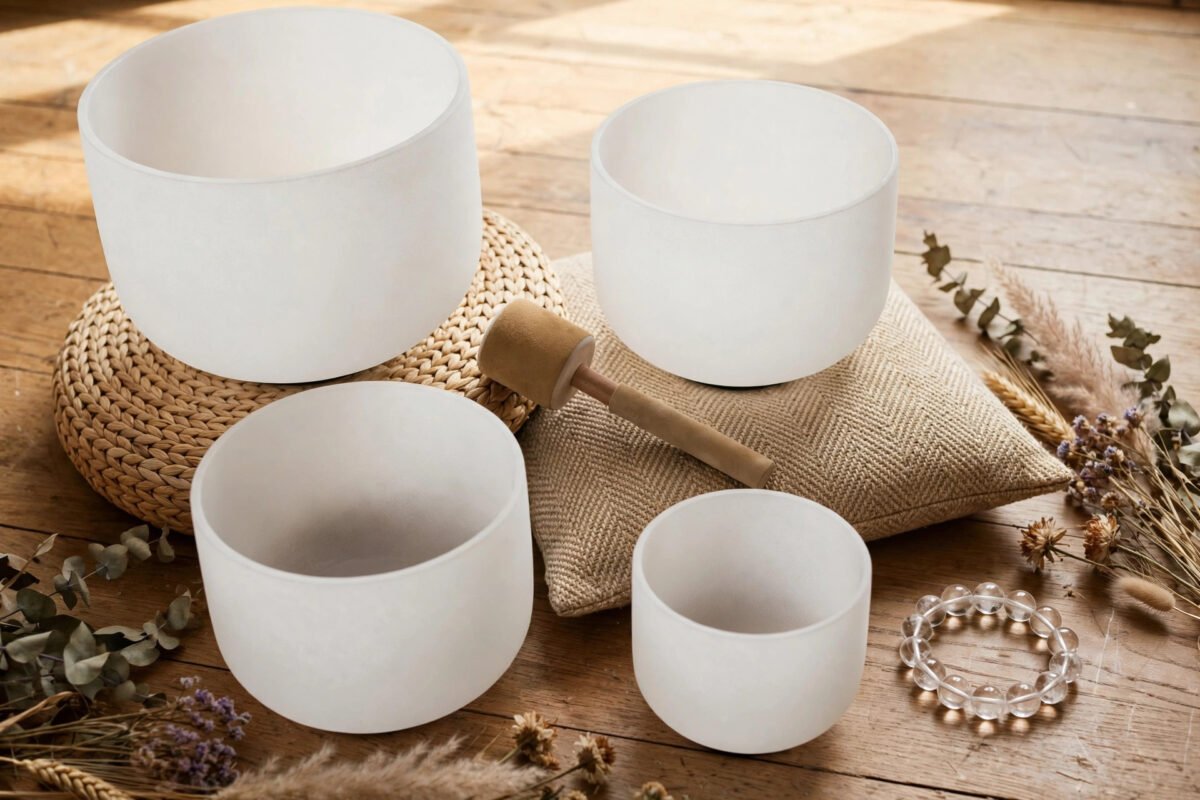
Angel carvings also anchor small altars and remembrance spaces. Our guide to crystal bowls and offering dishes pairs naturally with this one if you are building a small altar shelf of your own.
Popular Stones for Angel Carvings
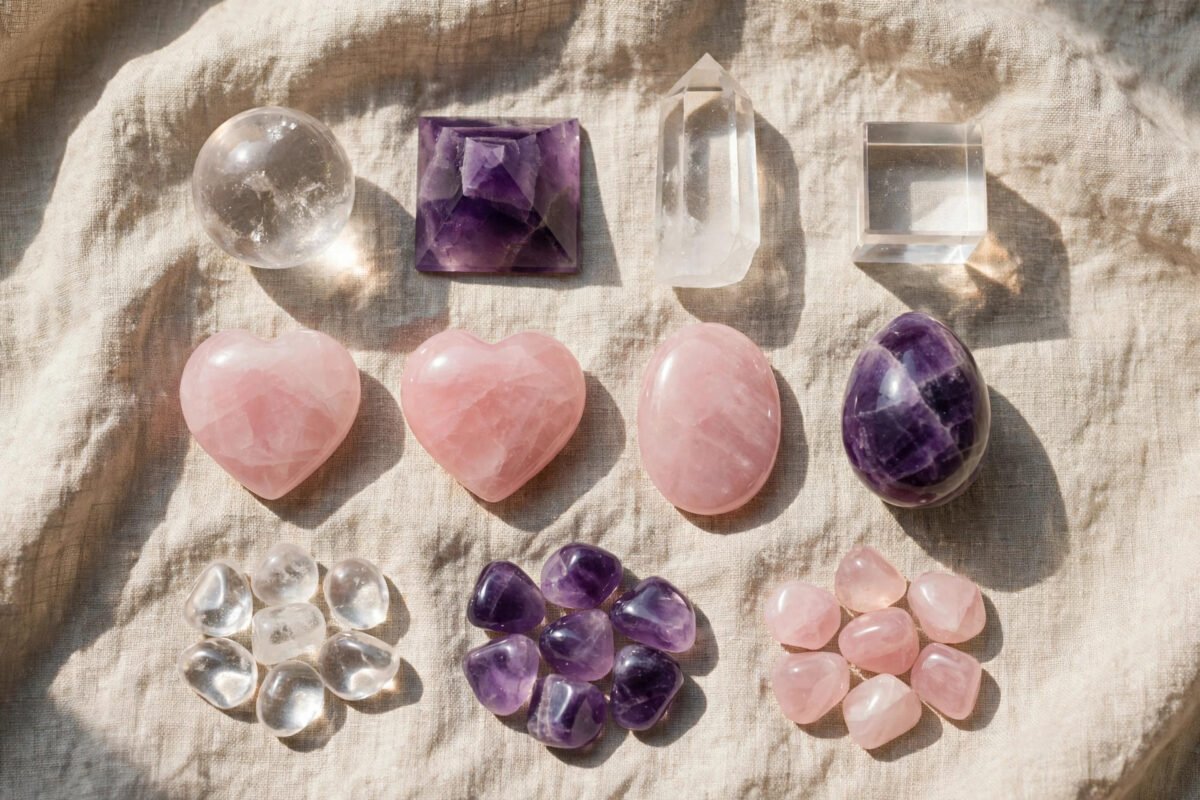
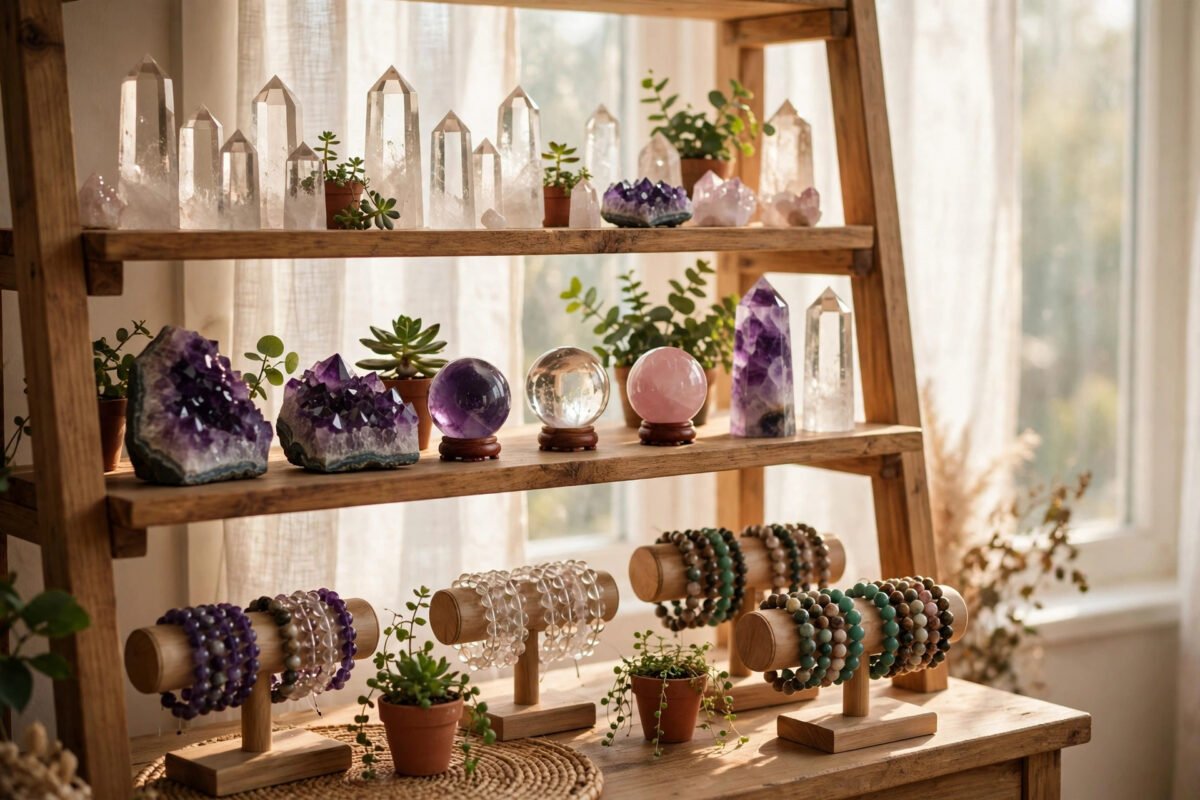
Rose quartz is the most gifted angel stone, because its soft pink color and long association with love and comfort suit the figure perfectly. Our rose quartz meaning guide explores that tradition in full. Clear quartz angels look luminous and suit any setting, while amethyst angels, traditionally associated with calm and clear thinking, are popular for bedrooms and study spaces — see our amethyst meaning guide for background.
Other favorites include blue lace agate and angelite, a soft blue stone whose very name links it to the angel theme, though angelite is delicate and must be kept dry. Selenite angels glow with a moonlit sheen but are soft and water-sensitive, so they suit display-only spots. Moonstone, traditionally associated with intuition, makes a luminous small angel; our moonstone meaning guide explains its gentle folklore.
When buying, inspect the wings and the face area for chips, check that the figure stands steadily, and confirm the stone is genuine using the tests in our guide on how to tell if a crystal is real, since small angel carvings are frequently imitated in glass and resin.
Choosing Size and Style
Angel carvings range from pocket-sized figures around four centimeters to display pieces over fifteen centimeters tall. Pocket angels are carried as daily companions and make meaningful favors at weddings and memorial services. Mid-sized angels around seven to ten centimeters suit bedside tables and desks, while large angels anchor a shelf or altar.
Styles vary from abstract, flowing silhouettes with suggested wings to detailed figures with feathered wings and folded hands. Abstract styles suit modern interiors and softer stones; detailed carving shows best in hard, fine-grained quartz. Guardian figures beyond angels — including robed figures, cherubs, and fairies — follow the same choosing logic: figure first, then stone, then size.
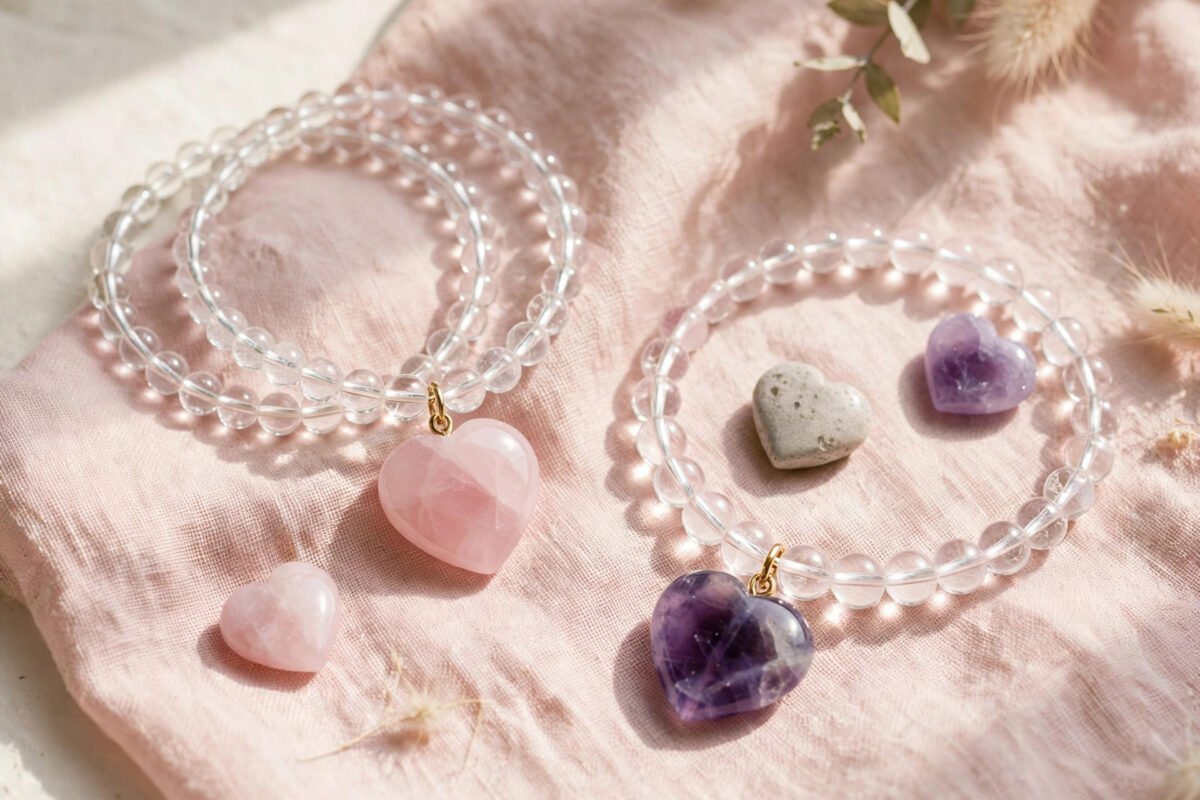
Many people pair an angel carving with an AVENSU bracelet in the same stone as a coordinated gift: the angel keeps watch at home while the bracelet, traditionally associated with the same comforting qualities, travels with the recipient. Our heart chakra crystals deep dive is a good next read if the heart-centered stones are your favorites.
Placement and Care
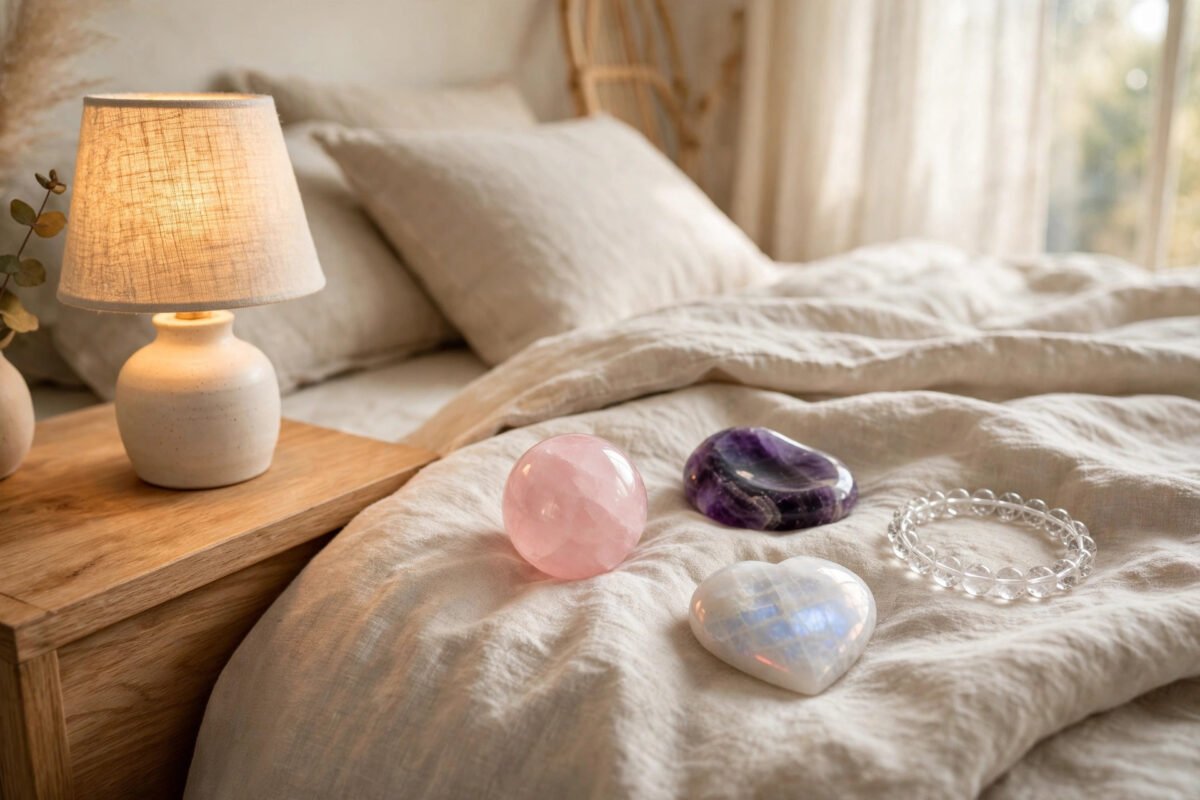
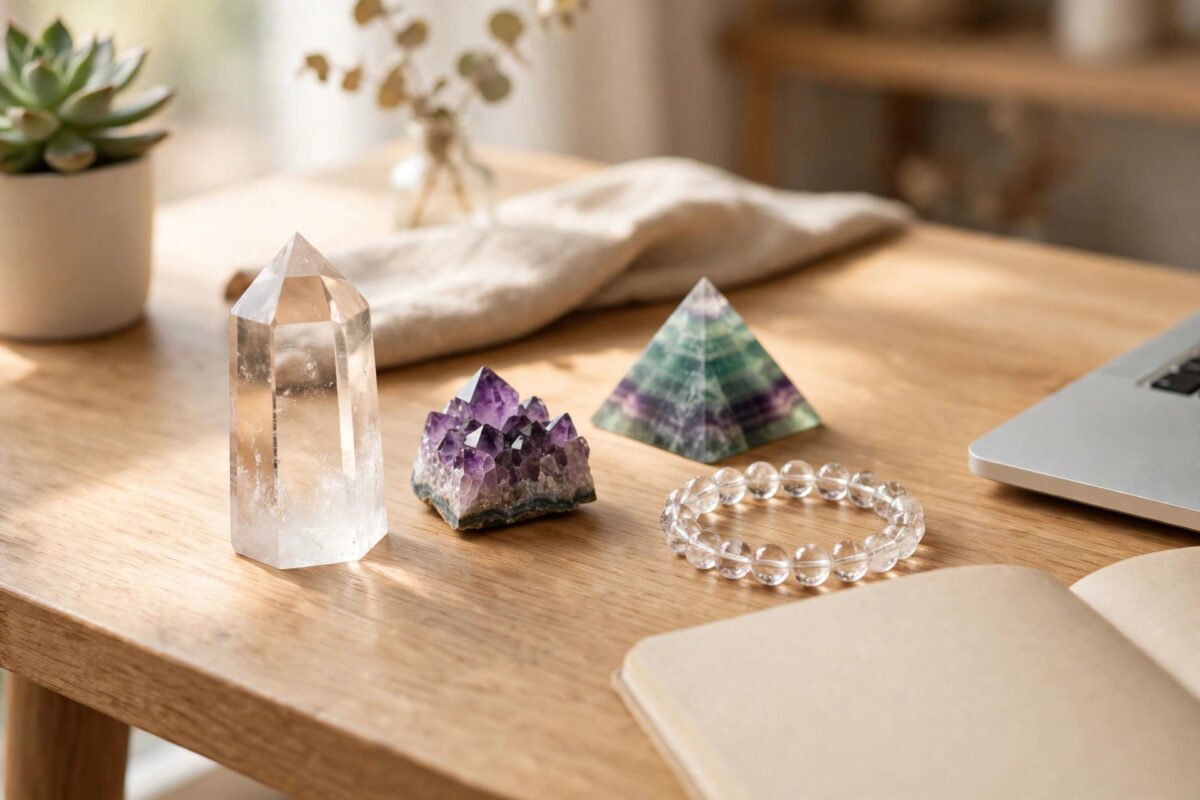
Place angel figures where their message matters: beside a bed, on a desk during a demanding season, in a child’s room, or in a remembrance corner with a candle and a photograph. In tradition, a guardian by the door is believed to watch over the household, and many families keep one in the entryway for exactly that reason.
Care gently. Wings are the most fragile part of the carving, so dust with a soft brush rather than a cloth that can snag, and lift the figure by its body, never by a wing. A crystal care kit brush is ideal. Quartz angels can be washed in lukewarm water; selenite and angelite should only be dusted dry. For traditional cleansing approaches and which stones must avoid water, see our guide on how to cleanse crystals with salt water. When traveling, wrap your angel in a soft pouch — the same advice we give for bracelets in our guide on how to store crystal bracelets.
Frequently Asked Questions
What do crystal angels symbolize?
In tradition, crystal angels symbolize protection, comfort, and guidance. They are given as tokens of care at births, during difficult times, and in remembrance of loved ones.
Which stone is best for a crystal angel?
Rose quartz is the most popular for its association with love and comfort. Clear quartz suits any setting, amethyst is chosen for calm spaces, and selenite gives a soft glow for display pieces.
Where should I keep a crystal angel?
Beside a bed, on a desk, in an entryway, or in a small remembrance or meditation corner — anywhere its comforting symbolism will be seen daily and the figure is safe from knocks.
Can a crystal angel be a gift for someone who is not spiritual?
Yes. Many recipients simply appreciate the craftsmanship and the caring message behind the gift. Choose an abstract style and a beautiful stone, and let the gesture speak for itself.



 English
 Vietnamese