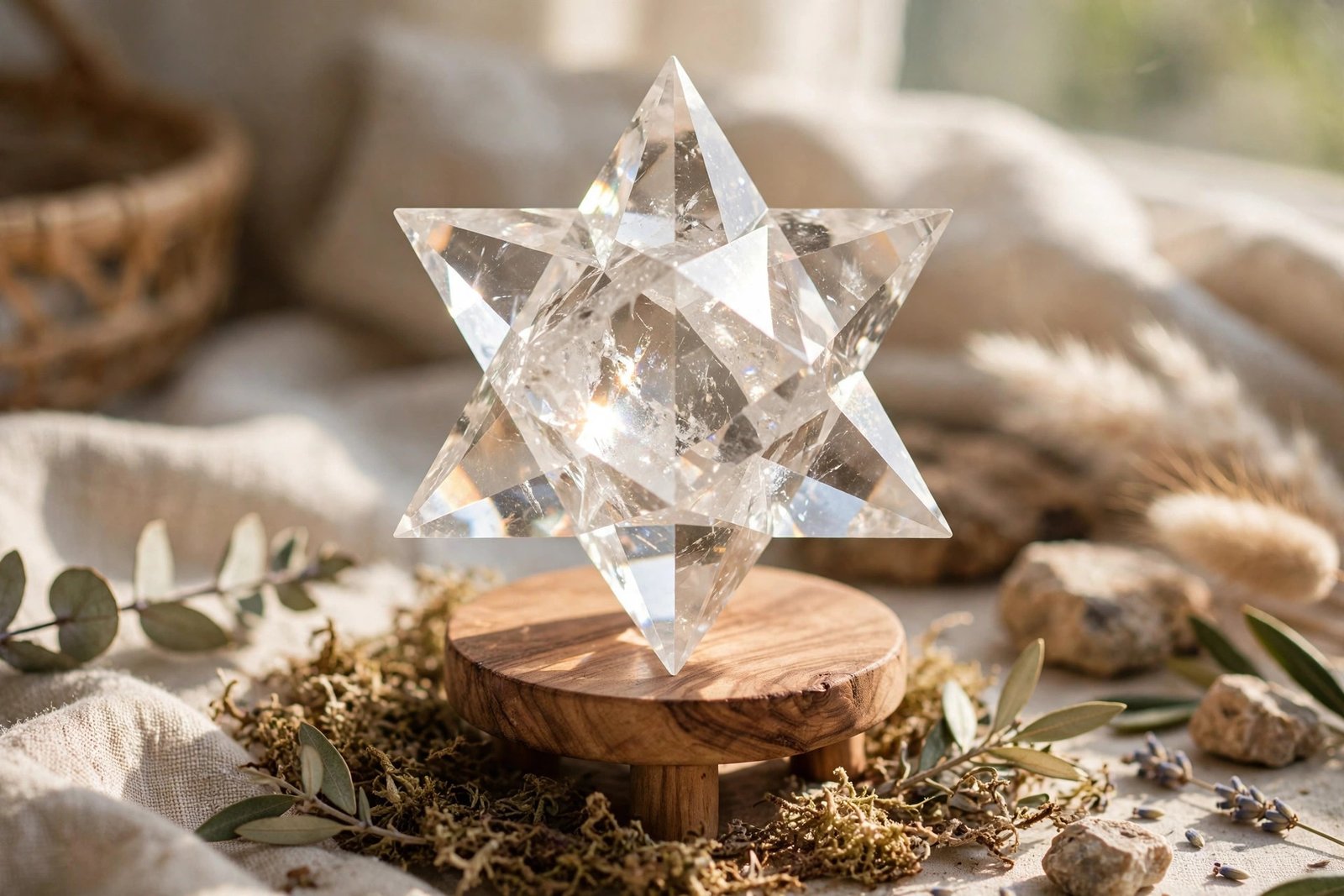
Of all crystal shapes, the Merkaba is the one people pick up, turn over in their hands, and ask: “What exactly is this?” It looks like a three-dimensional star — two pyramids interlocked, one pointing up and one pointing down. That geometry has a name (star tetrahedron), a long history in sacred geometry, and a devoted following among collectors. This merkaba crystal guide explains the shape honestly: what it is, where the ideas around it come from, which stones suit it, and how to handle a shape whose points are as delicate as they are striking.
If you are new to shaped crystals, browse the wearable side of the collection in the AVENSU shop while you read — Merkabas are display and meditation pieces, but the same stones appear in bracelets you can carry all day.
The Geometry: Two Tetrahedrons, One Star
A tetrahedron is the simplest pyramid: four triangular faces. A star tetrahedron combines two of them — one apex-up, one apex-down — intersecting so their points form an eight-pointed star when viewed from most angles. It is one of the forms studied in sacred geometry, the tradition that finds spiritual meaning in mathematical shapes. The Wikipedia article on the Merkaba traces the word to early Jewish mysticism, where “merkabah” referred to a divine chariot, while modern crystal usage blends that history with geometry symbolism.
Precision matters in this shape. A well-cut Merkaba is symmetrical: all points equal, all faces flat, and it should balance on a flat surface or sit neatly in a small ring stand. Cheap, uneven cuts wobble and lose the star effect, so inspect photos from several angles before buying.
Traditional Meanings and Modern Use
In contemporary crystal tradition, the Merkaba is believed to symbolise balance between opposites — the upward pyramid traditionally associated with light and spirit, the downward one with earth and body. Practitioners say they use it during meditation as a visual focus for balance and protection, and some place it in a workspace as a reminder to stay centred. These are beliefs and personal practices, not verified effects, and that framing matters: enjoy the symbolism, and let the object serve as a beautiful prompt for your own reflection.
Intuition-focused stones are popular for this shape. Our moonstone meaning guide explains why moonstone is traditionally linked with inner awareness, and Merkabas cut from moonstone or labradorite flash wonderfully as they turn. For a grounding counterpoint, see the root chakra crystals guide — many collectors pair a Merkaba with a grounding crystal bracelet worn during meditation sessions.
Best Stones for Merkaba Carvings
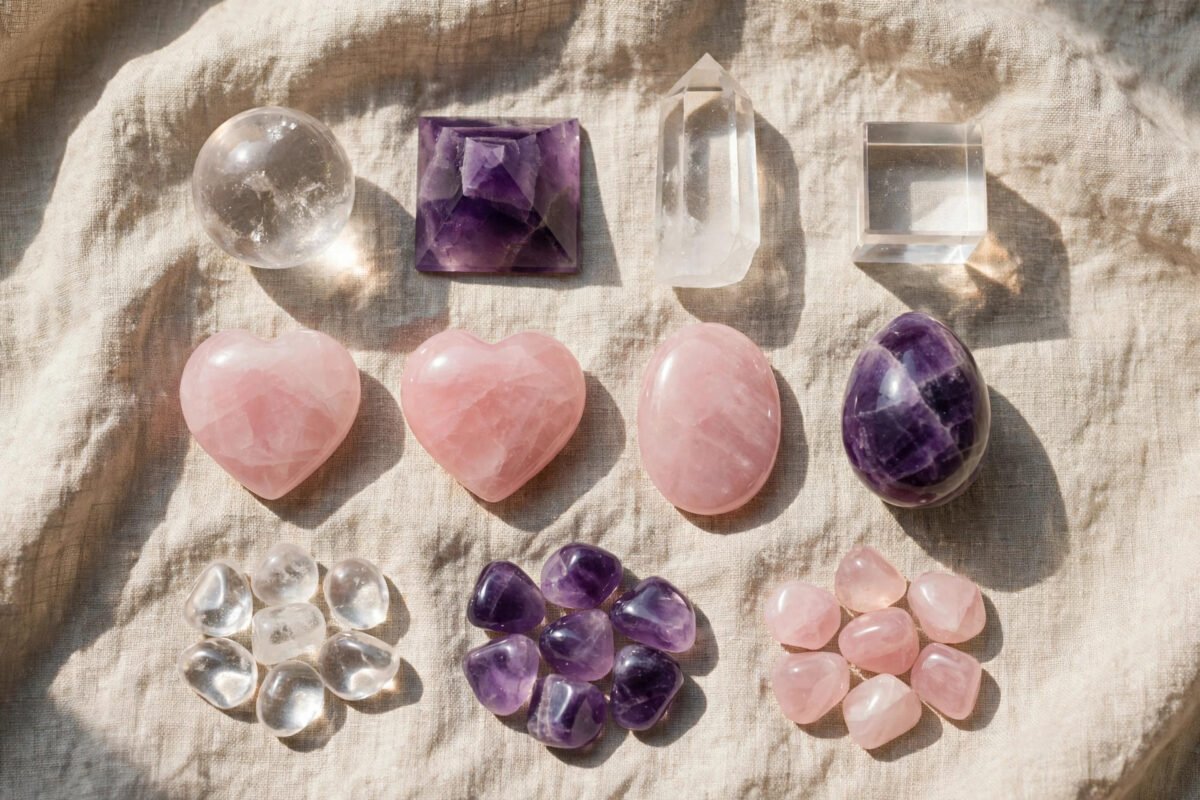
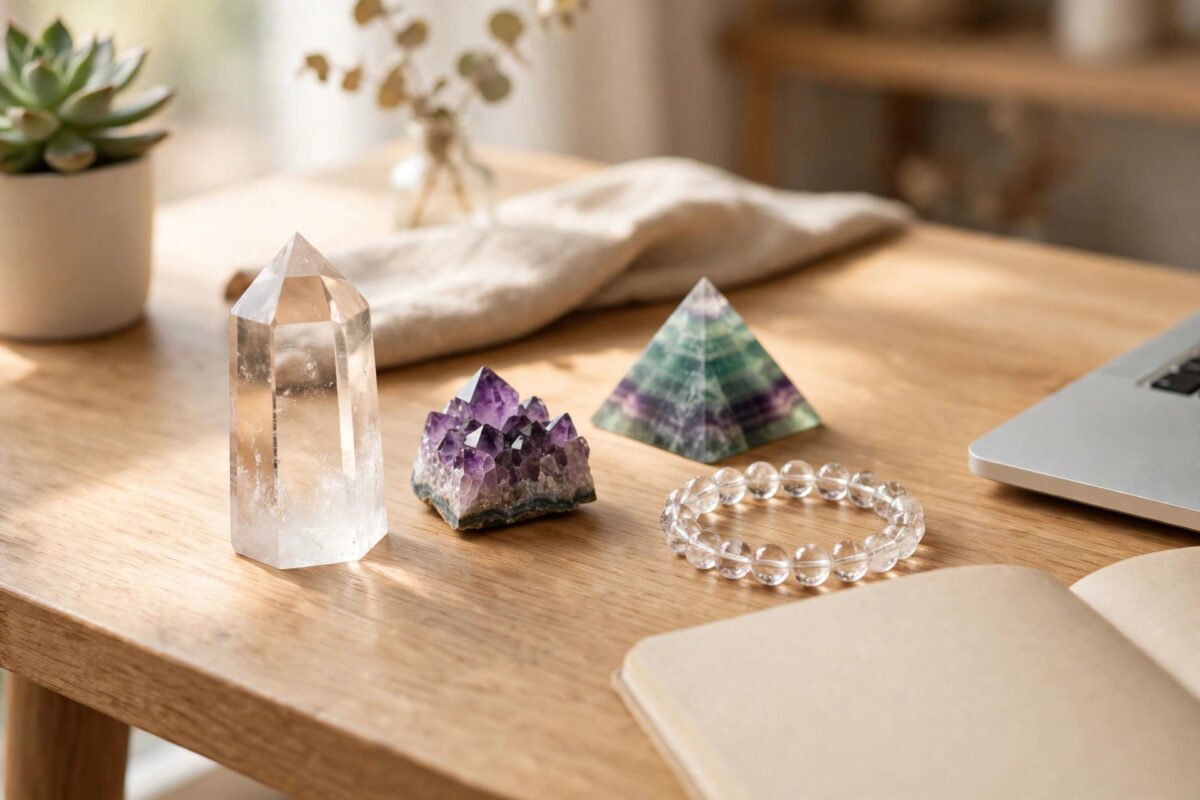
Clear quartz is the classic choice: transparent material shows off the internal geometry, and quartz is hard enough (Mohs 7) to hold sharp points. Amethyst adds colour while keeping good durability — read more in our amethyst meaning guide. Fluorite looks spectacular with its purple-green bands but is soft, so a fluorite Merkaba is a look-don’t-handle piece. Tiger’s eye and lapis lazuli give an opaque, sculptural star with strong visual weight.
Whichever stone you pick, run the authenticity checks in how to tell if a crystal is real, because complex carvings are sometimes moulded from resin. Real stone feels cool and noticeably heavy for its size; mineral data for comparison is available at Mindat.org.
Handling, Display, and Care
Eight sharp points means eight chances to chip. Handle a Merkaba over a soft surface, carry it cupped in both hands, and store it alone in a padded pouch — never loose in a bowl with other stones. Sizing matters too if you buy one as a pendant: oversized star points catch on clothing, so most people keep Merkabas as palm or altar pieces and choose smoother shapes for daily wear from the AVENSU shop.
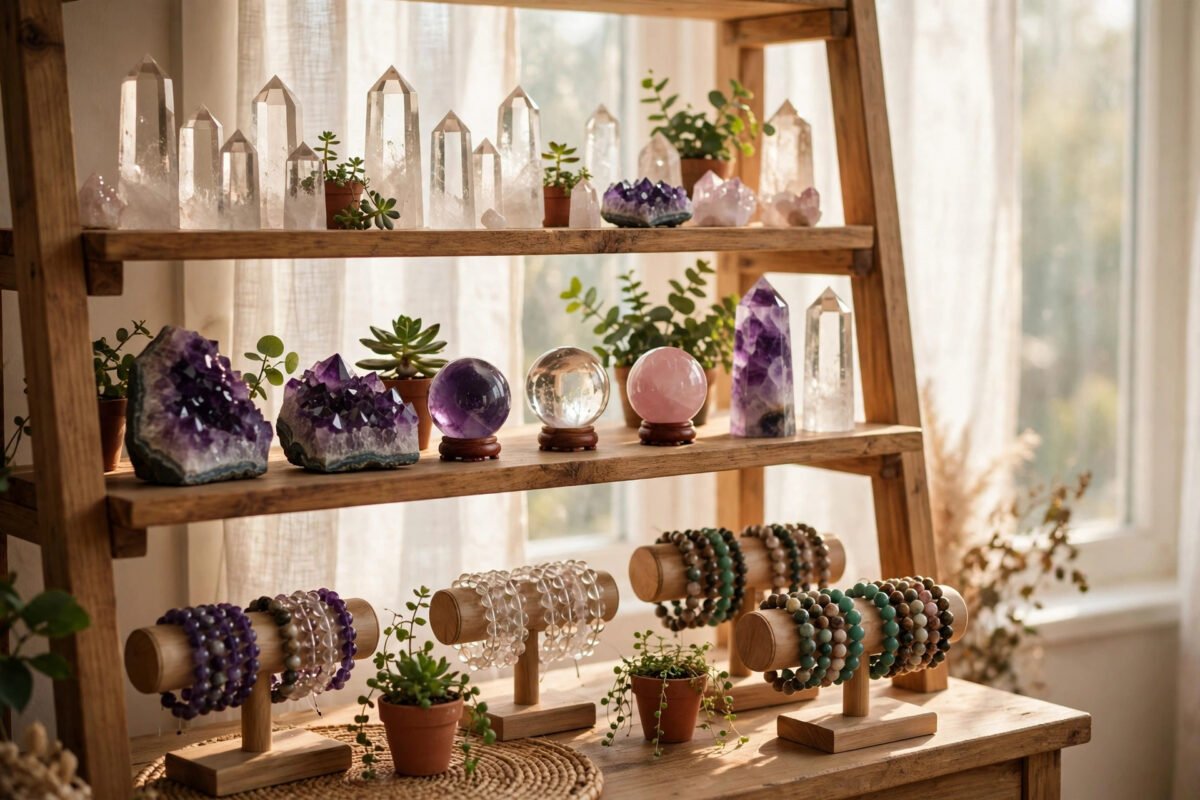
For display, a small wooden or brass stand lifts the star and lets light pass through it. Keep it out of reach of small children and pets, dust with a soft brush rather than a cloth that can snag on points, and clean only with methods suited to the stone — our complete crystal bracelet care routine lists water and sunlight safety by mineral. Store companion bracelets separately following how to store crystal bracelets, and if your Merkaba sits beside larger pieces, the stability advice in displaying large crystals safely still applies.
Frequently Asked Questions
How do you pronounce Merkaba?
It is commonly pronounced “mer-KAH-bah.” The word comes from Hebrew roots associated with a chariot, which is why Merkaba imagery is sometimes linked with travel, ascent, and spiritual journey themes in mystical literature.
Can I wear a Merkaba as jewellery?
Small Merkaba pendants exist, but the points can be sharp and fragile against skin and fabric. Most wearers prefer them for meditation or display and choose rounded bead bracelets for everyday wear. If you do wear one, pick a small size in hard quartz and check the points regularly for chips.
Which way up should a Merkaba sit?
A star tetrahedron has no single “up” — it looks balanced from every orientation, which is part of its appeal. On a stand, rotate it until the light catches the faces you like best. There is no incorrect position.
Is a Merkaba the same as a crystal star?
Not quite. Flat carved stars and eight-pointed ornaments are decorative shapes. A true Merkaba is specifically the three-dimensional star tetrahedron: two interlocking tetrahedrons. Sellers sometimes use the words loosely, so check the photos for the interlocking pyramid form.



 English
 Vietnamese