A crystal pendulum is a small weight on a chain, used in dowsing traditions to swing in response to questions, and equally enjoyed today as a meditation focus, a decision-making ritual tool, and a beautiful object in its own right. If you are choosing your first one, the sheer variety of crystal pendulum shapes can be baffling: teardrops, cones, spirals, Merkabas, and hollow “chambered” designs all promise something slightly different. This guide sorts fact from folklore, explains what each shape actually does physically, and helps you pick a pendulum that swings true and feels right in your hand.
Pendulums make lovely companions to wearable crystals from the AVENSU shop — many practitioners wear a bracelet in the same stone as their pendulum to keep the set together.
How a Pendulum Works (the Physics Bit)
A pendulum’s swing is governed by length and weight distribution, a principle described in any physics reference such as Encyclopaedia Britannica’s pendulum entry. A heavier bob on a shorter chain swings quickly in small arcs; a lighter bob swings slower and wider. In dowsing practice, movements are understood to come from subtle, unconscious hand motions — which is precisely why practitioners value the ritual: it externalises a gut feeling into a visible yes or no. Framed that way, a pendulum is a tool for reflection, traditionally believed to amplify intuition rather than to deliver guaranteed answers.
Shape affects handling in real ways. A symmetrical, bottom-heavy bob swings predictably. An unbalanced or chipped bob wobbles. That is why choosing by shape is not just aesthetics — it changes how the tool behaves.
The Main Pendulum Shapes Compared
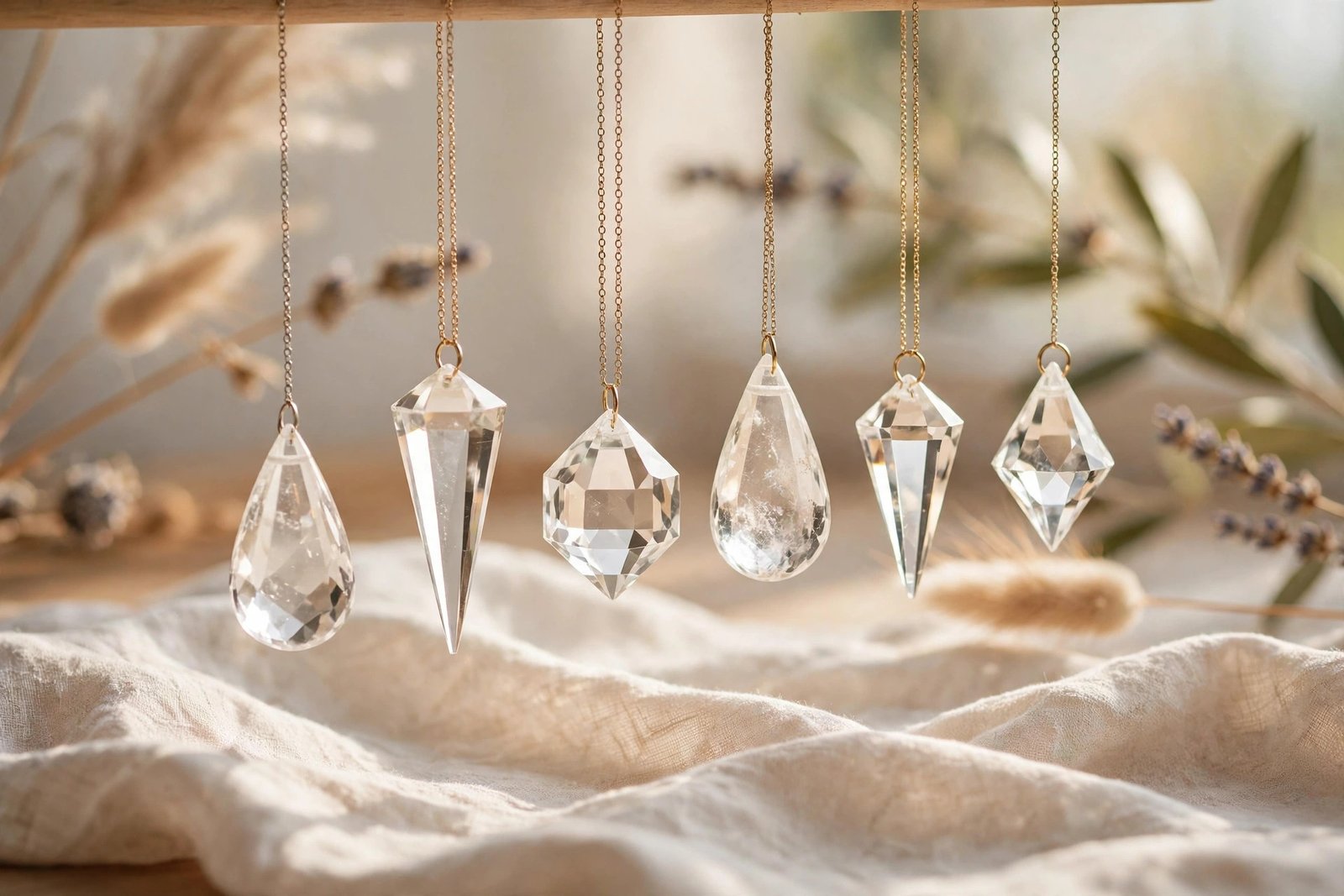
Teardrop / drop. The classic. A rounded body tapering to a downward point, traditionally associated with sensitivity and smooth, readable swings. Best for beginners.
Cone / spike. A longer, narrower cone that swings fast and decisively. Popular with experienced users who find teardrops too slow.
Faceted point. A cut crystal point, often six-sided quartz. It combines pendulum and point symbolism — see our related guide to crystal obelisks vs points for how point geometry is understood in tradition.
Merkaba and spiral metal designs. Merkaba bobs (covered fully in our Merkaba crystal guide) swing with a distinctive rotation and suit meditation more than quick questions. Spiral cages hold a small tumbled stone you can swap.
Chambered pendulums. These unscrew to hold a tiny sample — an herb, oil, or written word. They are specialty tools; beginners rarely need one.
Choosing Stone, Chain, and Size
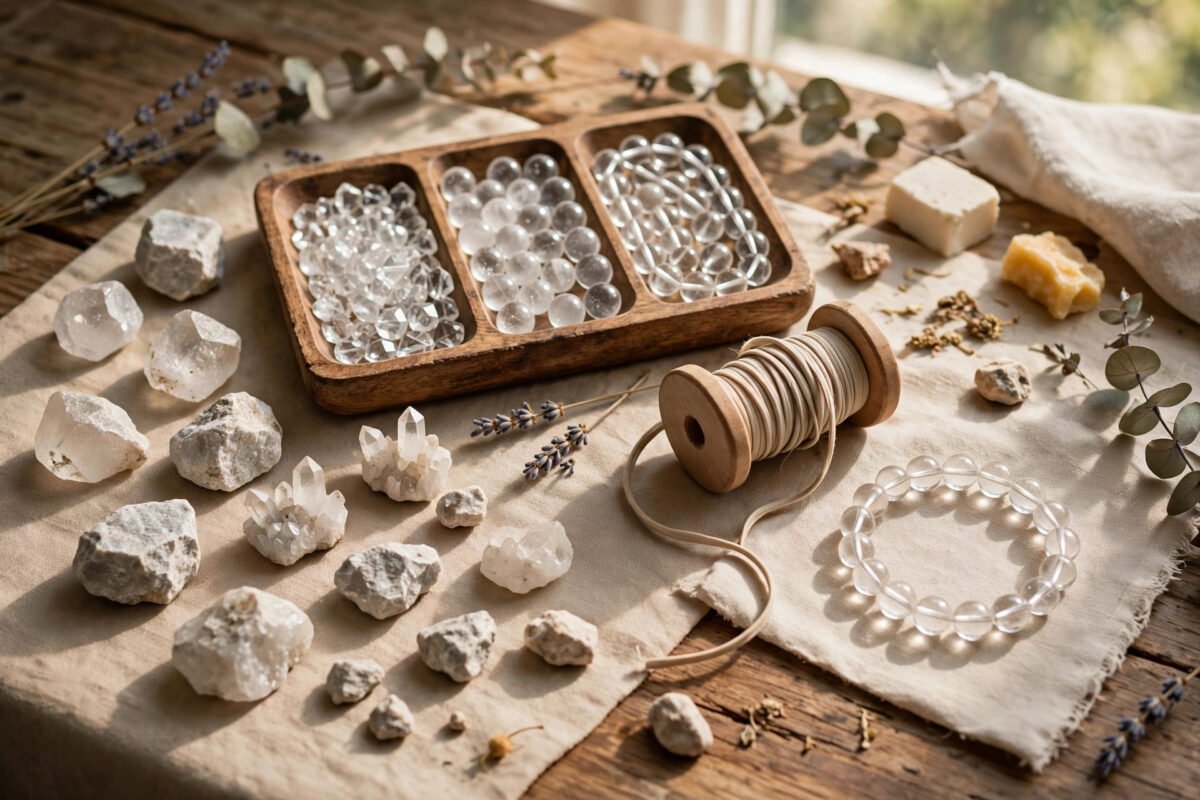
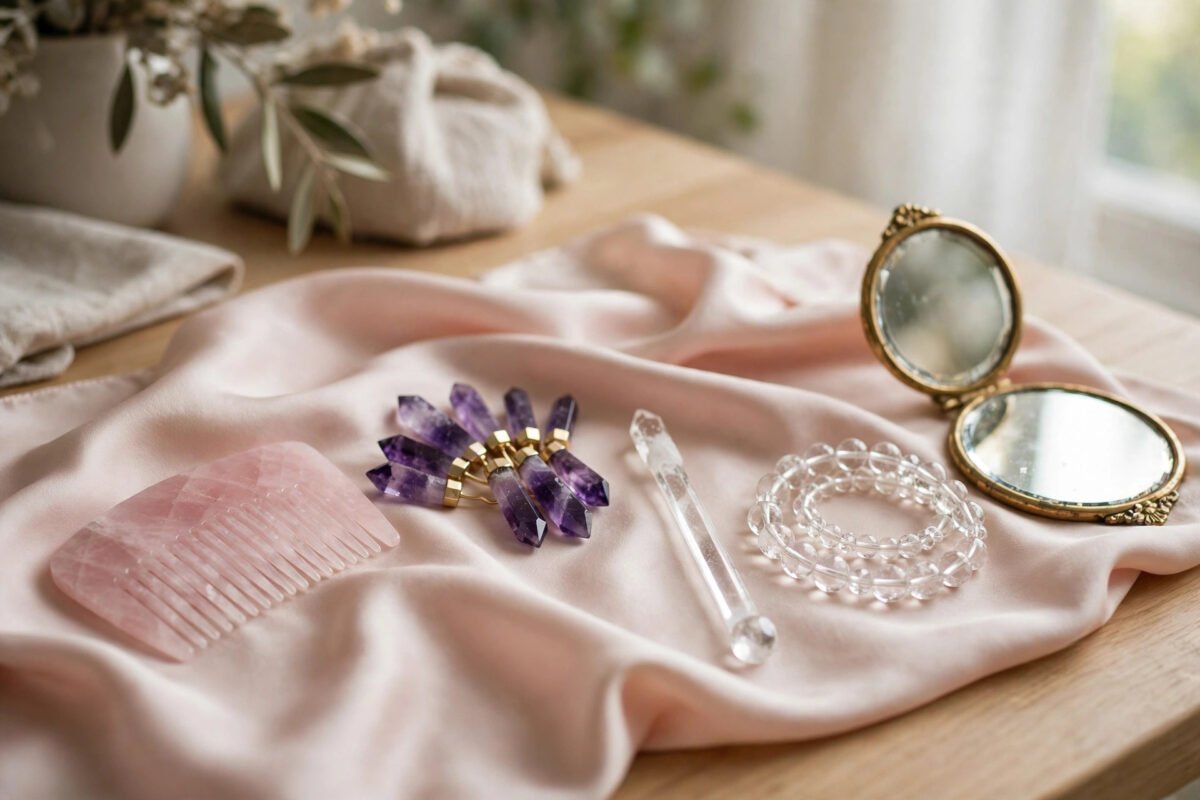
Pick a stone you are drawn to and that is hard enough for regular handling. Clear quartz is the traditional all-rounder. Amethyst is traditionally associated with calm focus — details in our amethyst meaning guide — while moonstone is linked in tradition with intuition, as our moonstone meaning guide explains. A grounding crystal bracelet worn during sessions is a common pairing for people who like to feel anchored while they work.
Chain length of 15–20 cm suits most hands. The end should have a small bead or charm to grip so the chain does not slip. Total bob weight of 12–25 g gives a clear swing without tiring your hand. Before buying, confirm the stone is genuine using how to tell if a crystal is real, and cross-check mineral details at Mindat.org if a seller uses an unfamiliar trade name.
First Session Basics and Care
Tradition suggests “programming” your pendulum first: hold it still, ask it to show you its swing for yes, then for no, and note the directions — they differ between people. Start with questions you already know the answer to, keep sessions short, and treat surprising answers as prompts for thought, not instructions. If you enjoy intention-setting rituals, our guide on how to activate a lucky bracelet adapts well to a new pendulum.
Care mirrors bracelet care. Cleanse a new pendulum before first use with a method safe for its stone — start with how to cleanse crystals with salt water to learn which stones must avoid salt. Store it coiled in its own pouch so the chain does not kink, following the separation principles in how to store crystal bracelets. The crystal care kit essentials list includes the soft cloths and pouches that keep both pendulums and bracelets in top shape, and new pieces arrive regularly in the AVENSU shop.
Frequently Asked Questions
Which pendulum shape is best for a complete beginner?
A medium-weight teardrop in clear quartz or amethyst. It swings smoothly, reads clearly, and is forgiving of an unsteady hand. Avoid very light novelty shapes until your technique settles, because they exaggerate every tremor.
Does the pendulum answer questions by itself?
In dowsing tradition the swing is believed to reflect the user’s intuition or subtle energy. Scientifically, the movement comes from tiny involuntary hand motions. Either way, most users treat results as guidance for reflection rather than certain predictions.
Can I use a necklace or bracelet as a pendulum?
You can improvise with any small weighted object on a chain, and some people do use a pendant. A purpose-made pendulum is better balanced, but an AVENSU bracelet charm or donut pendant will work for casual practice — just hold it by one end and let it hang freely.
How often should I cleanse my pendulum?
Many practitioners cleanse before important sessions and after lending the pendulum to someone else. There is no strict rule; a quick wipe, a rest on a cloth overnight, or your preferred cleansing method when the piece feels “heavy” is the common routine.





 English
 Vietnamese